
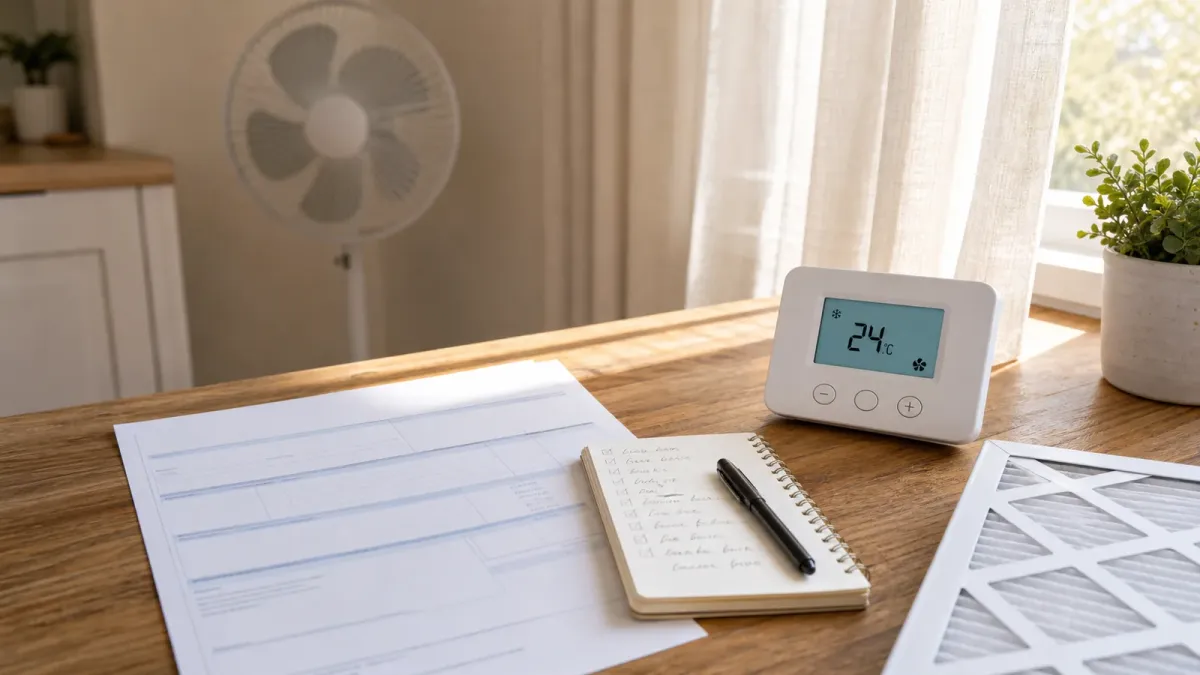
Cooling bills are becoming harder to ignore this summer. The National Energy Assistance Directors Association says the average U.S. household is expected to spend nearly $800 on electricity during the summer cooling season, while ENERGY STAR says heating and cooling account for nearly half of a typical home's utility bill.
The best first move is not to turn the house into an endurance test. The practical goal is to reduce wasted cooling, keep the people inside safe, and know when a bigger repair or upgrade is worth checking.
Do this first
- Raise the thermostat slightly, then use fans correctly. ENERGY STAR says raising the thermostat by two degrees while using a ceiling fan can lower air-conditioning costs by up to 14%. Turn fans off when rooms are empty because fans cool people, not rooms.
- Keep the cold air where it belongs. Close blinds or curtains on sunny windows, check weatherstripping around leaky doors, and look for obvious attic, window or duct leaks before assuming the AC itself is the only problem.
- Change or check the filter. A clogged filter makes the system work harder and can reduce airflow on the hottest days. If the filter looks gray, matted or dusty, replace it with the size and rating your system requires.
- Move heat-making chores out of peak hours. Dryers, ovens and dishwashers add heat indoors. Running them early, late or on cooler days can reduce the load on the AC.
Check these details
If your equipment is old or struggling, compare small fixes with bigger upgrades. DOE says high-efficiency air conditioners and other cooling actions can cut air-conditioning energy use sharply in some homes, and its home-upgrade hub lists federal tax credits and state rebate programs that may apply to efficient cooling equipment, insulation, duct sealing and smart controls.
Renters still have options. Ask the landlord about filter changes, blocked vents, damaged weatherstripping or a system that cannot hold a reasonable indoor temperature. Use temporary window coverings, keep interior doors positioned for airflow, and avoid blocking returns or registers with furniture.
Common mistakes
Do not rely on a portable fan as the main safety plan in extreme indoor heat. The National Weather Service warns that when room temperature is hotter than 90 degrees, directing a fan at yourself can speed dehydration. In that situation, air conditioning, a cooling center, a cool shower and checking on vulnerable people matter more than chasing a lower bill.
Also avoid setting a smart thermostat so aggressively that the home overheats before people return. Savings disappear quickly if the system has to run nonstop to recover during peak heat, and discomfort can become dangerous for older adults, infants, people with chronic conditions and anyone taking heat-sensitive medications.
When to get help
Call a qualified technician if the AC blows warm air, short-cycles, trips breakers, leaks water, or cannot cool the home after the filter and obvious airflow problems have been checked. For utility-bill pressure, look up your state energy assistance office or local LIHEAP administrator before a shutoff notice becomes urgent.
Bottom line: start with the no-regret checks: shade windows, clean airflow, modest thermostat changes and smart fan use. Then decide whether the bill points to a one-day heat spike, a leaky home, a repair problem or an upgrade worth pricing.


