
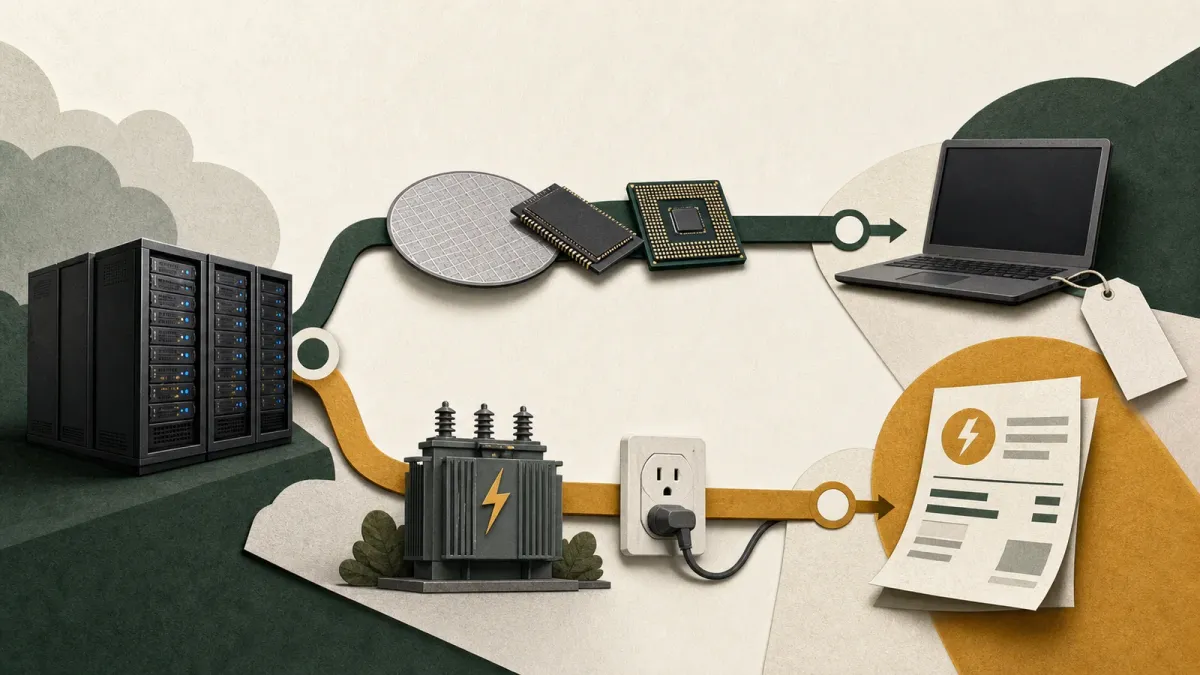
The AI boom is moving from earnings calls into household budgets. A wave of data-center construction is increasing demand for memory chips, processors, electrical equipment and power, turning a technology race into a new inflation watch item for consumers and policymakers.
The issue is timely because the latest U.S. inflation report, released by the Bureau of Labor Statistics on July 14, 2026, showed broad relief in June but not a finished fight. The Consumer Price Index fell 0.4% from May, the largest one-month drop since April 2020, while prices were still 3.5% higher than a year earlier. Core inflation, which excludes food and energy, was unchanged for the month and up 2.6% over the year.
That softer reading gives the Federal Reserve room to wait, but the AI buildout complicates the second half of the year. The Associated Press reported this week that major data-center investment is likely to top $700 billion in 2026 and is already putting pressure on chips, computer hardware and electricity.
The short answer
AI is not the only reason prices are high, and it is not showing up evenly across the economy. The practical point is narrower: when data centers compete for the same chips, transformers, skilled labor and electricity that consumer products and local grids need, some of those costs can reach buyers through more expensive devices and higher utility bills.
How the cost chain works
Large AI systems require specialized chips and dense server racks. If cloud companies, chip buyers and device makers are chasing constrained memory or processors at the same time, manufacturers have more pricing power. That can make laptops, phones, game consoles and business equipment harder to discount even when other consumer goods are cooling.
The power side is slower but more durable. Data centers need constant electricity, grid connections, backup equipment and new generating capacity. A March 2026 analysis from the Federal Reserve Bank of Dallas estimated that data centers alone could add 0.05 percentage points to headline PCE inflation in 2026 through retail electricity prices under a mid-capacity scenario, rising to 0.13 percentage points by 2030. The same analysis warned that a much larger buildout would create bigger upside risk.
The caveat
This does not mean every AI investment immediately turns into a higher bill. Some costs are absorbed by technology companies, some are offset by efficiency gains, and electricity prices still vary by state, utility and fuel mix. The risk is that a concentrated construction boom can keep pressure on categories that consumers notice even while the broader inflation trend improves.
What consumers should watch
For households, the clearest signals are local utility-rate filings, electricity line items, and price changes on electronics with heavy memory or high-end processors. A national CPI headline can cool while specific categories still move in the wrong direction.
The next CPI report is scheduled for August 12, 2026. One month will not settle the question, but it will show whether June's relief is carrying into July or being offset by renewed energy pressure, hardware costs, or other price increases tied to the AI infrastructure rush.


