
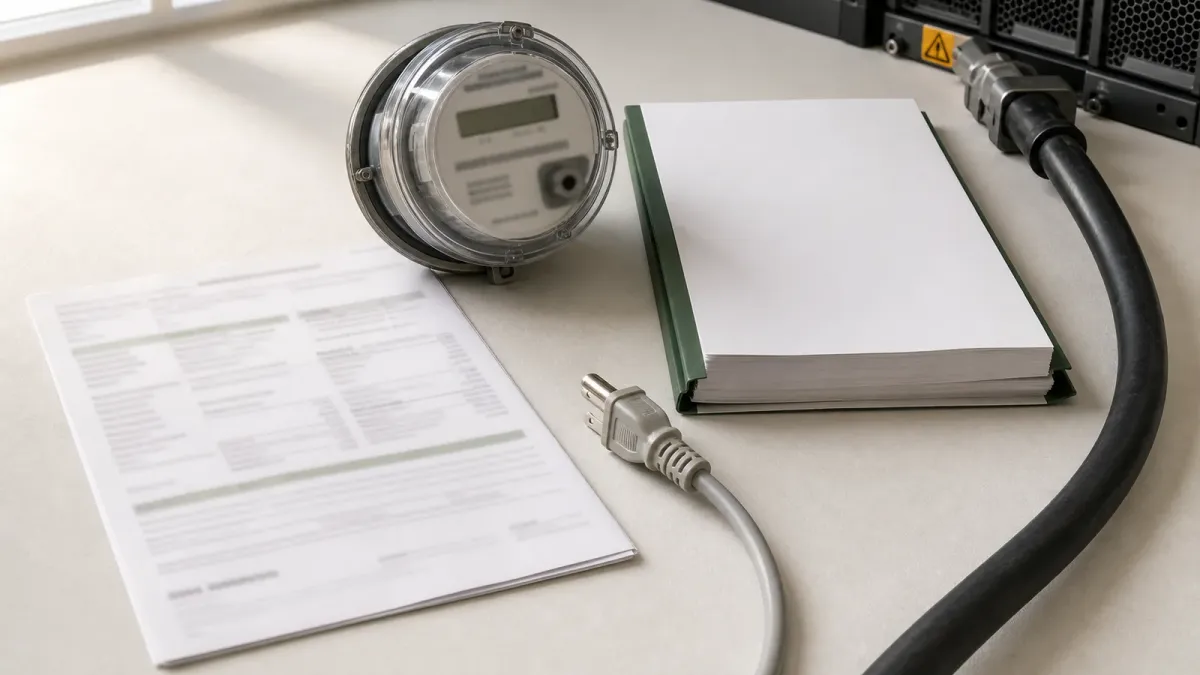
If a new AI data center is proposed near you, the question is not only whether the company signed a pledge. The better question is whether your state utility regulator, local utility, and the data center customer have created enforceable rules that keep ordinary households from paying for the extra power infrastructure.
The issue moved back into view after the White House said on July 23, 2026, that more than 200 additional utilities, data center developers, cooperatives, and states had joined its Ratepayer Protection Pledge. The administration says large data center operators should fund the power generation and grid infrastructure their projects require, rather than shifting those costs to other ratepayers.
That is a useful standard. It is not the same thing as a guarantee on your bill.
The Short Answer
A pledge matters most when it shows up in a formal tariff, interconnection agreement, long-term power contract, or utility commission order. If the promise is only a press release, households may still be exposed to higher fixed charges, transmission upgrades, reserve-capacity costs, or rate increases that get spread across all customers.
That distinction is already becoming a live political and regulatory fight. The Associated Press reported last week that data center backlash is spreading into statewide campaigns, including Texas, where opponents say fast-growing projects raise concerns about electric bills, water use, farmland, noise, and local control. In North Carolina, Axios reported Monday that Gov. Josh Stein and Attorney General Jeff Jackson are pressing Duke Energy to put a White House-backed pledge into enforceable writing before state regulators decide a rate case.
What To Check First
1. Look for a large-load tariff. A tariff is the utility rulebook regulators can enforce. For data centers, the important question is whether the tariff makes very large customers pay for new generation, transmission upgrades, reserved capacity, and exit risk if a project cancels or uses less power than expected. A voluntary pledge without a tariff can signal intent, but it may not decide who pays when costs hit the grid.
2. Check whether the data center pays for unused capacity. AI campuses often reserve enormous amounts of power before they use it. If a utility builds or buys capacity for a project that later slows down, closes, or uses less power than planned, the leftover cost can become the disputed part. Stronger protections make the large customer pay for reserved capacity even when it is not fully used.
3. Separate energy costs from grid costs. A data center can promise to buy its own electricity and still create costs for substations, transmission lines, distribution upgrades, backup capacity, and system planning. For households, the protection only works if the contract covers both the power and the wires needed to deliver it.
4. Watch fixed monthly charges. Even if the per-kilowatt-hour rate looks stable, utilities can recover system costs through customer charges, riders, or special line items. When a data center boom is happening nearby, compare the proposed residential fixed charge with the old one and read the utility's explanation for any new rider.
5. Read the regulator's order, not just the announcement. A governor, mayor, company, or utility can describe a deal in broad terms. The binding version usually appears in a public utility commission docket, settlement, tariff filing, interconnection document, or commission order. That is where readers can see whether the promise survived negotiation.

Why This Is Hard To Prove Quickly
Electric bills are not simple receipts for one power plant. Rates blend fuel costs, grid maintenance, storm recovery, capital spending, reserve margins, taxes, and regulatory choices. That makes it easy for a utility, company, or politician to claim that data centers are either protecting customers or raising bills before the public can see the full cost allocation.
The evidence is also mixed over time. A June 2026 working paper posted to arXiv by Asa Watten, John Bistline, and Geoffrey Blanford found that data centers were associated with modestly lower average U.S. retail electricity rates from 2015 through 2024, consistent with economies of scale in some power systems. The authors also warned that future supply constraints could reverse that effect. In plain English: data centers can help spread grid costs when the system has room, but they can strain bills when new supply and wires have to be built fast.
That is why the local documents matter more than the national slogan. A pledge can be a starting point, but your state still has to decide which costs belong to the data center, which belong to the utility, and which get shared by everyone.
What A Strong Protection Looks Like
The strongest consumer protection is specific. It says the large customer pays for dedicated infrastructure, contributes to shared upgrades it triggers, covers reserved capacity, and accepts termination charges if the project walks away. It also gives regulators enough data to compare the promised customer benefits with the costs being added to the system.
A weaker arrangement uses broad language about growth, jobs, innovation, or affordability while leaving the recovery mechanism for later. Those benefits can be real, but they do not answer the household question: will my bill carry costs that were created for a private data center project?
Bottom Line
Do not dismiss the pledge. It puts the right principle on the table: data centers should pay for the power and grid capacity they require. But before treating it as protection, check whether your utility commission has turned that principle into enforceable tariff language, contract terms, and rate-case findings.
If the documents are not public yet, the practical move is to watch the next rate case, not the next ribbon-cutting. That is where the bill usually gets decided.


