
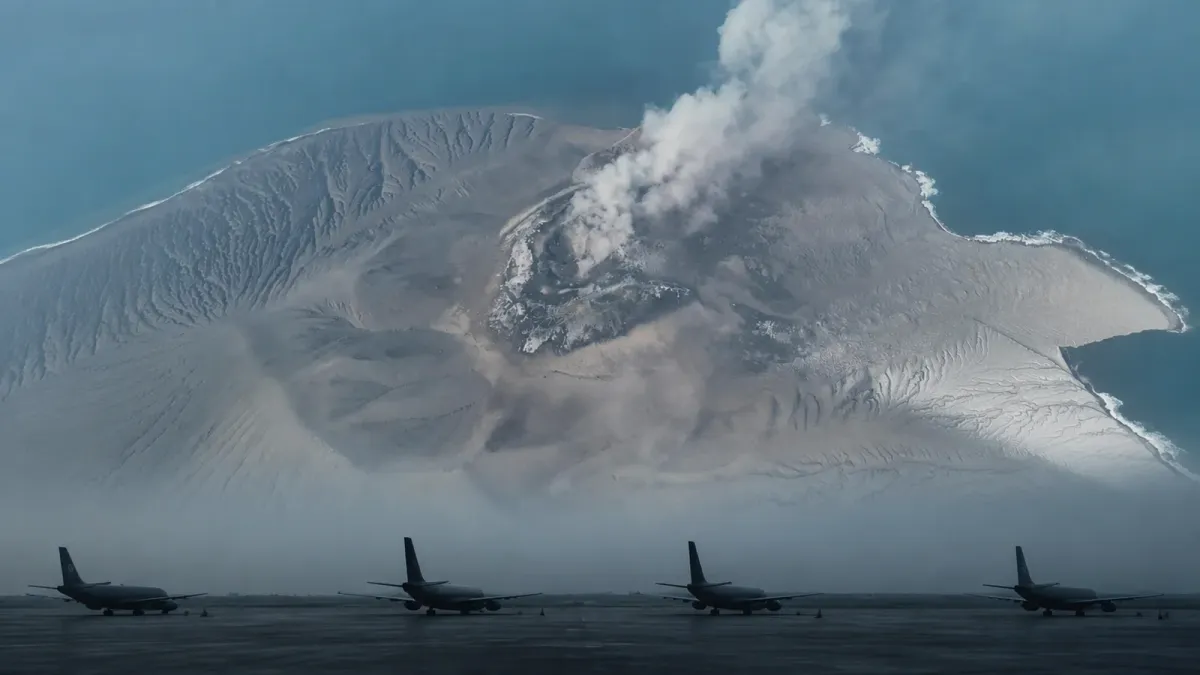
Indonesia ordered eight airports closed through midnight Sunday, September 6, after Anak Krakatau erupted and sent volcanic ash across heavily traveled airspace. By Sunday evening, 1,558 flights had been canceled and about 170,000 passengers were affected, including 963 canceled flights at Jakarta’s Soekarno-Hatta International Airport, the Associated Press reported.
No casualties were reported and authorities had not ordered an evacuation. Officials warned residents and visitors to remain at least 3 kilometers, or about 2 miles, from the active crater while monitoring continued around the clock.
What changed
Anak Krakatau, the volcanic island in the Sunda Strait between Java and Sumatra, had shown increased activity since Friday. Indonesia’s Geological Agency said it erupted for about 30 seconds at 3:53 a.m. Sunday and again for 16 seconds roughly three hours later. The agency described Sunday’s activity as the strongest since the current intensification began in July.
AirNav Indonesia closed airspace around Soekarno-Hatta and Halim Perdanakusuma in Jakarta as well as six other airports, including Radin Inten II in Lampung. The disruption also reached services at Bali’s I Gusti Ngurah Rai airport and Medan as aircraft and crews fell out of position.
How far the ash spread
Indonesia’s meteorology agency, BMKG, identified two separate ash clouds in satellite data. One rose to about 20,000 feet and moved northeast across Jakarta, Banten, West Java and nearby waters. A second reached about 50,000 feet and spread west over parts of Banten, Lampung and Bengkulu, the southern Sunda Strait and the Indian Ocean west of Sumatra.
BMKG said it had issued 18 aviation safety notices, known as SIGMETs, since the initial eruption late Friday. Volcanic ash can reduce visibility and damage aircraft engines and other components, so closures can remain in place even when conditions on the ground near an airport appear calm.
What travelers should do
Indonesia’s Directorate General of Civil Aviation urged passengers not to travel to affected airports during closure periods and to check directly with their airline. The agency said carriers must provide passengers with updated flight information and the options required under Indonesian rules.
Lion Group said affected customers were being offered rescheduling or refunds under its policies. Travelers with onward connections should also verify later segments because cancellations can create cascading problems with aircraft rotations, crews and terminal capacity even after an airport reopens.
What authorities are watching
BMKG said 20 tsunami gauges around the Sunda Strait showed no unusual sea-level activity as of 7 a.m., and its early assessment put tsunami probability below 40% at that time. Officials stressed that the eruption remained active and that a larger event could not be predicted from eruption counts or ash height alone.
The next operational decisions will depend on satellite observations, ash advisories and inspections at individual airports. Passengers should rely on current airline notices and Indonesian aviation authorities rather than screenshots or recycled closure lists, because airport status can change rapidly.


