
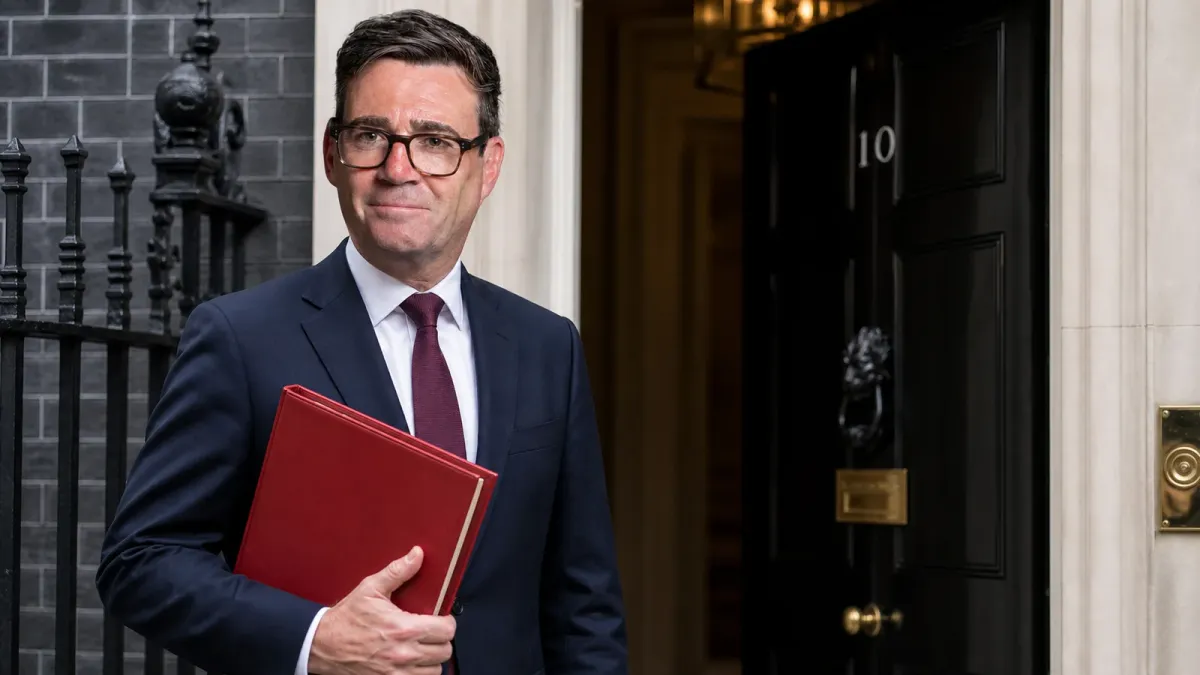
Andy Burnham became the United Kingdom's prime minister on Monday, July 20, 2026, after Keir Starmer resigned and Burnham accepted King Charles III's invitation to form a government.
The handover matters beyond Westminster because Britain is a major U.S. ally, a permanent member of the United Nations Security Council and a country facing immediate decisions on public spending, defense commitments, Ukraine, energy costs and relations with Washington and Europe.
What changed
Burnham arrived at 10 Downing Street promising what he called a "circuit breaker" moment for Britain. In his first speech as prime minister, he said he would set out a 10-year plan later this year and begin announcing cost-of-living measures on Tuesday, July 21, including how they would be paid for.
Starmer, who led Labour to a landslide general-election victory in 2024, used his final Downing Street speech to say he was resigning and passing the baton to Burnham with his support. The transition does not by itself trigger a general election; the next election is not required until 2029 unless one is called earlier.
The first policy signal
The clearest immediate move is homelessness policy. GOV.UK said Burnham's first instruction in office was a national drive to end rough sleeping at the earliest opportunity, backed from day one by an additional GBP340 million.
The government said mayors, councils, the NHS, public services and departments would be asked to move faster before winter, including by identifying people most in need and beginning the acquisition of suitable homes. That makes the announcement both a social-policy marker and a test of Burnham's argument that more prevention can reduce bigger public costs later.
What remains unclear
The broad direction is clearer than the financing. Burnham said he would honor fiscal rules and defense commitments while helping households with costs, supporting more young people into work, expanding mental-health support and building more council homes. The tradeoffs will become sharper when the new cabinet, chancellor and first spending choices are known.
Investors and allies will also watch whether Burnham's promise to move power out of London changes budget control, infrastructure planning or relations with devolved and local leaders. His speech pointed to stronger public control over essentials, but it did not spell out which sectors would move first.
What happens next
The near-term calendar is tight: cabinet appointments were expected to begin Monday, cost-of-living measures are due Tuesday, and the larger 10-year plan is promised later in 2026. Until those details arrive, the confirmed story is a rapid change in leadership with an ambitious opening agenda and several unanswered questions about money, timing and delivery.


