

Apple shares traded near $333.74 on July 17, 2026, giving the iPhone maker a market value of roughly $4.9 trillion. The business behind that price is formidable: Apple has just reported its best March quarter, record Services revenue and another $100 billion repurchase authorization. The harder question is whether even an exceptional company can deliver enough future cash to justify what investors are paying today.
A discounted cash flow analysis says the answer depends on how long Apple's recent acceleration lasts. Using a normalized $125 billion starting level of annual free cash flow, the model produces an estimated value of about $147 per share in a bear case, $243 in a base case and $363 in a bull case. That range is deliberately wide. It is a map of the assumptions embedded in AAPL, not a price target or personalized investment recommendation.
The numbers behind the valuation
Apple's fiscal 2026 second quarter ended March 28. Revenue was $111.2 billion, up 17% from a year earlier, while diluted earnings per share rose 22% to $2.01. Services generated $31.0 billion of quarterly revenue, an all-time high, and iPhone revenue reached a March-quarter record. For the first six months of fiscal 2026, total revenue was $254.9 billion and operating cash flow was $82.6 billion.
The latest annual filing adds the prior period needed to calculate a trailing result. Apple reported $416.2 billion of fiscal 2025 revenue, $111.5 billion of operating cash flow and $12.7 billion of capital spending. Replacing the first half of fiscal 2025 with the first half of fiscal 2026 produces approximately $451.4 billion of trailing revenue and $129.2 billion of trailing free cash flow. Free cash flow here is operating cash flow minus purchases of property, plant and equipment.
The model starts slightly lower, at $125 billion, because the latest six-month cash-flow statement benefited from working-capital movements that may not repeat every year. At March 28, Apple held $146.6 billion of cash and marketable securities against about $84.7 billion of commercial paper and term debt, leaving roughly $61.9 billion of net cash and securities. The share count used is 14.687 billion, the amount reported outstanding on April 17.
Three ways to value Apple
Each scenario projects free cash flow for five years, discounts those cash flows to the present, adds a terminal value and then adds net cash. Small changes in the discount rate or terminal growth rate have a large effect, which is why a single precise-looking figure would create false confidence.
- Bear case: $147 per share. Free cash flow grows 4% annually for five years, the discount rate is 9%, and terminal growth is 2.5%. This case allows for a healthy company but assumes product cycles normalize, regulatory pressure limits parts of Services economics, and the valuation premium contracts.
- Base case: $243 per share. Free cash flow grows 8% annually for five years, with an 8% discount rate and 3.5% terminal growth. This assumes Services keeps taking a larger role, hardware demand remains resilient and repurchases continue to support per-share growth, without requiring the latest quarter's pace forever.
- Bull case: $363 per share. Free cash flow grows 12% annually for five years, discounted at 7.5%, with 4% terminal growth. Apple would need sustained double-digit cash expansion, durable premium margins and successful monetization of its installed base across Services and new computing experiences.
What the market price implies
At $333.74, Apple trades near 40 times trailing earnings and about 39 times the model's normalized free cash flow. Holding the base discount rate and terminal growth assumptions constant, a reverse DCF indicates that the current enterprise value requires roughly 16% annual free-cash-flow growth for the next five years before growth settles to 3.5% in perpetuity.
That hurdle is higher than the model's bull-case growth assumption, although the bull case partly compensates with a lower discount rate and higher terminal growth. Put differently, today's price does not merely assume Apple remains dominant. It assumes unusually strong cash growth, unusually low perceived risk, or some combination of both.
Why investors may still pay a premium
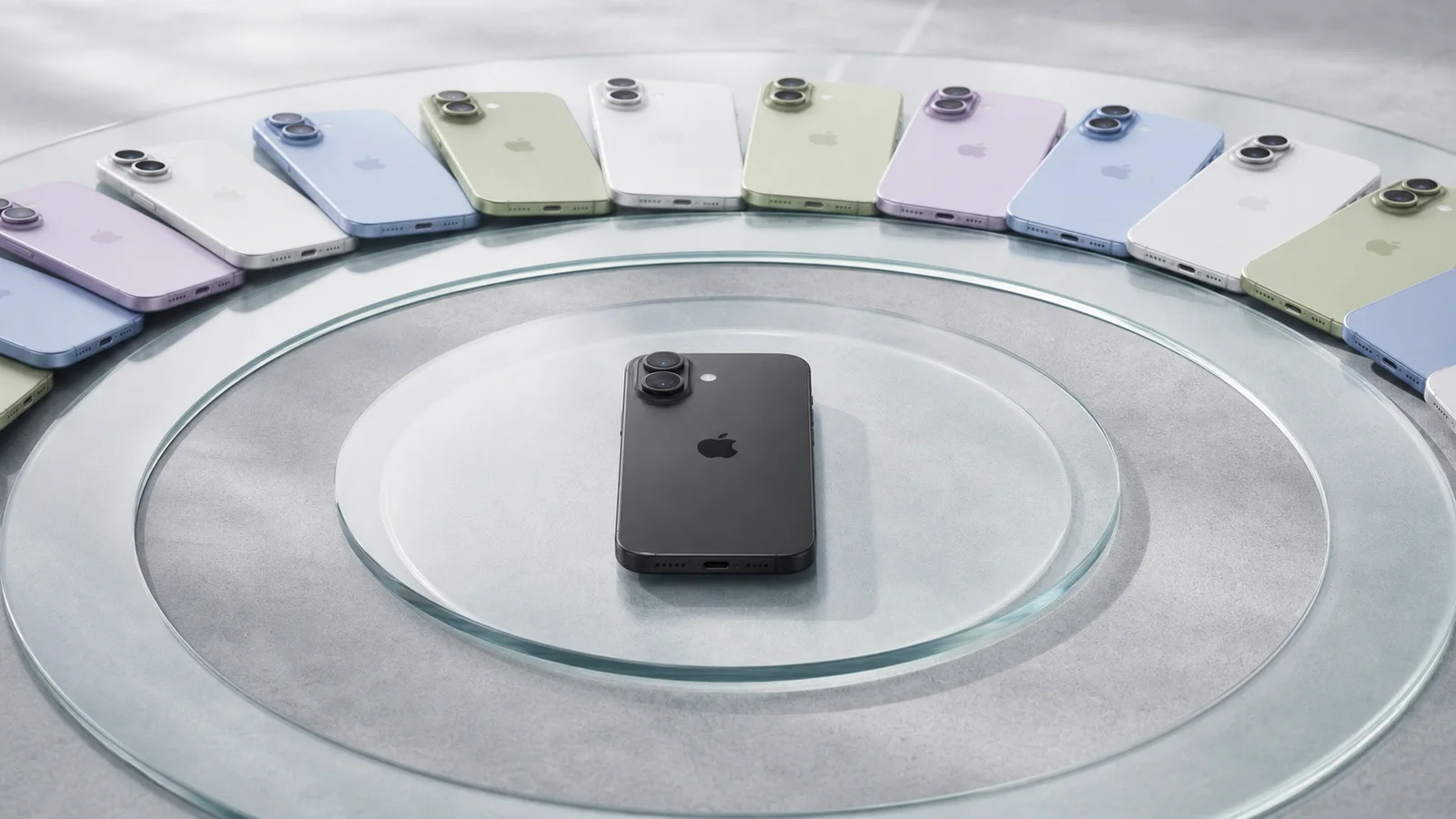
Apple's premium has real foundations. Services produced $61.0 billion of revenue in the first half of fiscal 2026, up from $53.0 billion a year earlier, while its gross margin remained far above the product business. The installed base reached another record across major product categories and regions, according to the company. That ecosystem can turn a device sale into years of payments for cloud storage, media, apps, support, payments and advertising.
Capital returns also matter. Apple repurchased 135 million shares for $36.0 billion during the first six months of fiscal 2026, and the board authorized another $100 billion program in April. Buybacks cannot make an overvalued stock cheap, but they can raise each remaining shareholder's claim on future earnings when funded by durable cash generation.
The caveat
The same concentration that makes Apple powerful creates risk. The iPhone still generated $142.3 billion, or about 56% of first-half revenue. Apple also flags component costs, tariffs, foreign exchange, fast product cycles, legal proceedings and changing regulation as material uncertainties. Its filing details continuing U.S. antitrust litigation and European Digital Markets Act scrutiny, both of which could affect platform rules or Services profitability.
Valuation sensitivity is the biggest caveat of all. A terminal value represents most of the DCF total, so no scenario should be read as a guarantee. Investors should update the inputs after Apple reports its next quarter, especially free cash flow, Services growth, gross margin, share count and management's discussion of component and regulatory costs.
Bottom line
Apple is producing record revenue and enormous cash, yet the current stock price leaves little room for merely good execution. The base case sits about 27% below the market price, while only the optimistic scenario offers modest upside. On these assumptions, AAPL looks richly valued rather than obviously mispriced. The cleanest bull argument is that Apple's installed base and Services economics can compound cash at a double-digit rate for years; the cleanest bear argument is that a nearly $5 trillion valuation already pays investors today for much of that success.
Sources and methodology
Financial figures come from Apple's April 30 fiscal Q2 release, its fiscal Q2 2026 Form 10-Q and its fiscal 2025 Form 10-K. The market snapshot was checked against the Nasdaq AAPL quote page. Scenario values are PS News calculations, rounded to the nearest dollar.


