
Search interest in the Ark of the Covenant surged again on Wednesday, July 22, 2026, after a cluster of archaeology stories and older CIA remote-viewing claims circulated online. Google Trends listed "ark of the covenant" as an active U.S. trend, and the topic is exactly the kind of story that rewards a careful pause: the new evidence is interesting, but it does not show that the Ark has been found.
The short version is this: archaeologists working at Tel Shiloh, a West Bank site traditionally identified with biblical Shiloh, reported new finds from the 2026 excavation season. Those finds include Middle Bronze Age storage jars with ancient food remains, new walls in a gate complex, and more definition around a large structure that the excavation team says should be studied in relation to the biblical tabernacle tradition. That is not the same as discovering the Ark of the Covenant.
The practical rule for readers is simple. Treat any Ark headline as a claim ladder. A jar, wall, ritual deposit, or old intelligence document may support a narrower claim about a site, a period, or a belief tradition. It does not automatically support the much larger claim that a lost sacred object has been located.
The short answer
No credible public report reviewed for this article shows that the Ark of the Covenant has been found. The most concrete July 2026 reporting concerns Tel Shiloh archaeology: restorable storage jars, charred food remains, walls, and ritual-context artifacts reported by the excavation team and covered by Fox News and LiveNOW from FOX.
The primary source is the Associates for Biblical Research, the organization leading the Shiloh excavation. ABR said its eighth season at Shiloh produced three significant discoveries: Canaanite-period storage jars, further definition of a large structure, and additional walls in the site's northern gate complex. ABR also said earlier work around the structure has found worship-associated artifacts such as altar horns, ceramic pomegranates, and murex shells.
That source matters, but so does its limit. ABR is the excavation team, so it is closest to the physical finds. It is also an advocacy organization with a biblical archaeology mission, so readers should separate its raw-find descriptions from its interpretation of how those finds relate to biblical texts.
What was actually reported at Shiloh
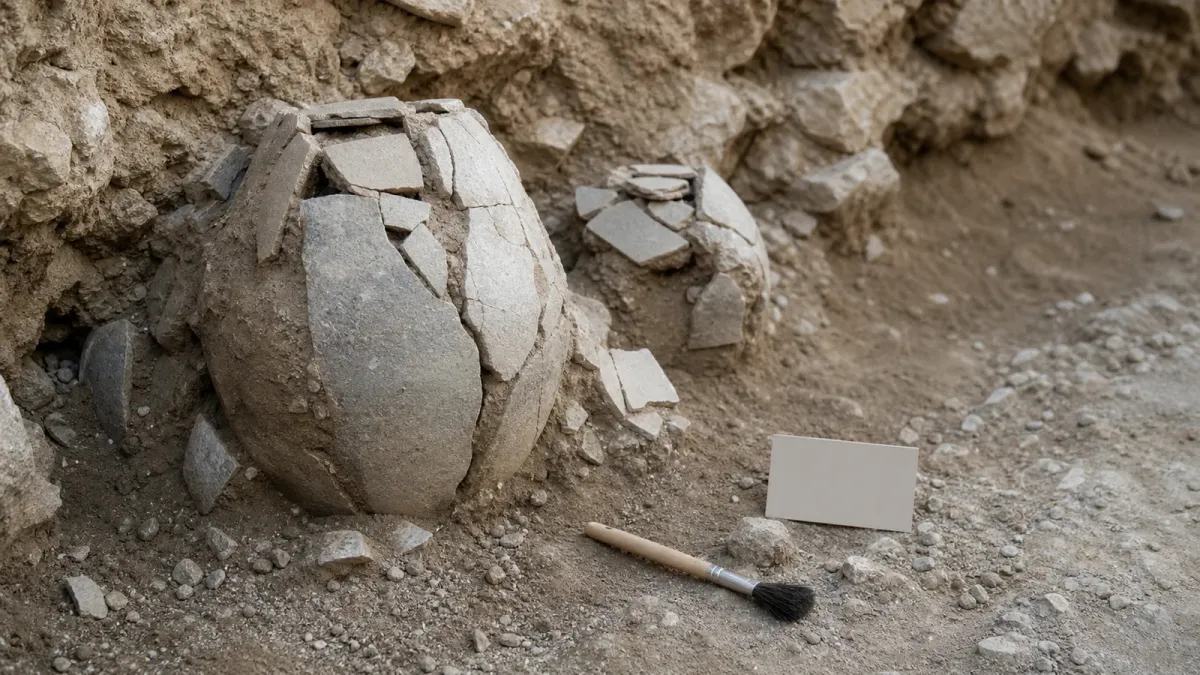
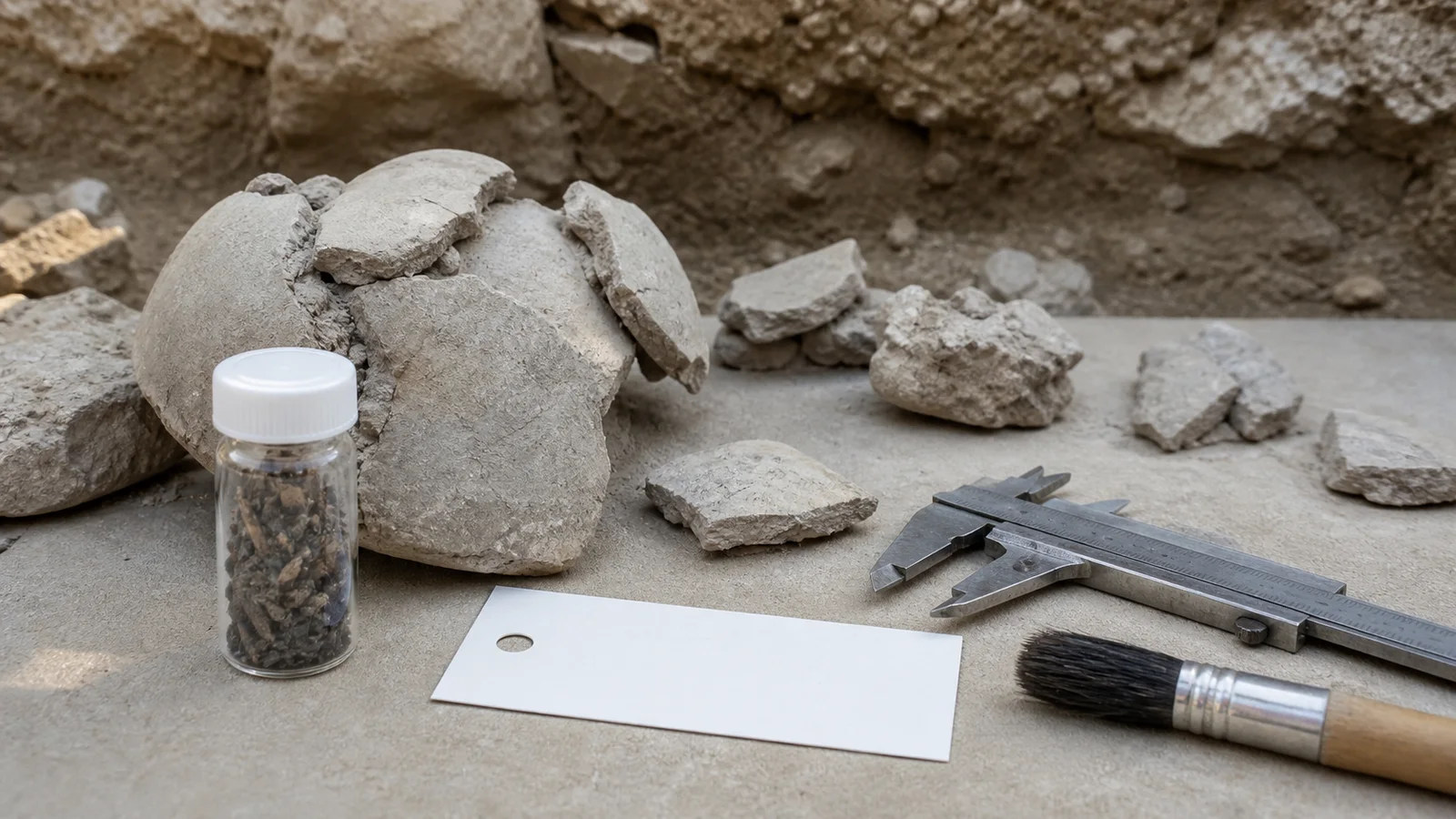
The most tangible find is not a golden chest. It is a set of large storage jars in Area D at Shiloh. ABR reported that the jars date to the Middle Bronze Age and contained charred remains of food staples. Fox News, citing the excavation team and archaeobotanical analysis, reported that two jars contained olives and another contained lentils, with one vessel holding hundreds of burned olive pits.
Those details are useful because they can be tested. The excavation team said radiocarbon testing is planned for the contents, which could help date the destruction layer associated with the jars. That is a normal archaeological pathway: find a material sample, document its context, test it, and adjust the interpretation when the lab results come back.
The second claim is more interpretive. ABR says it found the southern wall of a monumental structure whose proportions can be compared with biblical descriptions of the tabernacle. That comparison may be worth studying, but it is not proof by itself. Archaeological interpretation usually gets stronger when multiple independent lines of evidence point in the same direction: stratigraphy, pottery, radiocarbon dates, architecture, inscriptions, and peer-reviewed analysis.
Why the CIA story keeps resurfacing
Another reason Ark searches spike is a declassified CIA-era document about "remote viewing," a Cold War program that tested whether people could describe distant targets without being physically present. LiveNOW from FOX reported in 2025 that a circulating unclassified document described a 1988 session involving the Ark as a training target.
That document is not archaeological evidence. It is evidence that a U.S. intelligence-linked program recorded a remote-viewing session. The difference is important. A document can be real while the claim inside it remains unproved. For the Ark question, the missing step is physical verification: a documented object, a findspot, chain of custody, materials analysis, and review by qualified specialists.
This is why the viral version of the story often outruns the evidence. A search trend rewards the most dramatic phrasing. Archaeology moves in the opposite direction, through slow documentation and narrow claims.
What would count as stronger evidence
A stronger Ark claim would need more than a resemblance, tradition, or intelligence file. Readers should look for a public excavation record, exact location data when it can be disclosed safely, photographs and measurements of the object or feature, lab results, inscriptions or materials that match the claim, and independent review by archaeologists who are not part of the promoting organization.
Peer review is not perfect, and major discoveries can be announced before formal publication. But if a claim is as large as "the Ark was found," the evidence burden is high. A careful headline should say what was found first, then explain the interpretation. If the headline starts with the Ark and the article eventually describes jars, walls, or a ritual deposit, readers should notice that shift.
Bottom line
The Shiloh finds are a legitimate current archaeology story, and they help explain why the Ark of the Covenant is trending again in July 2026. But the safest reading is also the clearest one: archaeologists reported material finds at a site long associated with biblical Shiloh. They did not publicly produce the Ark.
For now, the useful question is not "Has the Ark been found?" It is "What exactly was found, who reported it, and what testable evidence supports the interpretation?" That question keeps the wonder in the story without letting the evidence get replaced by the headline.


