
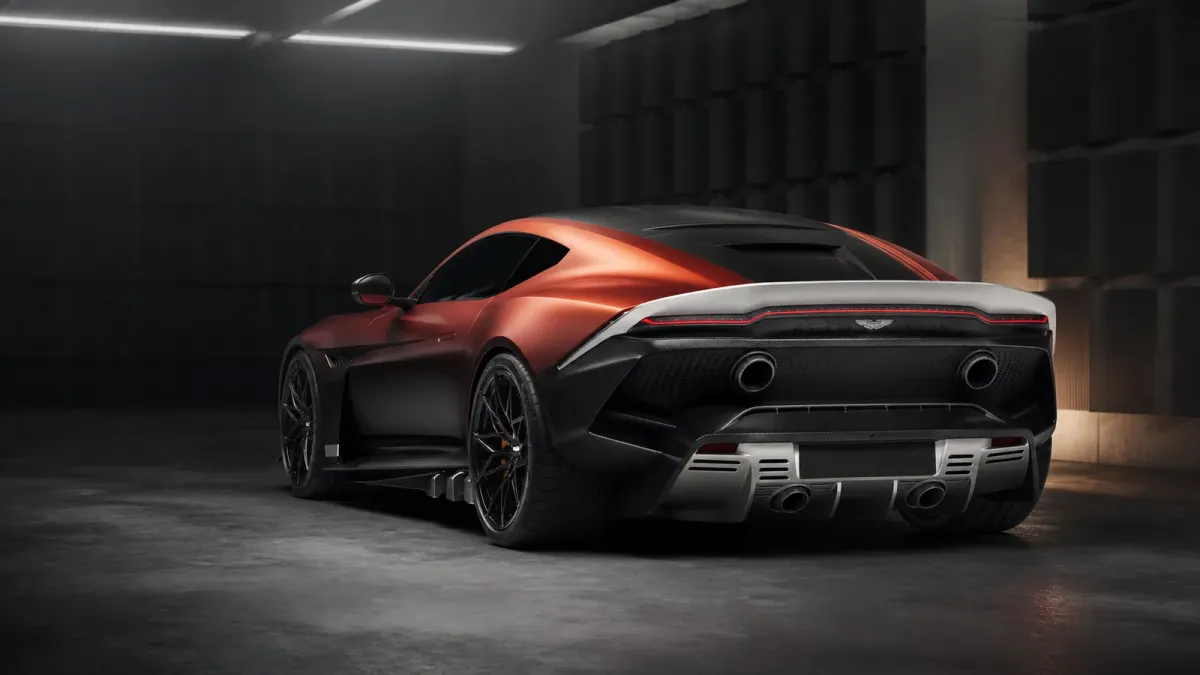
Aston Martin has unveiled the Valen, a front-engine V12 special limited to 150 cars worldwide. The company rates its 5.2-liter twin-turbo engine at 850 metric horsepower, equal to about 838 mechanical horsepower, and says the car can reach 60 mph in 3.0 seconds before an electronically limited 214-mph top speed.
The headline numbers are only part of the pitch. Valen is Aston Martin's attempt to make a modern supercar feel distinctive at ordinary road speeds, using less sound insulation, a titanium exhaust and a lighter structure to create more sensation before the speedometer reaches unusable territory.
MotorTrend reports that each car will start at $2 million, with availability expected in the second quarter of 2027. That timing still depends on production and homologation staying on schedule. Aston Martin has not published an exact curb weight, so the company's weight-saving claims are more useful than any unsupported final number.
Why this V12 is different
Valen starts with the front-engine, rear-wheel-drive architecture and 5.2-liter V12 used by the Vanquish, but the Q by Aston Martin and Special Vehicle Operations teams have reworked the package. Output rises to 1,000 newton-meters of torque, while carbon fiber, titanium, aluminum and standard magnesium wheels reduce mass by as much as 110 kilograms, or about 243 pounds, compared with Aston Martin's core V12 platform.
An optional lightweight pack removes a further 17 kilograms through machined-aluminum suspension parts and titanium hardware. Carbon-ceramic brakes, semi-active dampers, a solid-mounted rear subframe and revised steering and transmission calibrations are intended to make the large front-engine car respond more like a smaller one. Those are manufacturer claims until independent testing begins.
The experience is the product
The most revealing feature may be the exhaust rather than the acceleration. Four stacked outlets connect to a titanium system designed to produce more sound across the rev range, not only near the redline. MotorTrend reports that Aston Martin considers it 50% louder than the Vanquish throughout the range, while Car and Driver confirms the unusual quad-exhaust layout and the Valen's more aggressive bodywork.
The design follows the same idea. A full carbon-fiber body, thin lighting, a large front splitter, no conventional rear window and a broad rear aerodynamic treatment separate Valen from the smoother Vanquish. Buyers will use a digital rear-view display instead of seeing through the tailgate, and luggage space is limited to six cubic feet.
What the 150-car limit means
Valen is not a technology preview aimed at mass production. It is a scarce, high-margin statement about what a combustion-engine flagship can still offer when electric performance has made extreme acceleration less unusual. Aston Martin is betting that sound, materials, mechanical feedback and visible rarity can command more attention than another horsepower record alone.
The next proof points are practical: final production specifications, independent weight and acceleration tests, and whether Q2 2027 deliveries hold. Until then, Valen's clearest achievement is its focus. It uses familiar V12 hardware to sell an experience built around noise, response and exclusivity—and there will be only 150 chances to buy it.


