
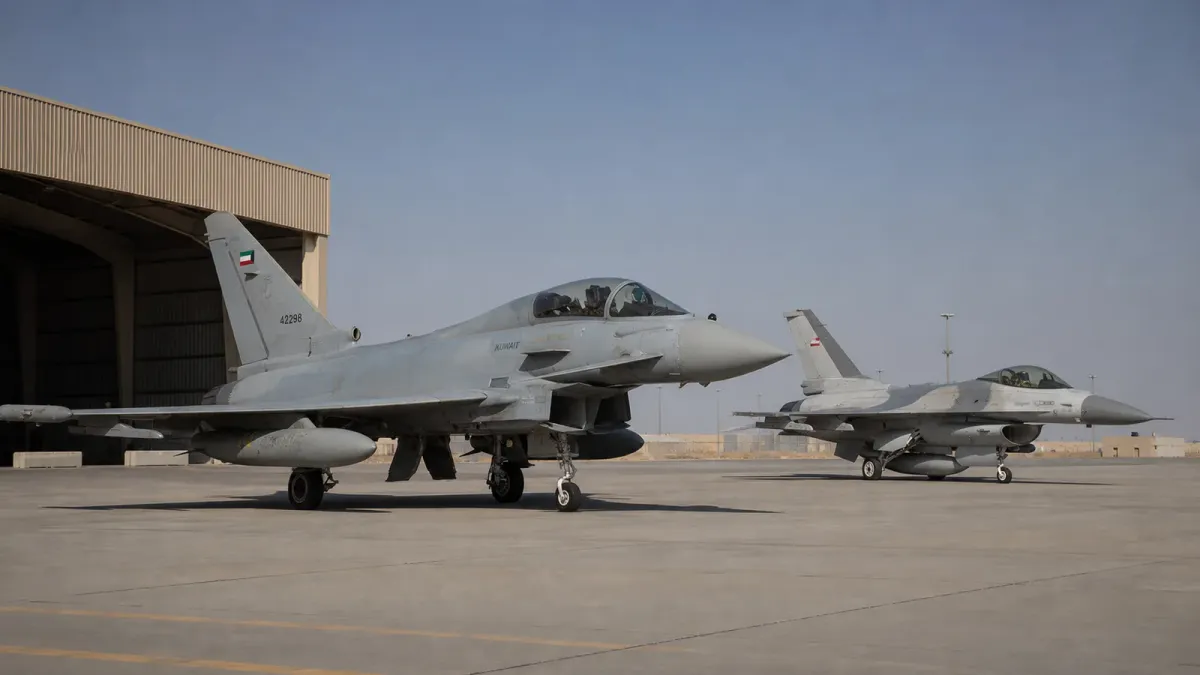
Bahrain and Kuwait secretly sent warplanes to strike military sites inside Iran earlier in July, according to a Wall Street Journal report published Friday, July 24. If confirmed, the missions would be the first direct attacks by either Gulf state on Iranian territory and a sharp expansion of a war that has repeatedly spilled across their borders.
The Journal attributed the account to people familiar with the matter. It reported that the jets targeted drone- and missile-storage depots and other military sites. The United Arab Emirates, which the newspaper says struck Iran earlier in the war, provided target intelligence and defensive air cover for the Bahraini and Kuwaiti missions.
Bahrain and Kuwait have not publicly confirmed the operations. The report did not identify the exact dates, all the targets, the number or models of aircraft involved, the weapons used, or whether the strikes caused casualties. Those gaps matter: the missions remain a sourced account of secret activity, not an officially acknowledged operation.
What changed
Until this report, Bahrain and Kuwait had publicly presented their military activity mainly as defense against Iranian missiles and drones. Kuwait’s government invoked its right to self-defense under Article 51 of the United Nations Charter after an Iranian attack on February 28, saying its air defenses had repelled the assault. Bahrain’s military said on July 13 that it had intercepted another wave of Iranian aerial attacks and kept its forces at their highest defensive readiness.
The reported strikes suggest that posture crossed from interception into retaliation. They also point to emerging coordination among three Gulf air forces: Bahrain and Kuwait conducting the attacks, and the UAE contributing intelligence and protective cover. That is a more consequential form of cooperation than sharing warnings or intercepting incoming weapons.
Why it matters
The change raises the risk that Iran will treat Gulf Arab governments as direct combatants rather than countries hosting U.S. forces. Tehran has already targeted Bahrain and Kuwait repeatedly. On Friday, Iran’s Revolutionary Guard claimed new attacks on U.S. sites in both countries, while Bahrain said it intercepted Iranian aerial threats, the Associated Press reported.
It also complicates diplomacy. Bahrain, Kuwait and the UAE have strong security ties with Washington, but all three face direct exposure to Iranian missiles and drones, economic disruption and the possibility that retaliation could hit civilian infrastructure. Secret operations may give their governments room to act without publicly embracing a broader war, but secrecy can also make the next exchange harder to predict or contain.
What we do not know yet
No independent public evidence has yet established which aircraft from the Kuwait Air Force and Royal Bahraini Air Force participated in the missions, whether they flew from home bases or another location, or which specific depots were damaged. Iran has not publicly acknowledged these reported Gulf strikes or announced a response tied specifically to them.
What happens next
The key signals will be any official statement from Bahrain, Kuwait, the UAE or Iran; satellite imagery or verified footage showing damage at the reported military sites; and whether Tehran changes the targets or intensity of its attacks. Until then, the clearest confirmed development is that a major U.S. newspaper has reported an unprecedented Gulf retaliation while the governments involved remain silent.


