
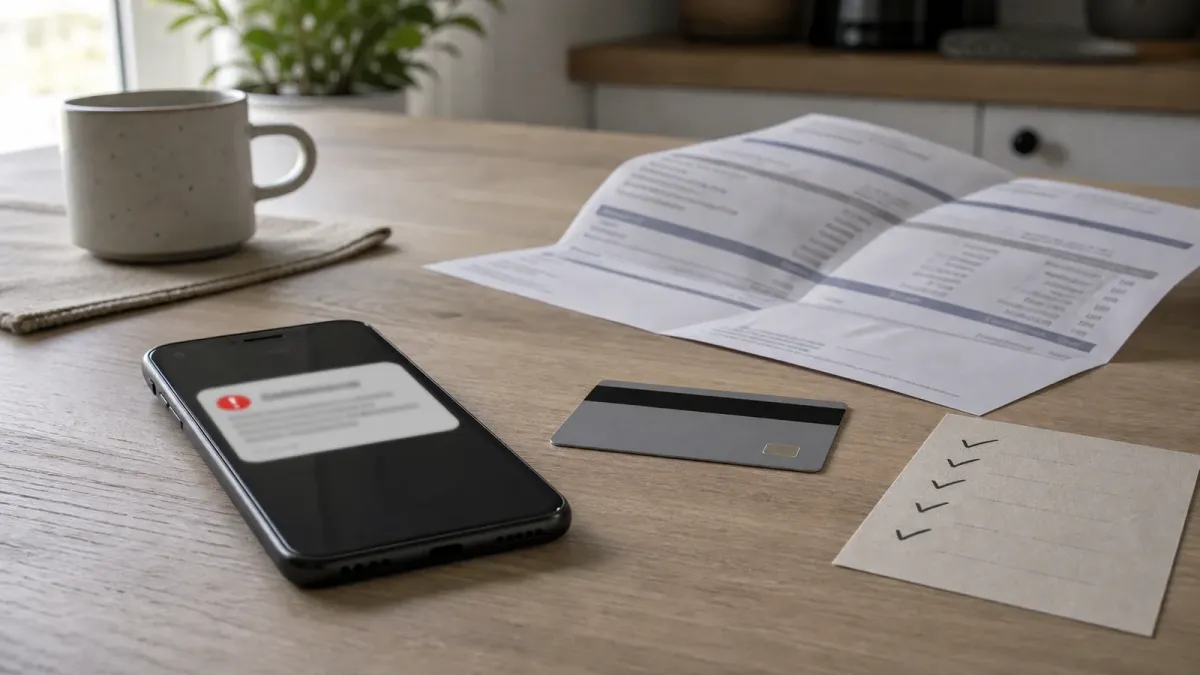
If a text or call says your bank account is in danger, the safest first move is not to reply, tap, or transfer money. Stop the conversation and call your bank back using the customer-service number printed on your card, listed on your statement, or shown inside the bank's official app.
That is the practical takeaway from a Federal Communications Commission consumer alert released July 21, 2026. The agency warned that bank impersonation scams often arrive as fake fraud alerts, urgent security calls, or messages claiming that money has to be moved to protect an account.
The point is not that every fraud alert is fake. Real banks do contact customers about suspicious activity. The danger is that scammers now imitate the format, timing, and pressure of those alerts, then try to keep the victim inside the scammer's channel long enough to steal credentials or money.
Do this first
Use a simple rule: if the contact was unexpected and asks you to act now, end that contact and start a new one yourself. Do not call a number sent in the text. Do not press a keypad option on the incoming call. Do not use a search result ad for the bank's phone number. Use a number from a source you already had before the alert appeared.
For most people, the cleanest options are the number on the back of the debit or credit card, the number on a monthly statement, or the secure-message feature inside the bank's official mobile app. If you are already logged into the real app, look for recent transactions, card controls, and fraud notices there rather than through a link in the message.
If the message says you must move money to a safer account, buy cryptocurrency, convert funds to gold, or share a password, PIN, Social Security number, one-time code, or account number, treat that as a stop sign. The FCC's alert says banks will not call or text asking you to move money to protect it.
Check these details
Start with the channel. A legitimate alert may ask whether you recognize a transaction, but it should not require you to reveal full credentials inside an unexpected text or call. A scam message often adds urgency: your account will be frozen, your card was used, a wire is pending, or a government agency is supposedly involved.
Next, check the requested action. The Federal Trade Commission published related scam advice on July 22, 2026, noting that unexpected demands for payment by bank transfer, wire transfer, cryptocurrency, payment app, or gift card are a major red flag. In bank-imposter scams, the payment request may be disguised as account protection rather than a bill.
Then check the destination. If someone tells you to transfer money to yourself, to a new account, to a law-enforcement wallet, or to a temporary holding place, you are probably not protecting your savings. You are following instructions written to make a recovery harder.
Common mistakes
The first mistake is trusting caller ID. A displayed bank name or local number is not proof that the call is real. Spoofed numbers can make an incoming call look familiar, and a scammer can time the call right after a fake text so the whole exchange feels connected.
The second mistake is answering a security question during an unexpected contact. A scammer does not need every detail. A one-time passcode, password reset answer, card number, or partial Social Security number may be enough to get deeper into an account.
The third mistake is staying on the phone while checking. If the caller tells you not to hang up, not to call your branch, or not to tell anyone because an investigation is underway, that is pressure, not security. Real verification works best when you fully disconnect from the suspicious contact.
What to do if you already responded
Move quickly, but keep the order clean. Contact the bank through a verified number and say you may have given information to an imposter. Ask about freezing cards, changing online-banking credentials, reversing pending transfers, closing compromised accounts, and adding extra authentication.
If money moved through a wire, payment app, cryptocurrency platform, gift card, or bank transfer, contact the company used to send it and report fraud immediately. The FTC advises acting without delay because some payments can be stopped or reversed only within a short window, and others may be difficult to recover once completed.
Also report the scam. The FCC accepts consumer complaints about unwanted calls and texts, and the FTC takes fraud reports at ReportFraud.ftc.gov. A report may not recover the money by itself, but it helps agencies and companies trace patterns, warn other consumers, and pursue repeat operators.
Bottom line
A real bank alert can wait long enough for you to verify it through a trusted channel. A scam depends on keeping you rushed, isolated, and inside the scammer's script. When the message is urgent, the safer habit is simple: stop, find your own number, and call the bank yourself.


