
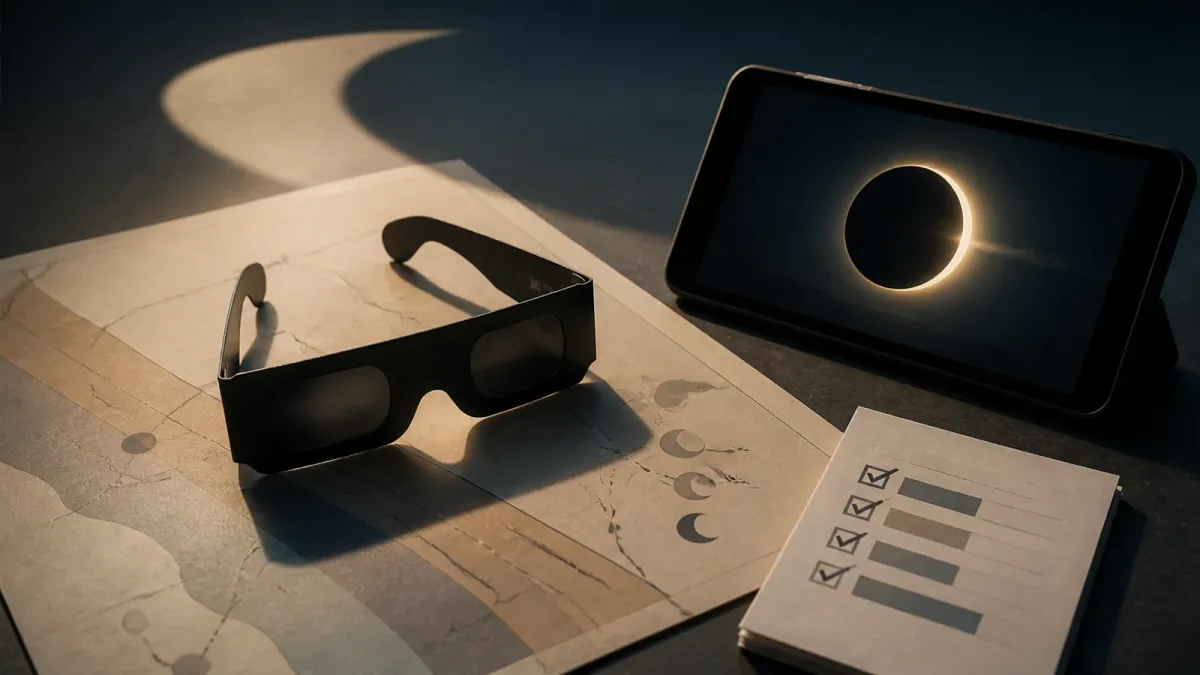
The August 12, 2026 solar eclipse is not a repeat of the 2024 coast-to-coast U.S. spectacle. NASA says the path of totality will cross Greenland, Iceland, northern Russia, the Atlantic Ocean, Spain and a small corner of Portugal, while many other places in the Northern Hemisphere will see a partial eclipse.
For U.S. readers, the practical point is simple: do not assume totality is coming to your backyard, and do not treat a partial eclipse as safe to watch without protection. NASA says parts of the northern United States, from Alaska to North Carolina, are among the places that may see a partial eclipse on August 12.
The useful move this week is to check three things before the event: whether your location is in the partial-eclipse zone, whether you will watch NASA's live coverage instead of traveling, and whether your viewing glasses or solar filter are truly safe for direct solar viewing.
The short answer
If you want totality, the main public viewing story is outside the lower 48 United States. NASA's eclipse page lists Greenland, Iceland, northern Russia, the Atlantic Ocean, Spain and a small corner of Portugal on the total-eclipse path. The Associated Press reports that mainland Spain is preparing for its first total solar eclipse in more than a century.
If you are staying in the United States, treat this as a partial-eclipse and NASA-coverage event unless a local astronomy group or official eclipse map confirms otherwise for your exact location. A partial eclipse can still be memorable, but the Sun is never fully covered for you, so eclipse glasses or a proper solar viewer remain necessary whenever you look directly at it.
How NASA plans to cover it
NASA is treating the eclipse as both a public viewing event and a science opportunity. Its NASA+ schedule lists live coverage for August 12 at 1:15 p.m., with telescope views, expert commentary and footage from a WB-57 high-altitude research aircraft chasing the Moon's shadow.
NASA also describes several science projects tied to the eclipse, including research flights and balloon observations. The goal is not just dramatic video. Scientists use eclipses to study the Sun's outer atmosphere and the way Earth's atmosphere changes when daylight drops suddenly.
That matters for readers because NASA's coverage can be the better option if travel is expensive, sold out or logistically risky. A livestream does not replace the experience of standing in the path of totality, but it does remove the two biggest failure points for many households: getting to the right place at the right time and protecting everyone's eyes correctly.
What to check before you watch
First, verify your location from an authoritative eclipse map or a local observatory, planetarium or astronomy club. Broad path descriptions are useful for orientation, but they are not precise enough to tell you what you will see from a specific address, park, school or workplace.
Second, separate totality from partial viewing. In the path of totality, viewers experience a short period when the Moon fully covers the Sun. Outside that path, even if the Sun looks mostly covered, it is still a partial eclipse. The safety rule is stricter for partial viewing because direct sunlight remains visible.
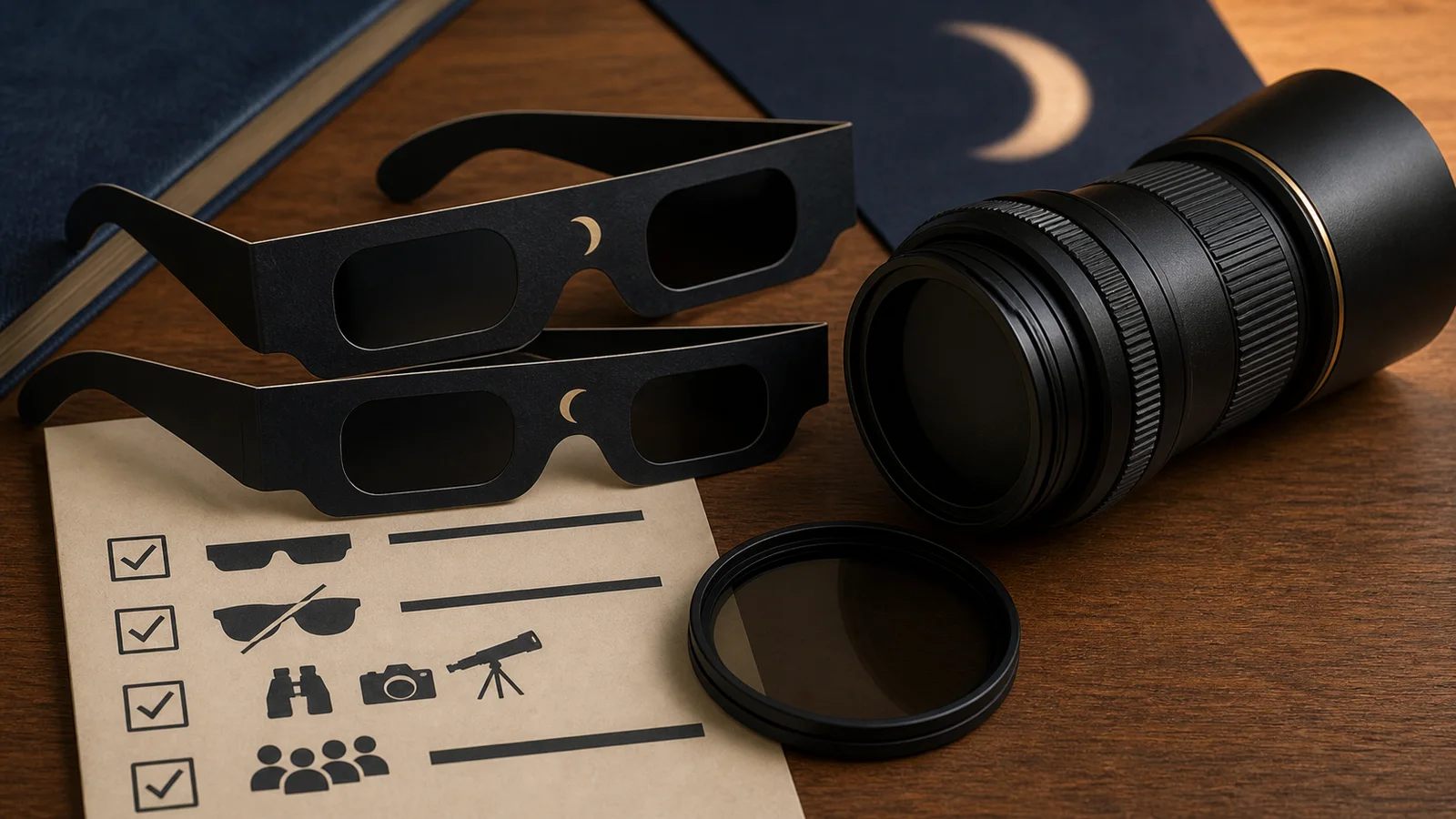
Third, check the eye protection before the day of the event. NASA and JPL point readers to proper solar viewing glasses or handheld solar viewers for direct viewing. Ordinary sunglasses are not enough, and cameras, binoculars or telescopes need proper solar filters on the front of the optics before they are pointed at the Sun.
Fourth, decide whether you are watching in person, through a livestream or both. If you are in a partial-eclipse area, the NASA+ feed can show the full path while you still step outside briefly with safe glasses to see what is happening where you live.
Why the safety details are not optional
The tempting mistake is to think a short glance does not count. Solar viewing injuries can happen quickly because the eye does not feel pain in the same way skin does, and the Sun can damage vision even when much of its disk is hidden.
The other mistake is assuming any dark lens or online listing is equivalent to a verified solar viewer. Before August 12, inspect glasses for damage, check that the product claims compliance with the ISO 12312-2 international safety standard, and buy from a source you trust. If glasses are scratched, torn or uncertain, do not use them.
For children, classrooms and group events, make one adult responsible for the safety plan instead of leaving each person to improvise. That means enough viewers for the group, a clear rule that glasses stay on during direct viewing, and a separate plan for cameras or telescopes so no one tries to look through magnified optics without the right filter.
What to watch next
In the days before August 12, watch for updated NASA programming details, local astronomy events and official maps from science institutions. Travelers heading to Spain, Iceland, Greenland or Portugal should also confirm transit, lodging and viewing-site rules through local authorities and venue organizers rather than relying on general eclipse summaries.
The bottom line: the August 12 eclipse is still worth planning for even if you are far from totality. Know what your location can see, use NASA coverage for the full view, and treat eye protection as the first decision, not the last-minute accessory.


