
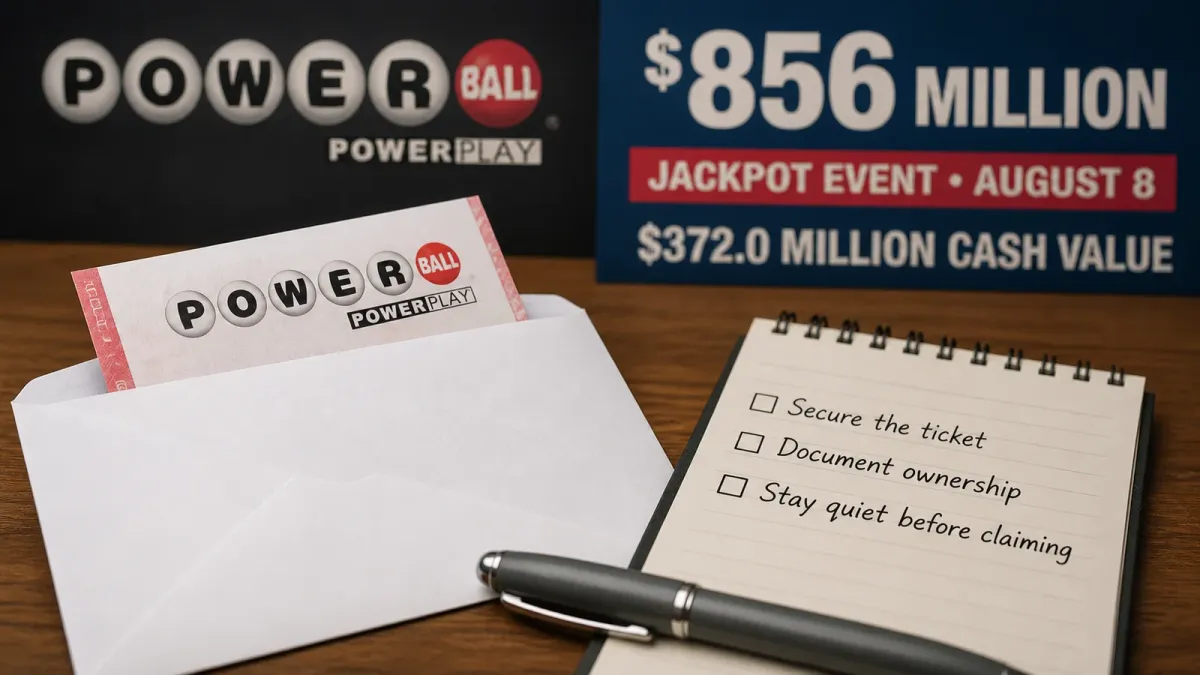
Powerball's next drawing is set for Saturday, August 8, 2026, with an estimated jackpot of $856 million and a $372.0 million cash value, according to the game's official site. That number is big enough to make office pools, family groups, and casual players ask the wrong first question.
The first question is not how to spend it. It is how to slow down long enough to protect the ticket, the tax record, the family conversation, and the claim decision before anyone rushes into public view.
The practical answer is simple: if you play, know the rules before the drawing, keep the ticket traceable, and decide who would be on your professional team before a claim deadline starts to feel urgent.
The short answer
A jackpot winner should verify the numbers with the official lottery, sign and secure the ticket, avoid public announcements, check the state claim rules, and speak with qualified tax, legal, and financial advisers before choosing between the annuity and lump sum.
That advice is not about expecting to win. The official odds remain extremely long, and lottery play should stay within a budget. It is about avoiding avoidable mistakes when a small paper ticket suddenly becomes a legal and tax document.
What changed now
The current Powerball run rolled again after no jackpot winner matched all six numbers in the Wednesday, August 5 drawing. Powerball listed the winning numbers as 14, 20, 59, 60, 61 and Powerball 25, with Power Play 2x. The site also listed one Match 5 winner in Ohio for $1 million.
The next drawing is scheduled for 10:59 p.m. Eastern on Saturday. Ticket sales cut off earlier, and the exact cutoff varies by jurisdiction. Powerball says a jackpot winner can choose either an annuity paid in 30 graduated payments over 29 years or a lump-sum payment, and both advertised options are before federal and jurisdictional taxes.
Do this before any claim
Secure the original ticket. If a ticket appears to match, do not hand it around, photograph it for social media, or leave it in a wallet. The American College of Trust and Estate Counsel's public guidance for lottery winners starts with verifying and securing the ticket, then planning the claim process before walking into a lottery office.
Document who owns it. A solo ticket is one thing. A family pool, workplace pool, or group text is another. If multiple people contributed to the ticket, write down the agreement, the names, and the payment trail before anyone tries to claim the prize. The tax and legal cleanup is easier when ownership is documented early.
Check anonymity rules where the ticket was bought. Winner privacy is mostly a state-by-state issue. Some places require disclosure; others allow a trust, legal entity, or limited confidentiality. The right move depends on the state, the claim deadline, and the winner's personal risk.
Build the advisory team before choosing a payout. A jackpot claim can involve income taxes, estate planning, asset protection, insurance, charitable giving, family loans, and security. A winner may need a tax professional, estate attorney, financial adviser, and, in some cases, a security or public-relations adviser. The team should explain tradeoffs, not pressure the winner into a quick product sale.
The tax surprise
The IRS says gambling winnings are fully taxable and must be reported, including lottery winnings. A payer generally issues Form W-2G for certain gambling winnings or winnings subject to federal income tax withholding.
For lotteries and similar winnings, IRS instructions say regular gambling withholding may apply at 24% when winnings minus the wager exceed $5,000. That withholding is not necessarily the final tax bill. A jackpot winner's total federal tax rate can be higher, and state or local taxes may also apply depending on where the ticket was bought and where the winner lives.
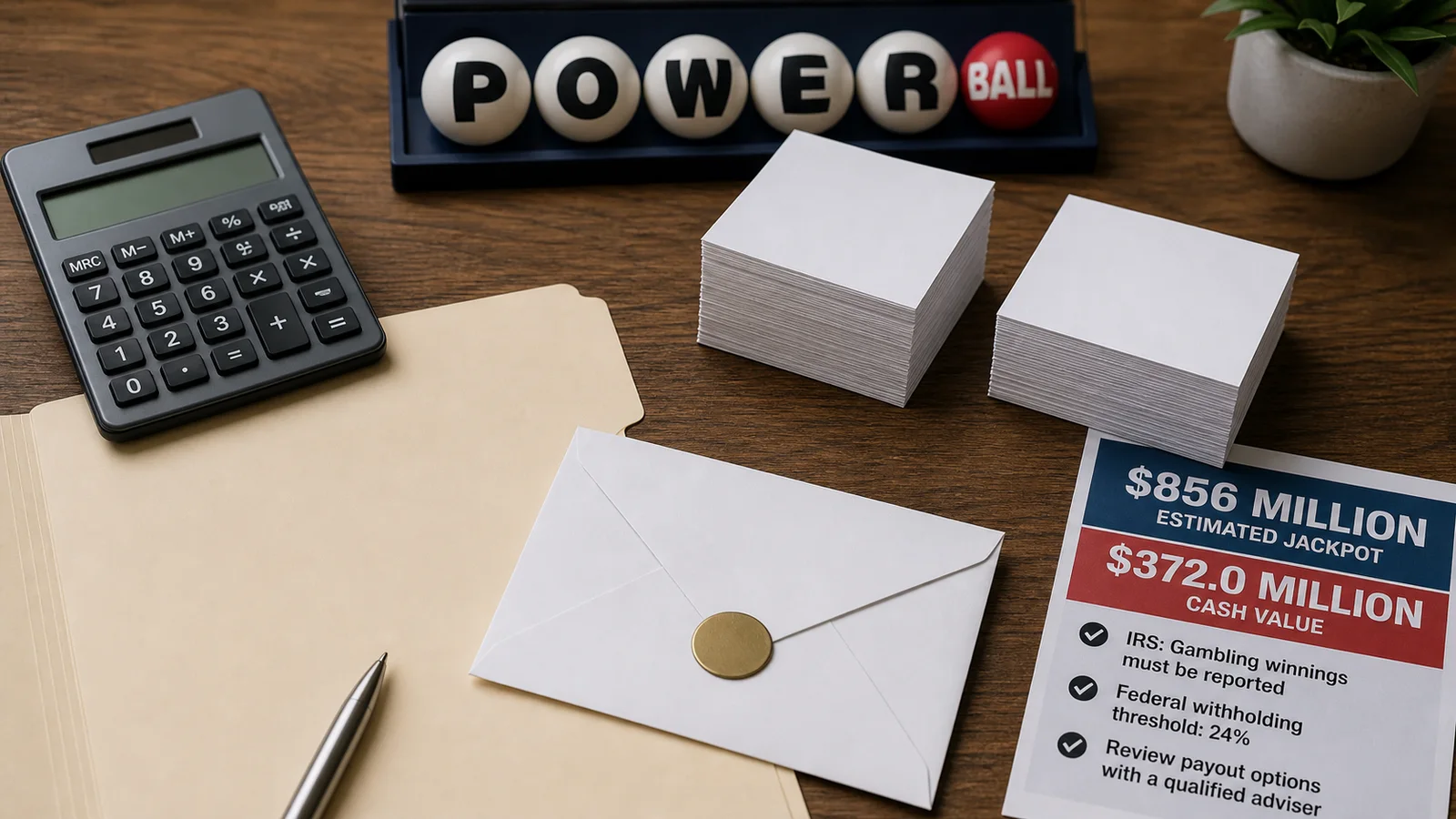
That is why the advertised $856 million annuity and $372.0 million cash value should be treated as pre-tax figures, not spendable balances. A winner choosing the lump sum would still need a tax plan for withholding, estimated taxes, state treatment, investment income, and gifts.
Annuity or lump sum is not just a math problem
The lump sum gives a winner immediate control over a much smaller present-value payment. That can be useful for someone with a disciplined plan, strong advisers, and clear goals. It also creates a large one-time tax and investment decision.
The annuity spreads payments over decades. That can reduce the risk of spending too much too quickly, but it also ties the winner to a long payment structure and still requires tax planning every year. The better choice depends on age, health, family obligations, risk tolerance, state rules, debt, and whether the winner can manage sudden wealth without turning every relationship into a financial negotiation.
What not to do
Do not quit a job, promise gifts, pay debts for relatives, or make public donations before the claim structure is settled. Do not assume a friend with investing experience can replace a licensed adviser. Do not forget that a signed ticket, a group agreement, a trust document, and a tax return can all become evidence if there is a dispute.
Also avoid turning the jackpot into a reason to overspend on tickets. A plan is useful because the prize is large, not because winning is likely. A small entertainment budget should stay small even when the jackpot gets louder.
Bottom line
The best Powerball plan is boring on purpose: verify the ticket, secure it, stay quiet, document ownership, learn the state claim rules, and get tax and legal help before choosing a payout. If the ticket loses, that plan costs almost nothing. If it wins, it may be the most valuable decision made before the prize is claimed.


