
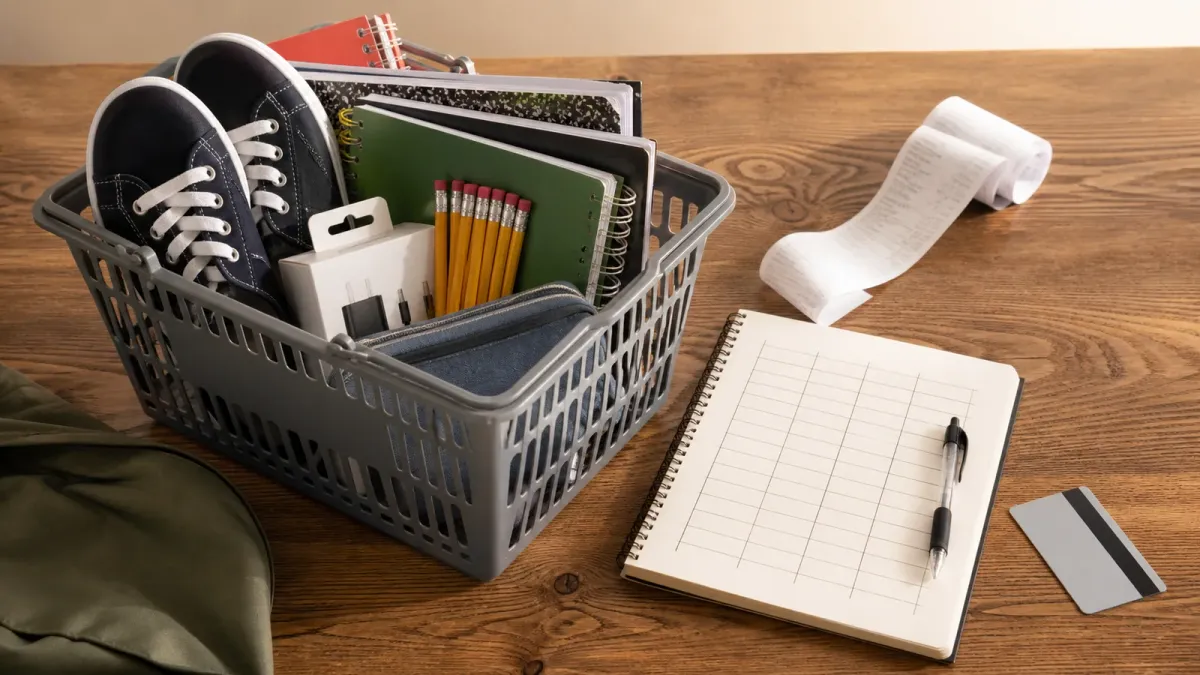
Back-to-school shopping looks like a seasonal errand, but in 2026 it is closer to a short, expensive budgeting test. Families are buying supplies, shoes, clothes, electronics and activity gear while many states are running sales-tax holidays or reduced-tax windows.
The useful move is not to chase every sale. It is to decide what must be bought now, what can wait until teachers publish exact lists, and what should not go on a credit card or buy-now-pay-later plan just because the checkout screen makes the payment look smaller.
The National Retail Federation and Prosper Insights & Analytics said families with children in elementary through high school plan to spend an average of $874.68 on back-to-school items this year. ABC News and Ipsos found a similar pressure point: parents expected to spend an average of $885 per child, and 68% said normal back-to-school items are more expensive than last year.
The Short Answer
Use a tax-free weekend only after you have a written list and a per-child ceiling. The best savings usually come from combining the tax break with items you already needed, not from using the deadline as a reason to buy electronics, shoes or activity gear before you know whether they fit the school’s actual requirements.
That matters because many shoppers are still unfinished. NRF said that, as of early July, 86% of back-to-school and college shoppers still had at least half of their purchases left to complete. The most common reasons were waiting for better deals and not yet knowing what was needed.
Do This First
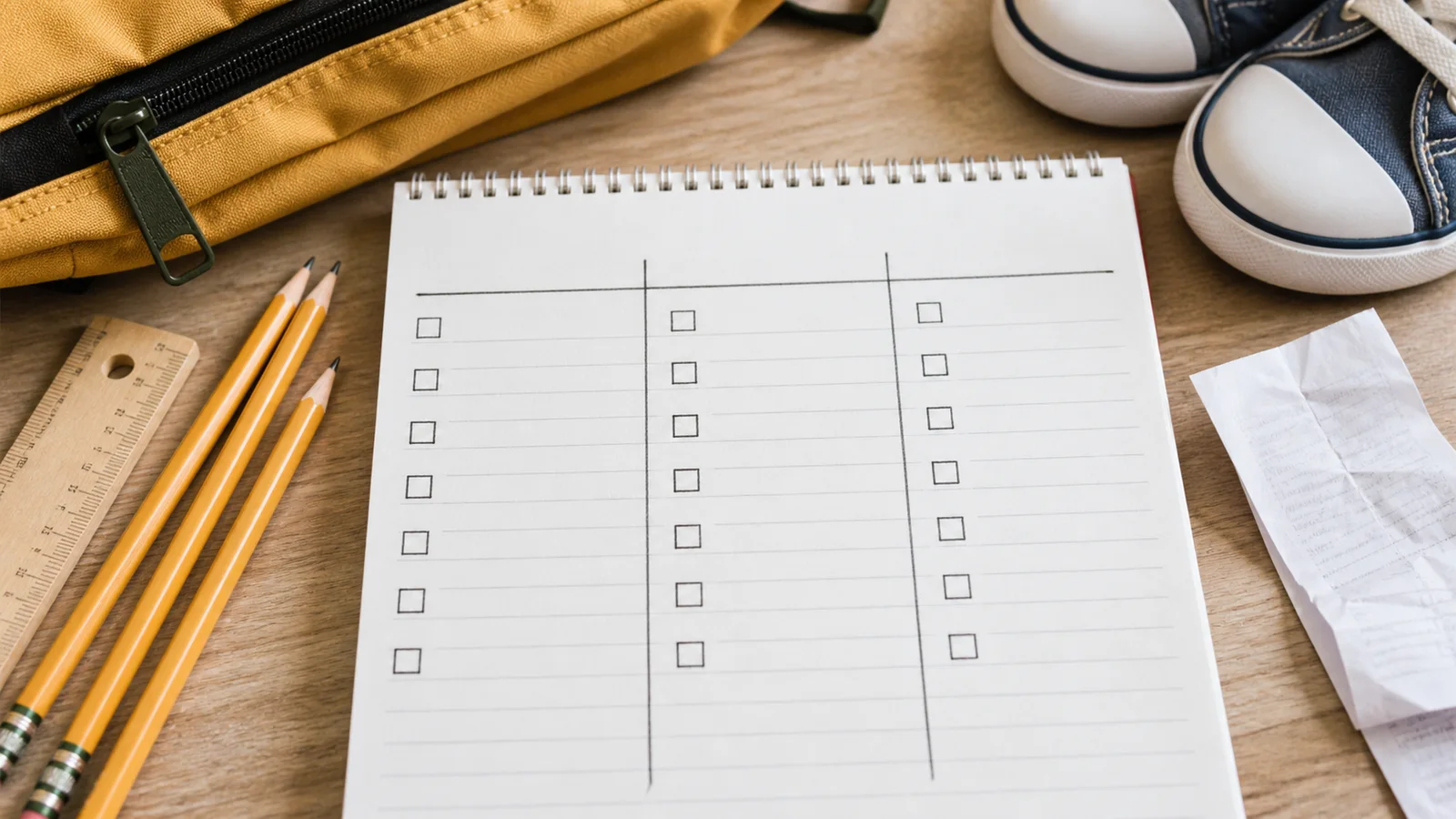
Separate required items from social-pressure items. Start with school-issued lists, last year’s leftover supplies, uniform rules, device requirements and activity registration deadlines. Put requested brands, duplicate outfits and optional accessories in a second column. That makes the tradeoff visible before a child, store display or app turns the whole cart into an emergency.
Give every child a ceiling. A family spending target works only if it survives the aisle. Break it into categories such as supplies, clothing, shoes, technology and activities. ABC/Ipsos found parents expected to spend $337 on after-school activities, $275 on clothing and shoes, $118 on supplies, $102 on technology and $52 on books. Your categories may be different, but using categories keeps one expensive purchase from quietly eating the entire budget.
Check the tax-holiday rules before checkout. The Federation of Tax Administrators lists state sales-tax holidays for 2026, and many back-to-school windows fall in early August. Several states, including Texas, Ohio, Oklahoma, Missouri, South Carolina and Virginia, have August 7-9 holidays. Florida’s back-to-school holiday runs July 20 through August 20, and Illinois is running a reduced state sales-tax period from August 7 through August 16.
Do the math on the real discount. A tax holiday can be useful, but the savings are limited by your state and local tax rate and by item caps. If a $100 backpack qualifies in a place with an 8% tax rate, the tax savings are about $8. If the same deadline pushes you to buy a $160 backpack you would not otherwise choose, the sale did not save money.
Check These Details
Price caps are the first trap. Some states exempt clothing or footwear only below a set item price. Some treat computers, calculators, learning aids and school supplies differently. Florida, for example, lists separate caps for items such as clothing, school supplies and personal computers during its 2026 back-to-school holiday. Illinois reduces the state tax rate on qualifying items rather than eliminating all tax, and local taxes may still apply.
Online orders can also be tricky. State rules may depend on when the sale occurs, where the order ships, whether shipping is included in the item price, and whether the seller actually collects the exemption. Before assuming a cart qualifies, read the state revenue page for your state rather than relying on a social post or a store banner.
Returns matter too. If you buy the wrong size, duplicate an item or purchase before the teacher’s list is final, your state’s refund and replacement rules may determine whether the tax benefit follows the exchange. That is one reason to avoid buying uncertain items only because a tax-free clock is running.
Common Mistakes
The biggest mistake is treating monthly payments as a discount. NerdWallet’s 2026 back-to-school survey, conducted by The Harris Poll, found that 24% of back-to-school shoppers said they would likely use buy now, pay later services, and 19% said they would likely go into credit-card debt for back-to-school shopping.
Debt may be unavoidable for some households, but it should be a deliberate last resort, not a checkout reflex. If a purchase cannot be paid off before interest, late fees or overlapping installment plans begin to pile up, the cheaper cart can become the more expensive one.
A second mistake is buying too early without an exchange plan. Sales are helpful only if the item is actually used. Keep receipts, photograph paper receipts, check return windows, and avoid final-sale clothing or technology unless you are certain about size, compatibility and school requirements.
A third mistake is leaving activity costs out of the school budget. Shoes, uniforms, sports fees, music supplies, club dues, transportation and fundraisers can arrive after the first shopping trip. A smaller first cart with room for later activity costs can be safer than a perfect-looking supply haul that leaves no margin.
When To Get Help
If the list is already larger than the budget, ask the school or district whether supply drives, fee waivers, used-uniform closets, activity scholarships or payment plans are available. Many families also compare community donation events, local nonprofits and parent-teacher groups before turning to debt for supplies.
If you do use credit, keep the goal narrow: buy the required item, know the payoff date, and avoid opening multiple installment plans across different stores. For bigger electronics, compare the school’s minimum requirement with refurbished, district-supported or library-lending options before buying the most expensive model on a sale page.
Bottom Line
A tax-free weekend is a timing tool, not a budget. The families that benefit most are the ones that arrive with a list, know the state rules, leave uncertain purchases for later and protect cash for the costs that show up after the first day of school.


