
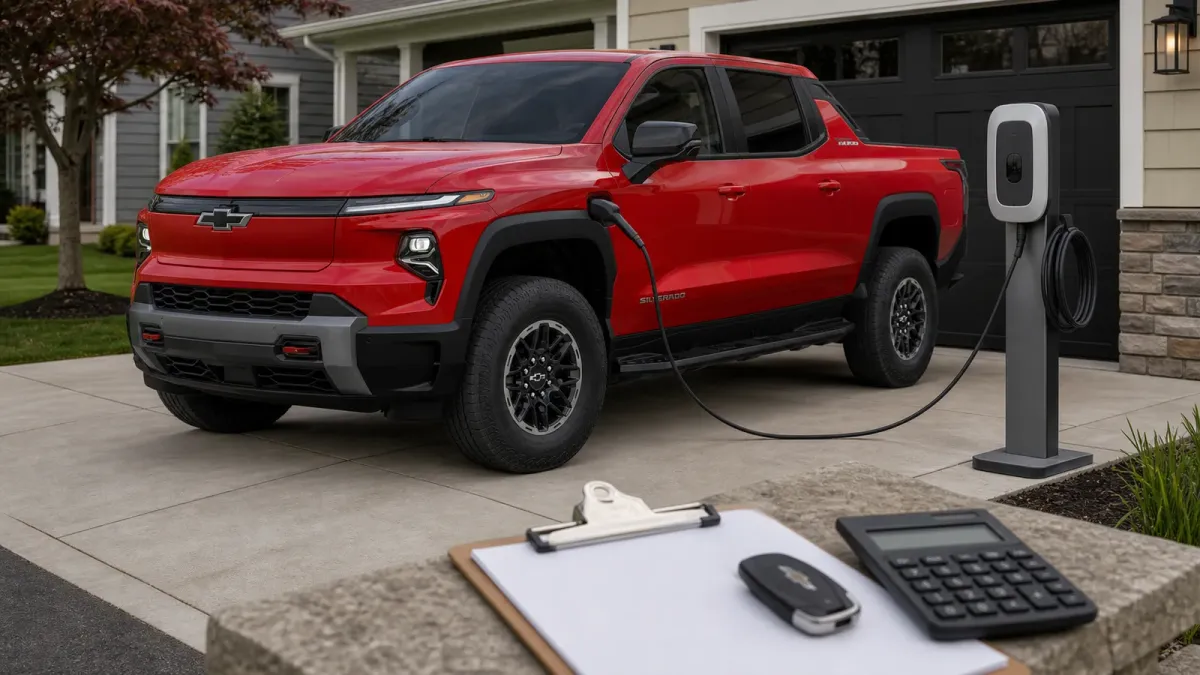
The Chevrolet Silverado EV is drawing fresh search interest because it promises what many electric-truck shoppers have been waiting for: long range, serious towing numbers and enough utility to replace a gas pickup rather than sit beside one. The buyer risk is that those headline specs do not answer the money question.
Before you treat the Silverado EV as a simple fuel-savings play, price it like a full-size truck, a home electrical project and a rapidly depreciating technology purchase at the same time. The right answer depends less on whether electric trucks are good and more on whether this one fits your driving, charging and resale math.
The short version: check the final transaction price, assume no new federal clean-vehicle credit for a 2026 purchase unless a qualified program clearly applies, confirm your home-charging cost, test the range against towing and winter use, quote insurance before you buy, and compare five-year ownership cost against a gas or hybrid truck you would actually choose.
1. Start with the real price, not the lowest trim number
Chevrolet lists the 2026 Silverado EV from $55,895, with higher trims starting far above that. The LT starts at $69,100 and Trail Boss at $70,000, while Chevrolet shows some configurations as displayed near the mid-$80,000 range. Those numbers matter because electric-truck savings can vanish quickly when a buyer moves from a base work-oriented model into a higher-trim lifestyle truck.
Ask for the full out-the-door quote with destination, dealer fees, taxes, title, registration, accessories and financing terms. Then compare that number with the truck you would buy if the Silverado EV were not available. A $10,000 or $20,000 price gap needs a lot of fuel, maintenance or utility value to pay back.
2. Do not build your budget around an expired federal credit
The federal clean-vehicle credit changed before the 2026 model year. The U.S. Department of Energy's Alternative Fuels Data Center says the clean vehicle credit is listed as expired on September 30, 2025, and points buyers to IRS information for current eligibility details. IRS used clean vehicle guidance also ties the used-EV credit language to vehicles acquired on or before September 30, 2025.
That does not mean every incentive is gone. State, local and utility programs can still matter, and dealer discounts can look like incentives even when they are not tax credits. But shoppers should make the salesperson identify the exact program, eligibility rule, dollar amount and expiration date in writing. If the savings depends on a tax filing position, verify it with the IRS or a qualified tax professional before counting it as cash.
3. Price home charging before you price fuel savings
Chevrolet says the Silverado EV can use home charging, public charging and available 350 kW DC fast charging, with a GM-estimated 120 miles of range in 10 minutes under the right conditions. The convenience case is strongest when the truck can charge where it sleeps.
That makes your electrical panel, parking setup and utility rate part of the purchase. Get an electrician's estimate before you buy if you need a Level 2 charger, a panel upgrade, a long wiring run or permits. Then check whether your utility offers time-of-use rates or EV charging rebates. Cheap overnight charging can strengthen the case; expensive public fast charging can weaken it.
4. Treat range as a use-case number
Chevrolet promotes up to 478 miles of GM-estimated range on the 2026 Silverado EV, and GM says a Max Range Work Truck reached 1,059.2 miles in a special engineering test on public roads. That test was impressive, but GM also said the team used efficiency-focused driving habits and adjustments, including low average speeds, no passengers for most of the test and climate control off.
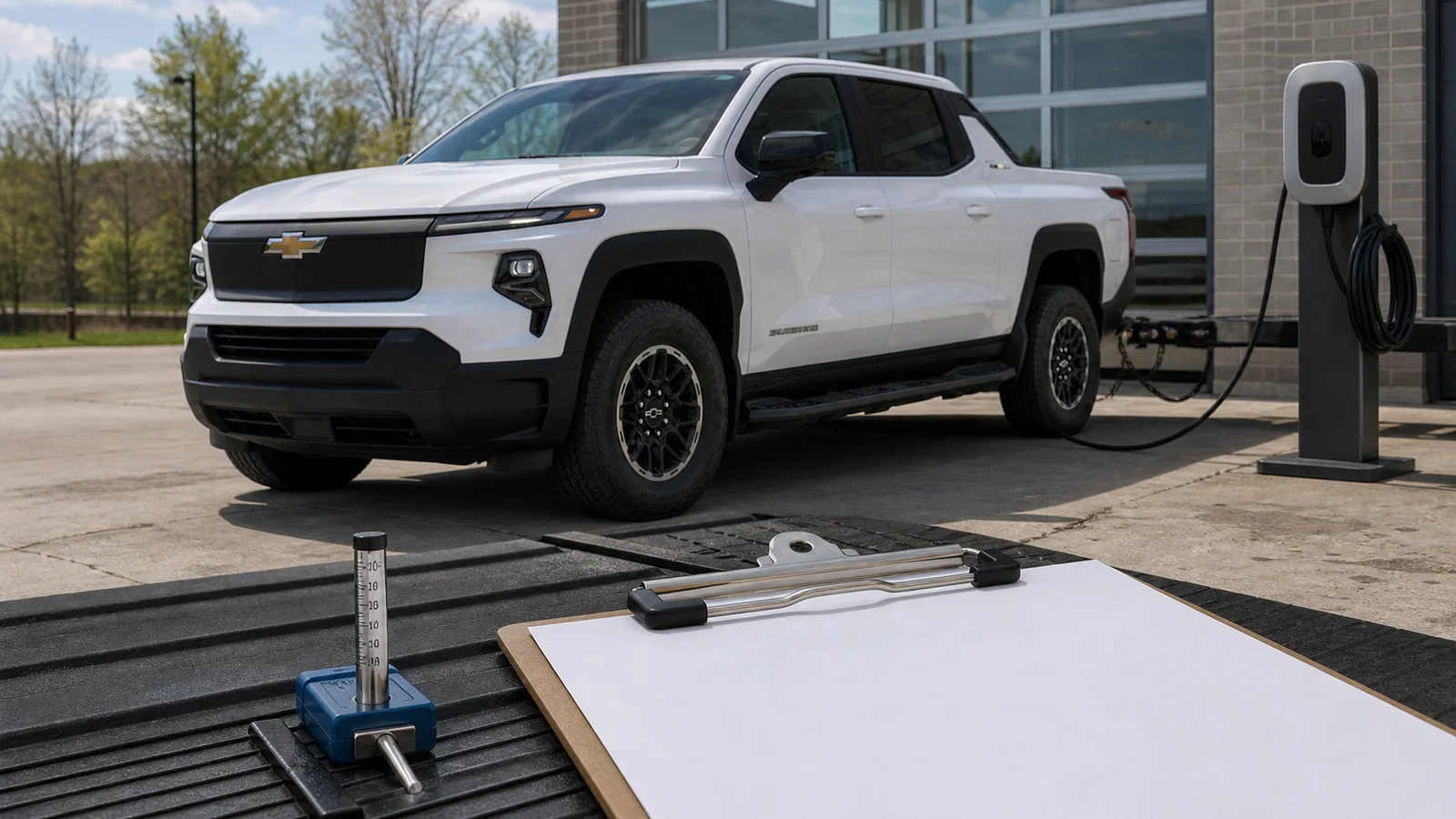
For buyers, the useful question is not the best possible number. It is the number you can live with while carrying tools, towing, using climate control, driving at highway speeds and leaving enough reserve to avoid charging stress. If you tow long distances, ask for range estimates with a trailer similar to yours and map charging stops along routes you actually drive.
5. Quote insurance, tires and repairs early
Electric pickups can be expensive to insure because they combine high purchase prices, advanced driver-assistance hardware, heavy batteries and specialized repair procedures. Do not wait until delivery week to learn what your premium will be. Quote the exact trim and coverage level with your insurer, then compare it with the gas truck or smaller EV you are considering.
Tires are another quiet cost. Heavy, high-torque vehicles can wear through truck tires faster than a buyer expects, especially if the truck is driven hard or equipped with large wheels. Ask the dealer for replacement tire size and load rating, then price a full set from an independent retailer.
6. Compare five-year cost, not monthly payment
Kelley Blue Book's cost-to-own page for the 2026 Silverado EV LT Max Range estimates a five-year cost to own of $107,484, including $52,072 of depreciation and $55,412 in out-of-pocket expenses for the sample shown. KBB also classifies that trim in the high-cost end of full-size pickup ownership.
Any estimate can change by ZIP code, mileage, loan terms, insurance record and resale market. Still, the lesson is useful: a lower fuel line does not automatically make a large EV cheap. Build your own five-year comparison that includes depreciation, financing, insurance, charging, maintenance, repairs, registration and the opportunity cost of buying more truck than you need.
Bottom line
The Silverado EV can make sense for a buyer who needs full-size truck capability, can charge mostly at home and will use features such as offboard power, four-wheel steer or long electric range. It is a weaker fit for shoppers who are stretching for the monthly payment, relying on an expired federal credit, towing far from reliable chargers or assuming gasoline savings will cover every premium.
Before you sign, make the dealer and your own numbers answer one plain question: after incentives, charging setup, insurance and resale risk, is this the best truck for your life, or just the most interesting one on the lot?


