
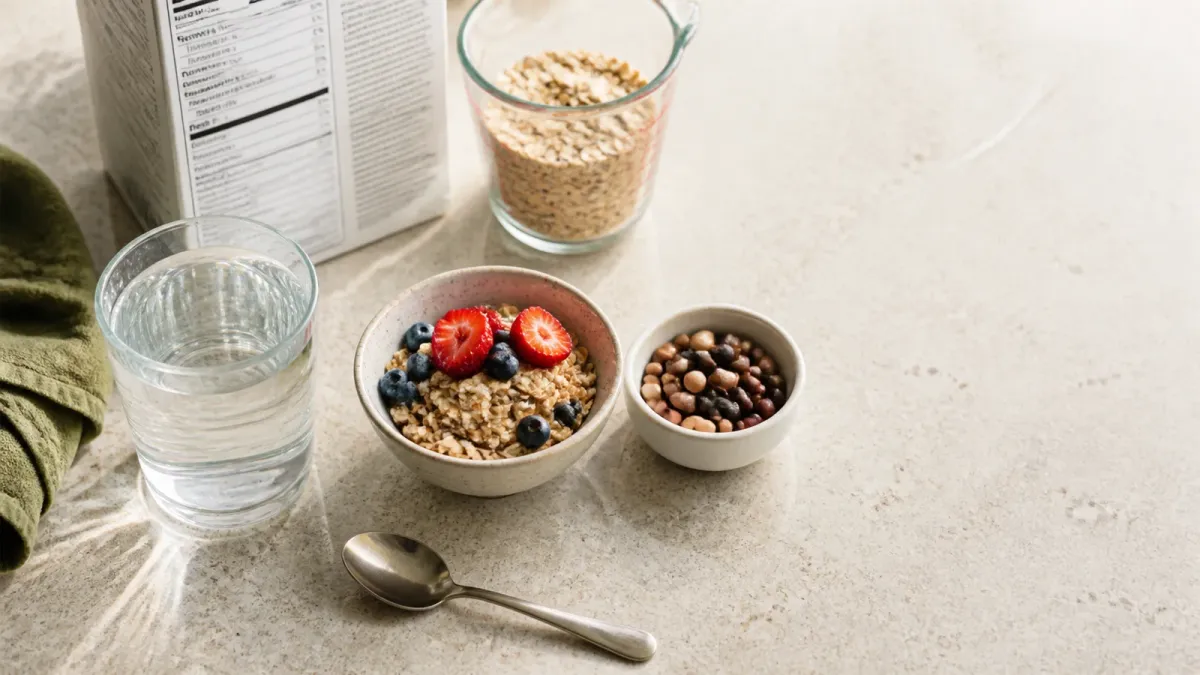
Fiber is having a search-driven moment. Google says U.S. interest in dietary fiber hit an all-time high in 2026, while searches for "fibermaxxing" rose 115% over the past 90 days in its Summergeist report.
The short version: more fiber can be a smart goal for many adults, but maxing it out overnight is the wrong move. A safer plan is to increase slowly, use the Nutrition Facts label, drink enough water, and treat supplements as a backup rather than the whole strategy.
That matters because the gap is real. The FDA lists 28 grams as the Daily Value for dietary fiber on Nutrition Facts labels. USDA's Economic Research Service, citing the 2020-2025 Dietary Guidelines for Americans, says low fiber intake is a public health concern and estimated U.S. consumption at 8.1 grams per 1,000 calories in 2017-18, well below the 14 grams per 1,000 calories guideline.
The short answer
Fibermaxxing is useful only if it turns into a sustainable routine. If it becomes a race to hit a large number with powders, bars, or sudden bean-heavy meals, it can backfire with gas, bloating, cramps, constipation, or diarrhea.
Mayo Clinic's practical warning is simple: adding too much fiber too quickly can cause digestive discomfort, and increasing slowly over several weeks gives the gut time to adjust. Water matters too, because fiber works best when it absorbs fluid and helps stool move through the digestive tract.
Check the label before you copy the trend
The easiest first check is not a viral meal plan. It is the Nutrition Facts label. The FDA says the Daily Value for dietary fiber is 28 grams, and label percentages show how much one serving contributes to that daily benchmark.
That does not mean every adult should chase exactly the same number in the same way. Calorie needs, medical conditions, medications, and tolerance vary. The label is a reference point, not a dare.
Use it to answer three practical questions: how much fiber is in one realistic serving, how much added sugar or sodium comes with that food, and whether the serving size matches what you actually eat. A cereal that looks high-fiber on paper is less helpful if the real bowl is two or three servings with a large sugar load.
Do this first
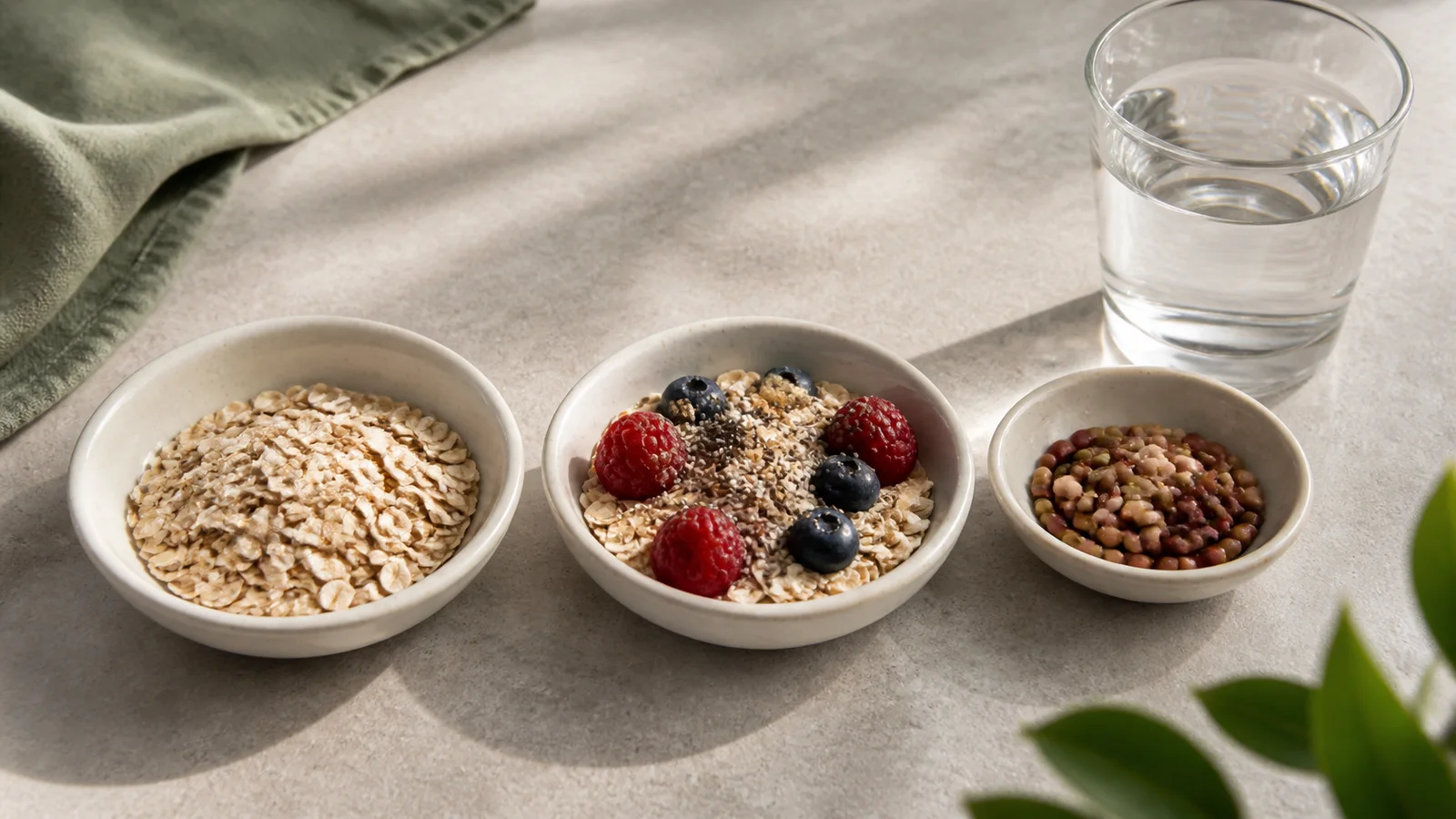
Start by adding one dependable fiber source to a meal you already eat. Oats, beans, lentils, berries, vegetables, whole-grain bread, chia seeds, and nuts can all help, but the best first choice is the one you can repeat without turning breakfast or lunch into a project.
Then increase the amount in steps. Add a few grams a day, wait to see how your body responds, and keep water nearby. If bloating or cramping shows up, the answer is usually not to quit fiber entirely; it is to slow down, spread fiber across meals, and rely more on whole foods than concentrated add-ins.
Common mistakes
The first mistake is treating "high fiber" as automatically healthy. A product can advertise fiber while also being expensive, heavily sweetened, or built around ingredients that do not keep you full for long. Compare the full label, not just the front of the package.
The second mistake is changing everything at once. If you add a fiber powder, a new breakfast cereal, extra beans, a seed-heavy smoothie, and a high-fiber snack in the same day, you may not know which change helped and which one caused problems.
The third mistake is ignoring symptoms that deserve medical attention. Persistent abdominal pain, unexplained weight loss, blood in stool, severe constipation, severe diarrhea, or a major change in bowel habits should be discussed with a clinician. People with digestive disorders or strict medical diets should get individualized advice before making a large fiber jump.
A better fibermaxxing rule
Do not ask, "How can I get the biggest number today?" Ask, "What is the smallest repeatable change that moves me toward enough fiber without making tomorrow harder?"
For many adults, that might mean one bean-based meal a few times a week, berries with breakfast, a higher-fiber bread, vegetables at lunch, or swapping a low-fiber snack for nuts and fruit. The trend can be useful if it nudges people toward foods they were missing. It becomes counterproductive when it turns nutrition into another contest.
Bottom line: fiber is worth paying attention to in 2026. Just do not let the word "maxxing" talk you into skipping the boring part that makes the habit work: gradual changes, enough fluids, a careful label check, and a plan your gut can actually live with.


