

X Money is now a real consumer-finance decision, not just another Elon Musk product tease. X says its money account is available to select U.S. users who are at least 18, while AP and The Verge reported that the rollout starts with paying X subscribers and includes peer-to-peer transfers, a Visa debit card and an advertised yield of up to 6.00% APY.
The short answer: do not judge X Money by the 6% number alone. Treat it like any new fintech account. Check who actually holds the deposits, what subscription or direct-deposit rule applies to your tier, whether the perks beat the cost of X Premium, and what happens if the app, card, account or customer support fails when you need money.
That does not mean X Money is automatically a bad deal. It means the useful question is narrower: does this account solve a real payment or savings problem for you better than a bank, credit union, high-yield savings account, Venmo, Zelle, Cash App or a card you already use?
Do this first
1. Confirm whether you are eligible today. X Money says access is currently limited to select U.S. users who are 18 or older. AP reported that invitations are available to paying X members. If you are not already in the invited group, do not make plans around a rate or card feature you cannot yet use.
2. Check the exact APY rule for your subscription tier. X Money says the 6.00% APY was accurate as of July 27, 2026 and is subject to change. It also says Premium+ users are eligible for 6.00% APY, while Premium users may need to meet qualifying direct-deposit requirements to receive a boosted 6.00% APY. If the account only works for you after a subscription upgrade or payroll change, include that cost and friction in the decision.
3. Separate the yield from the subscription cost. AP reported that X Premium starts at at least $8 per month and that a customer would need roughly $1,600 on deposit for the 6% yield to cover that subscription cost. Your own break-even point depends on the subscription tier, rate, account balance, taxes and whether you would pay for X anyway.
Check these details
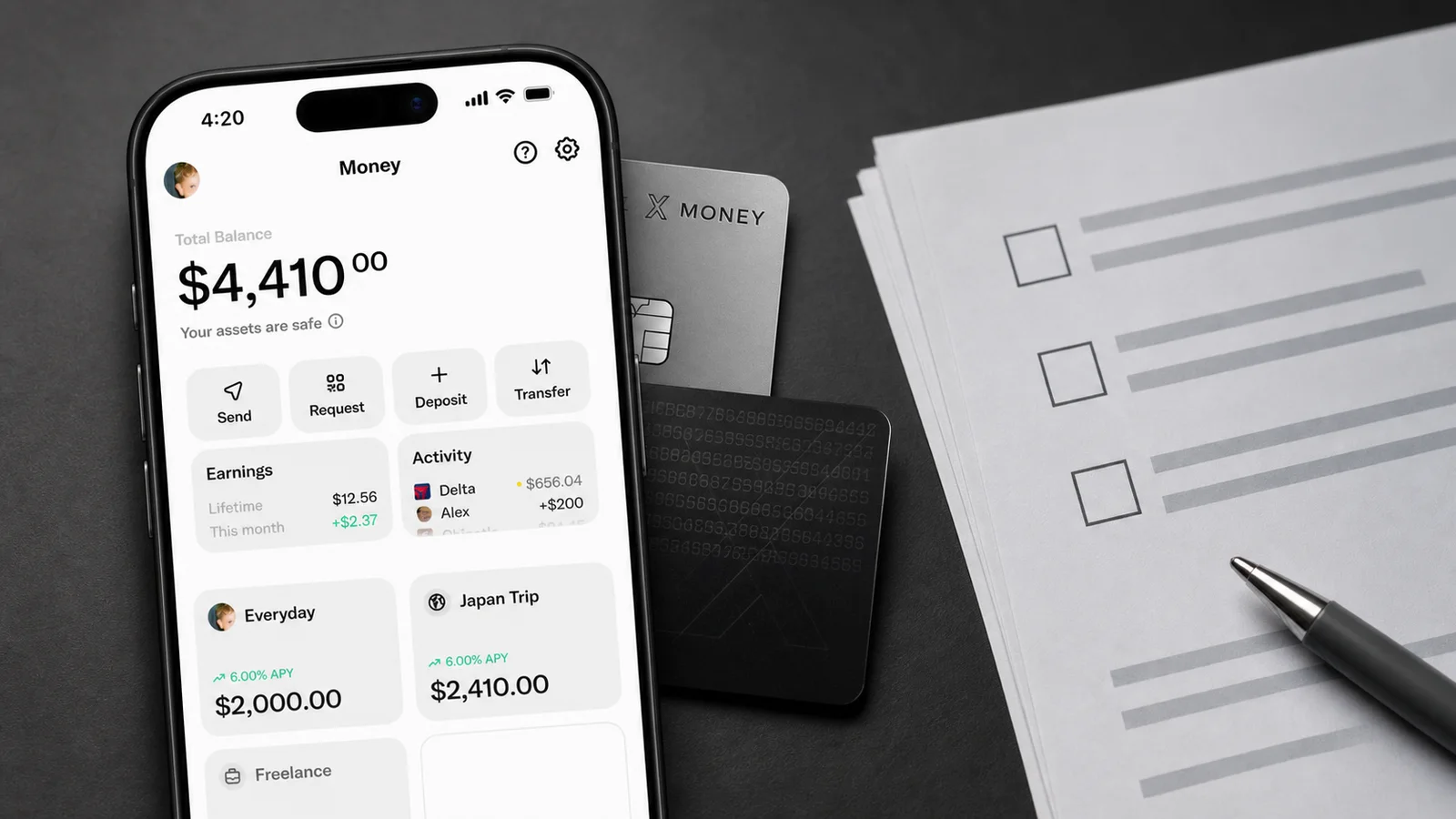
4. Know who is the bank and who is not. X Money says deposit accounts are held at Cross River Bank, Member FDIC, and that X Payments LLC is a financial technology company, not an FDIC-insured bank. Cross River says its infrastructure powers the account, card and money movement inside X. That structure is common in fintech, but it puts more importance on disclosures, recordkeeping and support when something goes wrong.
5. Read the deposit-insurance limits carefully. X Money says Cross River deposits are insured up to $250,000 and that a cash sweep program can provide up to $10 million in aggregate FDIC pass-through coverage across participating network banks, subject to conditions. The same page warns that deposit insurance covers the failure of an insured bank, not the failure of X Payments. For most households, the practical step is simple: keep balances well below limits unless you understand exactly where funds are swept and how ownership categories apply.
6. Decide whether a social app should become a money hub. The convenience pitch is clear: transfers, card spending and an X account in the same place. The risk is also clear: the more money tasks live inside a social platform, the more important account security, fraud controls, privacy, lockout recovery and customer service become. A Senate Banking Committee letter sent in April raised questions about consumer risk, data use, scams and Cross River's regulatory history. A letter is not a finding that the product is unsafe, but it is a useful checklist for consumers.
Common mistakes
The first mistake is treating a headline APY as permanent. High rates can change, and promotional economics can shift once a product moves beyond early adopters. Save or screenshot the rate and eligibility terms that apply when you enroll, then check them again after major app or subscription changes.
The second mistake is moving emergency cash before testing basics. If you try X Money, start with an amount you can afford to have delayed. Test a transfer, card transaction, ATM access, customer-support path, bank-link change and account-recovery process before letting payroll or bill payments depend on it.
The third mistake is ignoring privacy fit. A money product inside a social app can be convenient, but it also raises a different trust question than a stand-alone bank account. Read what financial activity is visible, what is shared with partners, how transaction data is used, and whether you can close the account cleanly if you leave X.
When to get help
If you are moving money needed for rent, payroll, benefits, taxes, debt payments or a near-term emergency, compare X Money with accounts from regulated banks or credit unions you can contact directly. For larger balances, verify FDIC coverage with official disclosures and consider using the FDIC's own insurance tools or speaking with a qualified financial professional.
Bottom line: X Money may be worth watching, especially for people who already pay for X and want app-native transfers. But the right first move is not chasing the biggest number. It is checking eligibility, subscription cost, deposit insurance, privacy, support and exit options before turning a social account into part of your financial life.


