
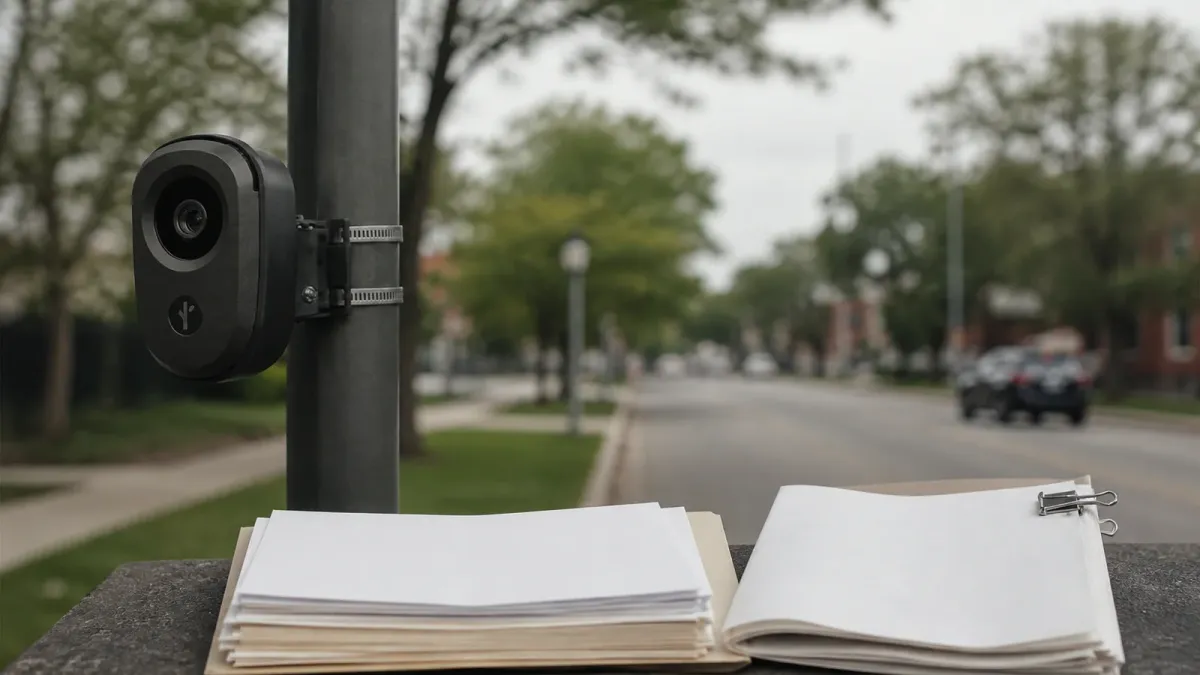
Flock Safety cameras have turned a local procurement choice into a national privacy debate: communities want faster evidence when cars are stolen or people are missing, while critics want to know how long ordinary drivers' movements are stored and who else can search them.
The practical question for residents is not simply whether a police department should use license-plate readers. It is whether the town has written rules for retention, sharing, audits, hot lists, and public reporting before the cameras go up.
The issue is newly visible because CNN and Fox News programming have both highlighted the widening backlash, while local coverage this week described Houston-area disputes over the same technology. Threads searches for Flock cameras also show current posts from local newsrooms, national outlets, and residents debating city contracts and alleged misuse.
The short answer
If your city is considering Flock or another automated license-plate reader system, ask for the contract, the data-retention rule, the sharing map, the audit policy, and the process for removing cameras. A useful crime-solving tool can become a broad movement database when those limits are vague.
Flock's own public materials say its products include license-plate readers, video cameras, trailers, drones, software, and a national LPR network. The company says its system helps agencies search vehicles, time, and location, share evidence across boundaries, and keep searches logged for review. Its site also says more than 12,000 communities trust Flock nationwide and that Flock-supported work helped locate more than 10,000 missing people in 2025.
Those are real public-safety claims. They are also exactly why the policy details matter. The more useful a system is for finding where a vehicle went, the more important it is to decide who can query it, how long non-hit data stays in the system, and whether outside agencies can reach local records.
What the cameras collect
Automated license-plate readers usually capture a plate number, the location, the date, and the time a vehicle passes a camera. Privacy groups including the Electronic Frontier Foundation warn that fixed cameras can show travel direction and patterns when they are placed across a town, while mobile readers can scan parked cars as patrol vehicles move through neighborhoods.
The collection is broad by design. The camera does not know whether a driver is connected to a crime before it records a plate. The useful investigative feature comes later, when a police department searches for a vehicle tied to a stolen-car report, a warrant, a missing-person case, or another alert.
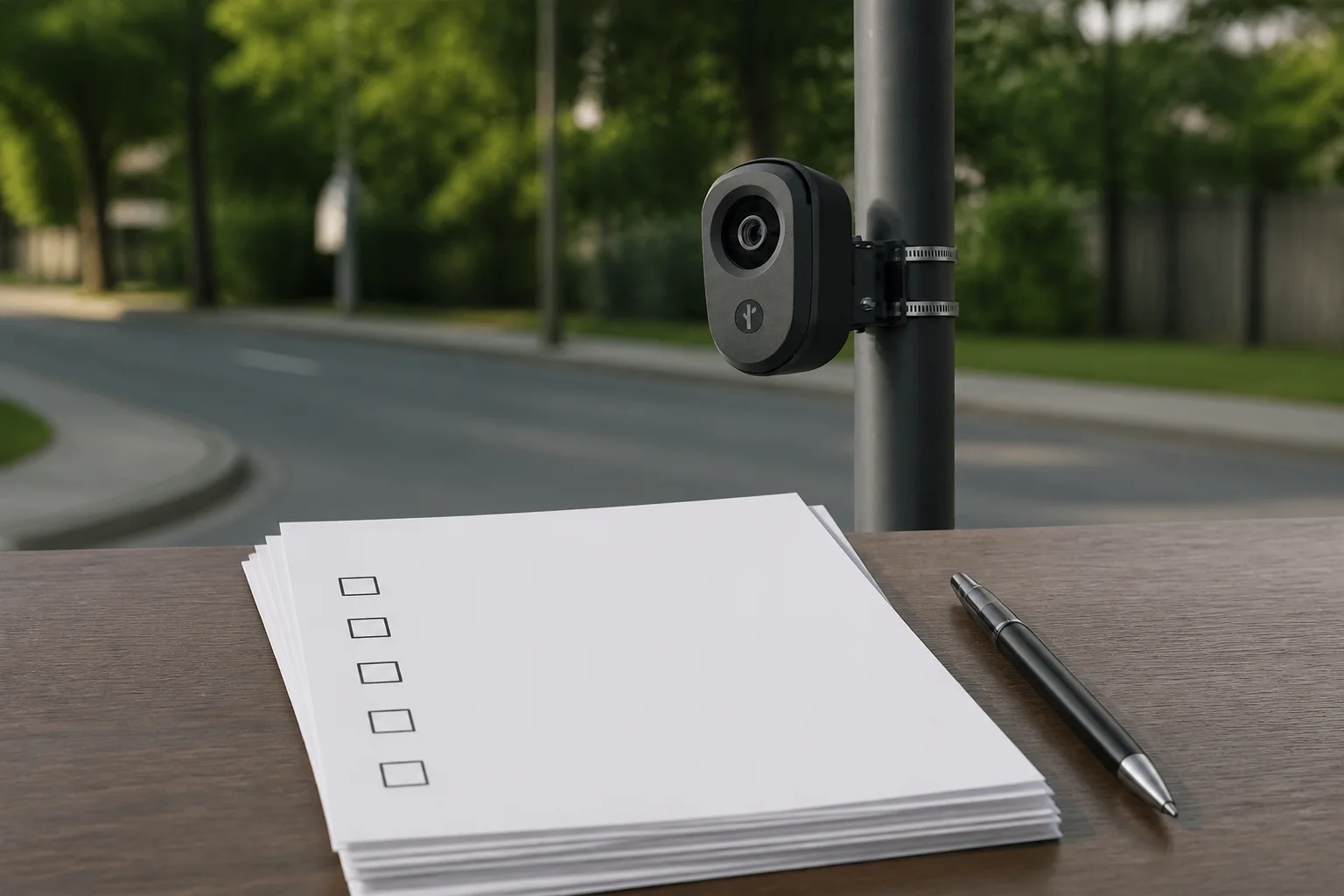
Five terms to check first
Retention: Ask how long the system keeps scans that do not match an active alert. A short retention window limits the risk that ordinary movements become a long-term travel history.
Sharing: Ask which agencies can search local data, whether sharing is automatic or case-by-case, and whether federal access is allowed. A local council may think it is buying neighborhood cameras while the contract creates a much wider search network.
Hot lists: Ask who can add plates to alert lists, what offenses qualify, and whether low-level traffic or fee matters are excluded. A narrow hot-list policy keeps the system focused on serious public-safety uses.
Audits: Ask whether every search is logged, how often supervisors review searches, and whether misuse produces discipline. Flock says its system supports audit-ready use, but the local policy determines whether that feature becomes a meaningful safeguard.
Public reporting: Ask for recurring reports that show camera locations, searches, hits, arrests, data-sharing requests, and complaints. The public cannot evaluate the tradeoff if the only metric presented is a success story.
The tradeoff
The case for the cameras is strongest when a department can point to concrete uses: recovering a stolen car, finding a missing person, or narrowing the search for a suspect's vehicle after a serious crime. The case against a poorly governed deployment is strongest when a city cannot explain why it needs each camera, who can search the data, or how innocent-driver scans are deleted.
That makes the city-council vote the key moment. Residents do not need to settle the whole national surveillance debate before asking better local questions. They can insist that the contract publish limits first, then judge whether the promised safety gain is worth the documented privacy cost.
What to do next
Before a vote, search the council agenda for the vendor name, ask for the full contract and data policy, and compare the proposal with civil-liberties guidance on license-plate readers. If the city will not say where cameras are placed, how long data is stored, or who can access it, that is not a technical detail. It is the core decision.
For most communities, the better standard is not blind approval or blanket rejection. It is a written rule that treats vehicle-location data as sensitive from the first scan, not only after a scandal proves why it mattered.


