
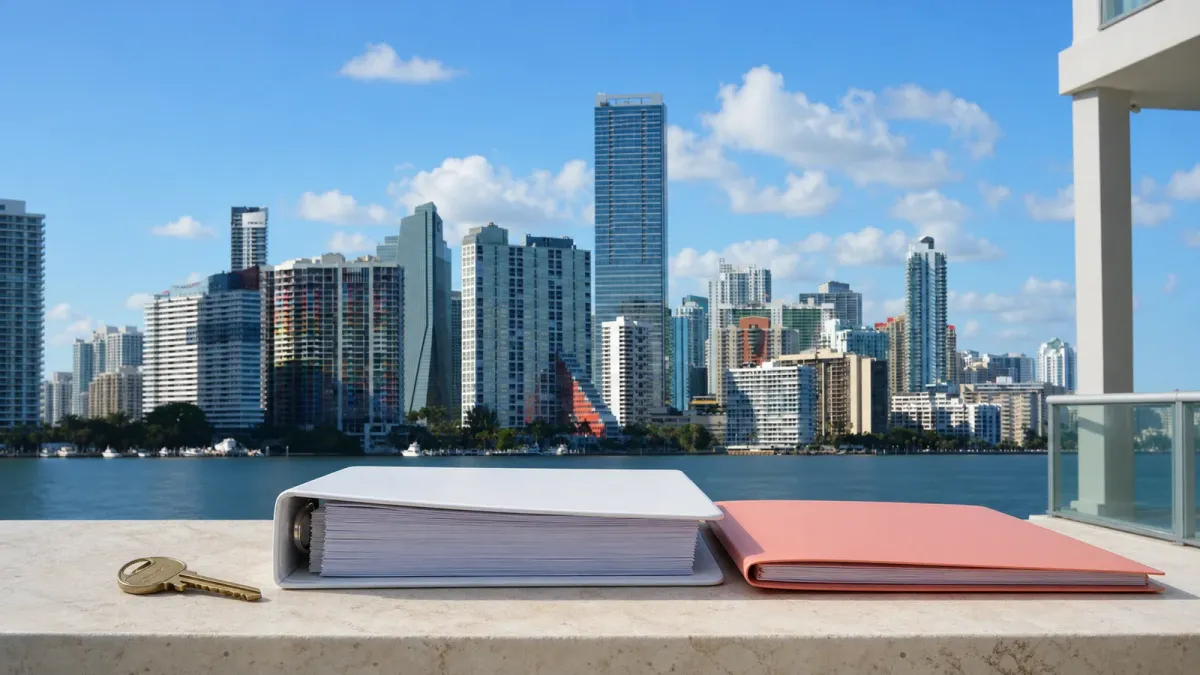
The best place to buy an Airbnb in Miami in 2026 is not simply the neighborhood with the highest nightly rate. It is the property where tourist demand, purchase price, zoning, building approval and carrying costs all work together. That distinction matters in South Florida, where two condos across the street from each other can have completely different short-term-rental rights.
Miami has real demand. The Greater Miami Convention & Visitors Bureau says Miami-Dade welcomed a record 28.3 million visitors in 2025, while AirDNA's June 2026 market overview counted 23,418 active short-term-rental listings. Those listings averaged $27,500 in trailing annual revenue, 55% occupancy and a $276 average daily rate. Revenue was up 6.7% from a year earlier, but those citywide averages hide large differences among units, operators and legal jurisdictions.
For most buyers, Downtown Miami is the best overall place to start looking. Brickell is strongest for business and upscale demand, Wynwood offers the clearest experiential appeal, Edgewater provides a balanced central base, and properly licensed Miami Beach buildings offer the highest-rate opportunity with the highest regulatory burden.
The short answer: five Miami areas worth investigating
- Best overall: Downtown Miami. Central location, broad visitor demand and the lowest recent median sale price among the core condo districts in this guide.
- Best for business and upscale stays: Brickell. Strong corporate and dining appeal, but high condo fees can erase an attractive top-line revenue estimate.
- Best for experience-led demand: Wynwood. Walkable restaurants, art and nightlife help a well-designed unit stand out, though new supply is a real risk.
- Best balanced city base: Edgewater and nearby Midtown. Access to Wynwood, the Design District, Downtown and the causeways can attract mixed leisure and work trips.
- Best for high nightly rates: licensed Miami Beach buildings. Beach demand supports higher rates, but only certain zones and buildings permit short stays.
Important: The building examples below are screening leads, not blanket approvals. Confirm the exact unit, current declaration and rules, municipal zoning and Certificate of Use, state license, tax registrations, minimum stay and management terms before relying on short-term-rental income.
1. Downtown Miami: the best overall starting point
Downtown offers the most balanced investment case. Guests can reach Kaseya Center, Bayfront Park, museums, PortMiami, Metromover and Brightline without building an entire trip around a car. That mix can support cruise-related stays, events, business trips and weekend tourism instead of relying on one narrow demand source.
Redfin's May 2026 data put Downtown's median sale price at about $580,000, versus roughly $650,000 in Brickell, $668,000 in Wynwood and $708,000 in Edgewater. Those medians cover all home types and are not Airbnb projections, but they provide a useful entry-price comparison.
Buildings to investigate: District 225 explicitly markets owner hosting on Airbnb; Gale Miami Hotel & Residences says residents may use their preferred homesharing platform; and The Elser Hotel & Residences offers a managed hotel rental program for qualified units.
Best fit: A studio or one-bedroom in a building whose declaration, rules and city approvals expressly support the intended rental frequency. Main risk: A tower marketed as “rental friendly” may still impose minimum stays, annual caps, platform restrictions or management fees that change the return.
2. Brickell: best for business and premium urban demand
Brickell combines offices, restaurants, shopping and transit, making it the strongest choice for investors targeting business travelers, international visitors and couples seeking a polished urban stay. It also offers a deeper resale market than a property whose value depends entirely on vacation-rental income.
The tradeoff is cost. Redfin reported a roughly $650,000 median sale price over the three months ending in June 2026, with homes taking about 154 days to sell. Buyers may have negotiating room, but association dues, valet or parking charges, resort-style operating costs and special assessments can turn healthy gross revenue into weak cash flow.
Buildings to investigate: Smart Brickell was designed for short-term rentals. LOFTY Brickell says it is designed and licensed for short-term rentals, while Domus Brickell Park is a hospitality-oriented condo project. Check completion status, final governing documents and owner-use limits on newer projects.
Best fit: An efficient one-bedroom near transit and everyday services. Main risk: Underwriting gross booking revenue while ignoring dues, insurance, management and reserve funding.
3. Wynwood: best for experience-led stays
Wynwood's art, restaurants and nightlife give hosts a clear merchandising story. The neighborhood also continues to add residences and hotels, broadening its visitor base beyond weekend nightlife. Redfin's recent median sale price was about $668,000, down 6% from a year earlier.
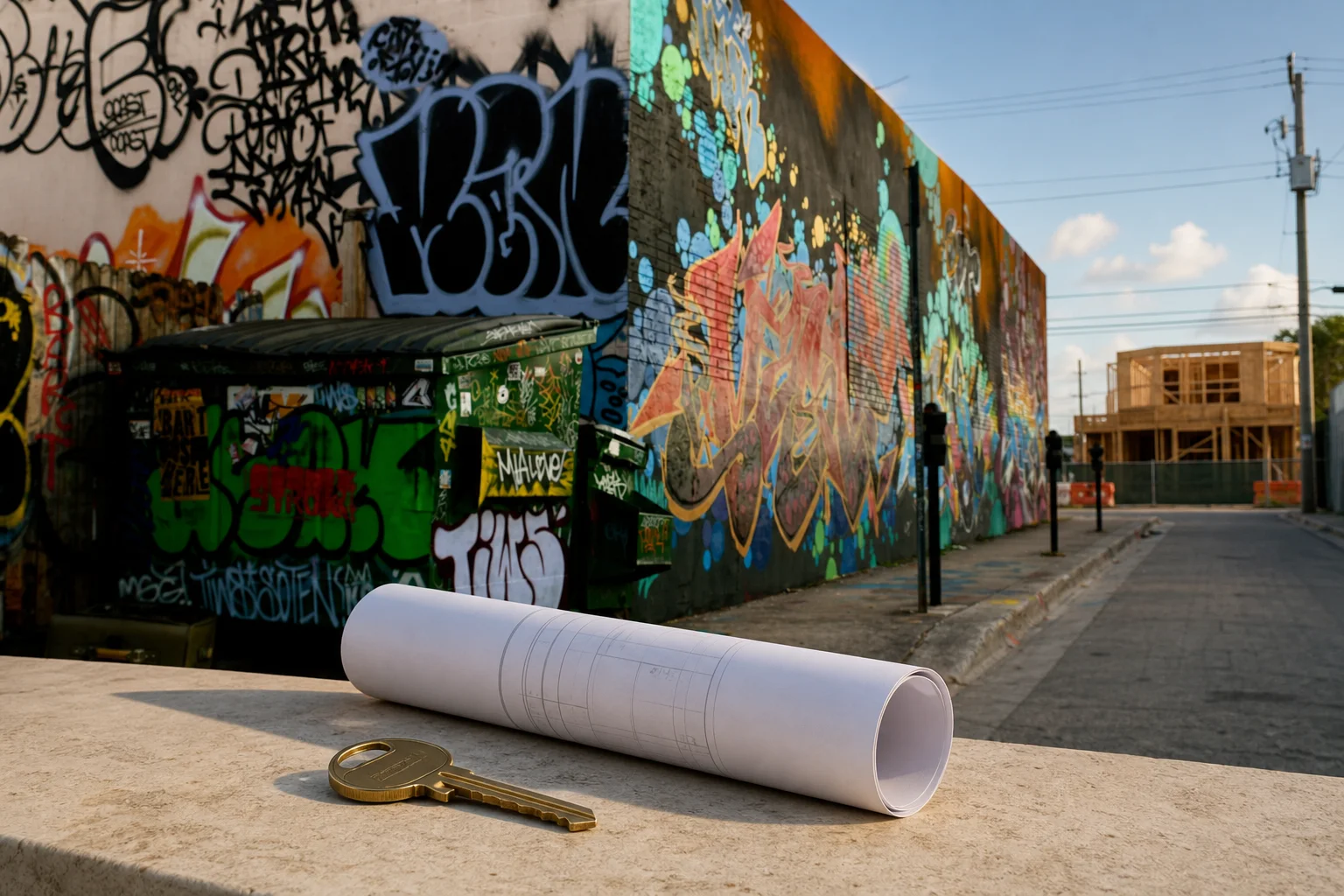
That price decline may create negotiating opportunities, but the area's development pipeline cuts both ways. More attractions and residents can lift demand, while more furnished units and hotels increase competition. A generic white-box condo will have difficulty commanding a premium when guests can choose among newer professionally operated buildings.
Buildings to investigate: NoMad Residences Wynwood advertises flexible ownership with no rental restrictions. The Rider says short-term rentals will be allowed, and Twenty Sixth & 2nd Wynwood Residences is planned around Airbnb hosting; the latter two require construction and delivery risk to be underwritten.
Best fit: A differentiated, professionally designed unit in a building created for flexible stays. Main risk: Paying a preconstruction premium based on projected revenue before the building has an operating record.
4. Edgewater and Midtown: best for a balanced Miami base
Edgewater and Midtown sit between several major demand centers. Guests can reach Wynwood, the Design District, Downtown, Brickell and the Miami Beach causeways quickly, while waterfront views can raise a unit's appeal. Edgewater's recent median sale price was about $708,000, down 16.3% year over year, according to Redfin.
The area makes more sense for buyers who want flexibility between short stays, medium-term furnished rentals and personal use. It is less compelling when the deal requires peak-season vacation rates every month. Verify walkability, parking and nearby construction on the exact block; a map pin can make two units look more interchangeable than guests will consider them.
Buildings to investigate: ELLE Residences Miami and Edge House Miami are planned with short-term-rental capability. Existing Opera Tower commonly uses a 30-day minimum, while daily rentals at Hyde Midtown are associated with its hotel-style Designer Suites rather than every residential condo.
Best fit: A one- or two-bedroom with parking and a view, backed by a viable medium-term-rental fallback. Main risk: Assuming proximity to multiple neighborhoods automatically creates destination demand.
5. Legal Miami Beach buildings: best rates, hardest due diligence
Miami Beach deserves a place on the list because its rate potential is materially higher. AirDNA's June 2026 overview reported a $357 average daily rate and $37,400 in average annual revenue across 9,677 active listings. Occupancy averaged 50%, however, and annual revenue grew only 2.9% even as average rates declined 1.9%.
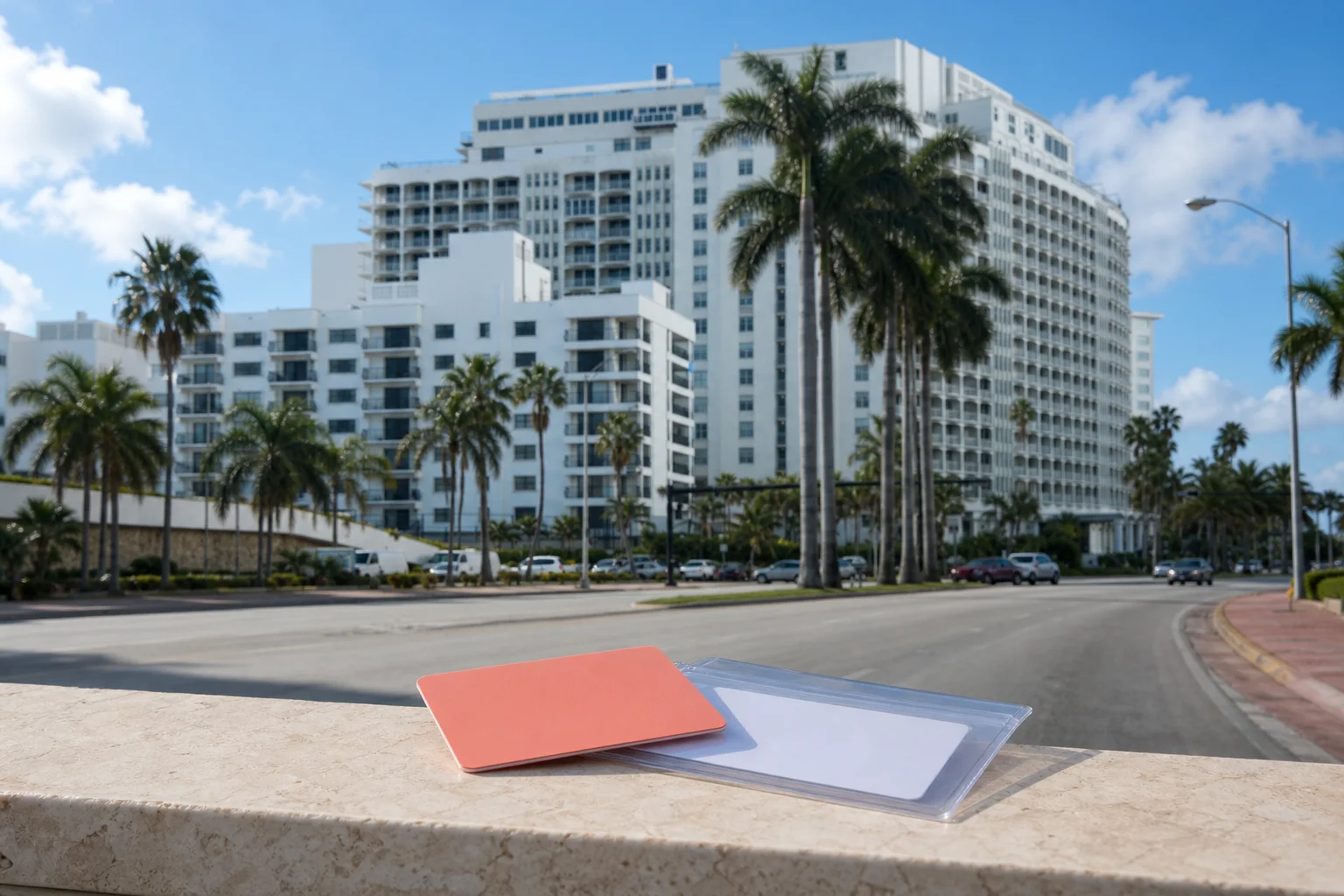
The legal warning is decisive. Miami Beach says vacation rentals are prohibited in all single-family homes and many multifamily buildings. Legal operators in permitted areas need city authorization, a Business Tax Receipt and a Resort Tax account, and their advertising must display the required numbers. The city publishes a list of licensed addresses, but an address appearing there is not a substitute for confirming the specific unit's status and association rules.
North Beach can offer a lower entry point than Mid-Beach: Redfin's May 2026 median was about $767,000 in North Beach and $827,000 in Mid-Beach. These broad medians include properties that cannot legally operate as short-term rentals, so never calculate a return from the neighborhood median alone.
Buildings to investigate: Condo-hotel units at Fontainebleau Miami Beach, Mondrian South Beach at 1100 West Avenue and The Alexander at 5225 Collins Avenue are starting points. Those addresses appear on Miami Beach's current licensed-address list, but that does not mean every unit is approved or may be independently listed on Airbnb.
Best fit: An already licensed condo-hotel or unit with written municipal and association confirmation. Main risk: Buying a beach condo first and discovering after closing that rentals under six months and one day are prohibited.
Why the exact building matters more than the ZIP code
Miami-area rules layer state, county, municipal and private restrictions. Florida's Department of Business and Professional Regulation licenses vacation-rental condos and dwellings. Florida also taxes transient accommodations, while Miami-Dade and municipalities impose additional requirements.
In unincorporated Miami-Dade, the county requires an annually renewed Certificate of Use before a property is advertised, along with an inspection, state licensing, tax registration and a local business tax receipt. Municipalities apply their own rules. The City of Miami's current workflow calls for zoning confirmation, certificates of occupancy and use, association certification, an operational management plan, inspections, a business tax receipt and DBPR licensing. If more than 25% of a building's units become short-term lodging, the city says that can trigger a change in occupancy classification and additional building-code requirements.
Private condo rules can be stricter than local law. Get the declaration, amendments, rules, board minutes, rental application, current budget, insurance summary, milestone inspection and structural integrity reserve study before the inspection period ends. Florida law requires structural reserve studies for many residential condominium buildings of three habitable stories or more, and the findings can affect both dues and special assessments.
How to underwrite a Miami Airbnb without fooling yourself
- Verify legality in writing. Ask the municipality to confirm the parcel's zoning and licensing path. Ask the association to identify the exact minimum stay, annual rental cap and approval process for the unit.
- Use property-level comps. Compare at least 10 truly similar legal listings by bedroom count, building, view, parking and amenities. City averages are a screening tool, not a forecast.
- Stress-test demand. Model a base case below the trailing performance of verified comps, then test a slower case with lower occupancy and rates. Do not use a major event, such as the 2026 World Cup, as a normal year.
- Price every operating cost. Include property tax, association dues, wind and flood coverage, utilities, internet, platform fees, management, cleaning gaps, repairs, furnishings, supplies, license renewals and reserves.
- Read the condo financials. A low asking price can reflect an approaching assessment or underfunded reserves. Review the structural study and recent board minutes with qualified professionals.
- Build a fallback plan. Confirm that a 30-day, seasonal or annual rental would cover enough of the carrying cost if regulations change or short-stay demand softens.
Work with a local Miami real estate professional
If you are looking to buy Miami real estate, consider working with Duarte Realty Group to identify properties and navigate local neighborhoods, condo buildings and the purchase process. Buyers should still obtain independent legal, tax, insurance and association guidance where appropriate.
The bottom line
Downtown Miami is the best all-around search area for most buyers, Brickell is the premium urban play, Wynwood is the experience-led bet, Edgewater offers flexibility, and legal Miami Beach buildings have the highest rate potential. But none is automatically a good deal. In Miami, the winning investment is usually the unit with documented rental rights, conservative expenses and a credible long-term-rental fallback—not the one with the most optimistic Airbnb revenue screenshot.
This article provides general information, not individualized legal, tax or investment advice. Rules, association policies, insurance terms and market conditions can change; verify the exact property with the relevant agencies and qualified professionals before buying.


