
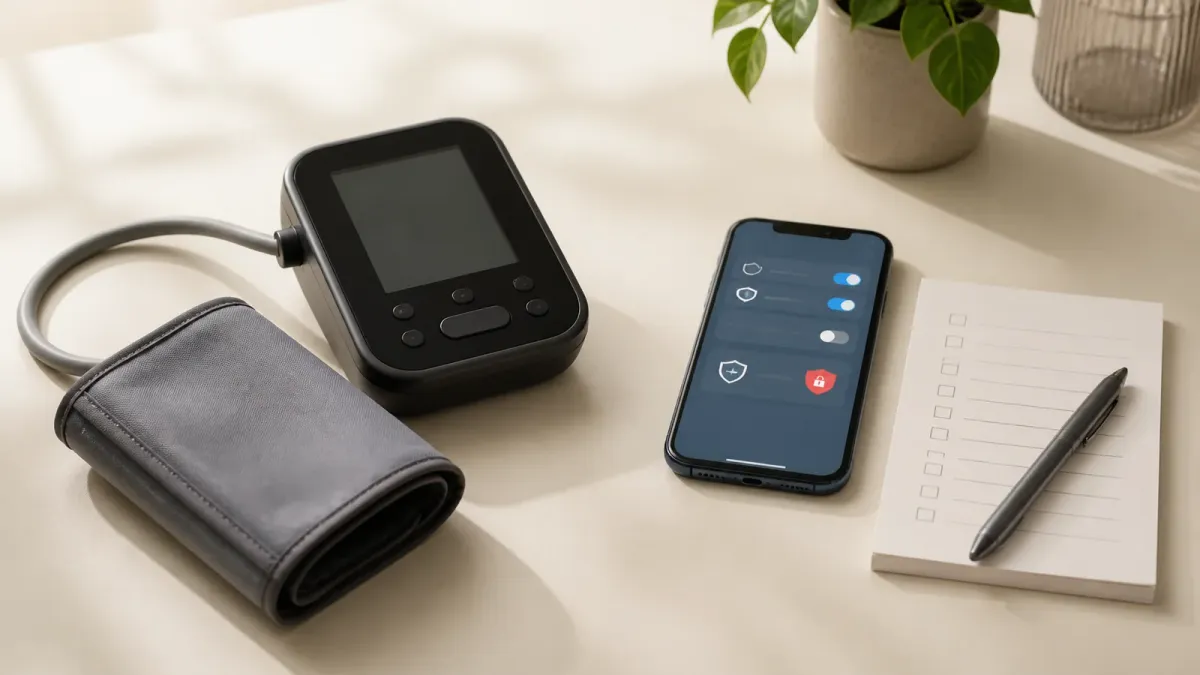
If you use a connected blood pressure cuff, smart scale, glucose log, or health-tracking app, the privacy question is not just whether the device works. It is who receives the data after the reading leaves your hand.
The short answer: do not assume a consumer health app is protected the same way as a doctor, hospital, or health plan. The Federal Trade Commission says many apps and connected devices that collect health information may fall outside HIPAA, even when the information feels medical to the person entering it.
That does not mean every blood pressure app is unsafe. It does mean the default should be caution before you connect the device, create an account, enable cloud backup, or let the app share data with advertising and analytics partners.
The short answer
Before syncing a cuff, check three things: whether the app is tied to your medical provider, what the privacy policy says about advertising or analytics, and whether the device itself has the authorization needed for the kind of blood pressure claim it makes.
If the app is supplied by your doctor, health plan, or another HIPAA-covered organization, different rules may apply. If you downloaded the app directly as a consumer product, FTC privacy and breach rules may matter more than HIPAA. The safest practical habit is to treat the app like a sensitive data account, not like a harmless gadget companion.
Why HIPAA may not be enough
HIPAA is narrower than many people think. It generally applies to covered health care providers, health plans, health care clearinghouses, and some business associates. A direct-to-consumer app that stores weight, heart rate, menstrual-cycle, medication, glucose, or blood pressure information may not automatically become a HIPAA-covered service just because the information is health-related.
HHS points developers to a federal mobile health app tool built with the FTC, FDA, and health IT officials because more than one law can apply. The practical takeaway for users is simple: the name of the data does not tell you the privacy rule. Who collected it, why it was collected, and who the company serves can change the legal protection.
That distinction matters because blood pressure readings can reveal patterns that are valuable to marketers, insurers, scammers, and identity thieves. A single number may not tell the whole story, but repeated readings, medication reminders, location data, device identifiers, and account details can create a profile of someone's health concerns.
What regulators have already alleged
FTC health privacy cases show why the issue is not theoretical. In 2023, the agency announced an enforcement action against GoodRx over allegations that the company failed to report unauthorized disclosures of consumer health data to advertising platforms including Facebook and Google. GoodRx agreed to a $1.5 million civil penalty without admitting wrongdoing.
The FTC also reached a settlement with Easy Healthcare, the developer of the Premom fertility app, after alleging that the company deceived users and shared sensitive personal and health information with third parties. The agency said the case involved advertising and analytics recipients as well as failures under the Health Breach Notification Rule.
Those cases were not about a household blood pressure cuff specifically. They are still useful warning signs because they show how ordinary software tools, ad pixels, analytics kits, and account identifiers can move sensitive health information beyond the app a user thought they were trusting.
Check the device claim too
Privacy is not the only question. The FDA warned in September 2025 that many over-the-counter products claiming to measure or estimate blood pressure lacked FDA marketing authorization. The agency said inaccurate readings can delay care, lead to unnecessary interventions, or affect medication decisions.
That means a wearable feature or connected gadget can create two separate risks at once: a bad reading and a broad data trail. If your care depends on accurate blood pressure monitoring, the FDA says to talk with a health care provider and look for an FDA-authorized device appropriate for your needs.
Do this before you sync
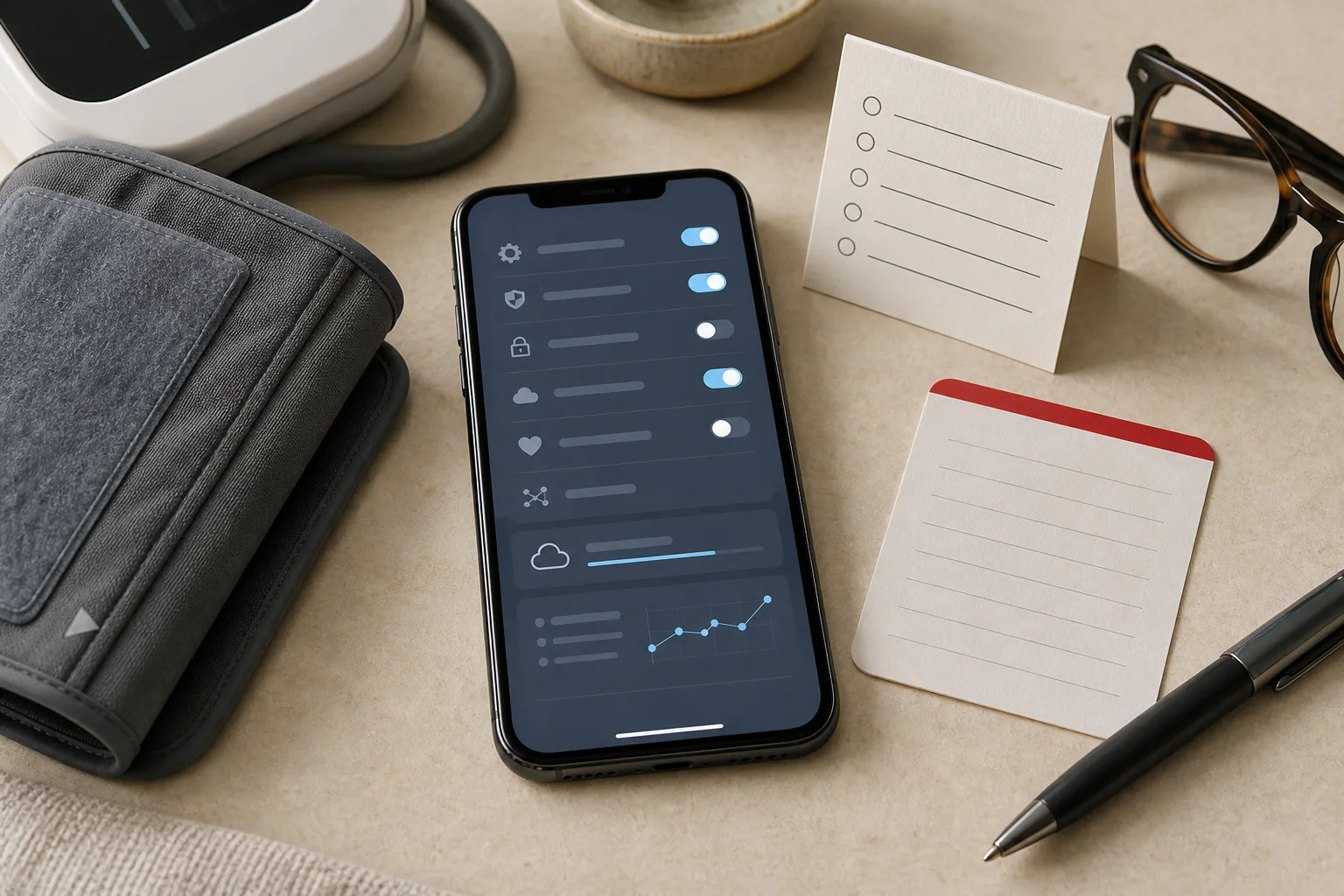
- Find the privacy settings before the first reading. Look for controls covering advertising, analytics, data sharing, cloud backup, research use, and personalized offers.
- Check whether sharing is required or optional. A device may work locally, through a doctor-linked portal, or only through the company's cloud account. Those are different risk levels.
- Use a separate, strong password. A health app account can be more revealing than a shopping account, especially if it stores readings over time.
- Limit app permissions. A blood pressure app usually should not need broad access to contacts, photos, microphone, or precise location to save a reading.
- Ask whether the device is authorized for its claim. If a wrist or finger device claims to estimate blood pressure, check the FDA's device database or ask your clinician before relying on it.
Common mistakes
The first mistake is treating a connected cuff like a paper logbook. A paper log stays in a drawer unless you hand it to someone. An app may store readings on remote servers, connect them to an email address, and pass technical identifiers through other companies' software.
The second mistake is accepting every setup prompt to make the app work faster. Some permissions improve the product. Others improve marketing, engagement tracking, or data collection. If a setting is optional and does not improve your care, turn it off first and enable it later only if you need it.
The third mistake is using privacy policy labels as a substitute for behavior. Phrases such as improvement, personalization, partners, service providers, or analytics can cover very different practices. Look for concrete statements about whether health data is used for advertising, sold, shared, retained, or deleted.
When to get help
Talk to a clinician if you are making care decisions from home blood pressure readings, if the device gives surprising results, or if you are unsure whether a device is appropriate for your condition. For privacy questions, start with the app's privacy controls, account deletion tools, and support channel. If a company says your health data was exposed, the FTC's Health Breach Notification Rule may require notices in some situations.
The useful rule is not to avoid connected health devices altogether. It is to slow down at setup. A cuff can help you track a real health concern, but the app should not quietly turn that concern into a data trail you would never have agreed to share.


