
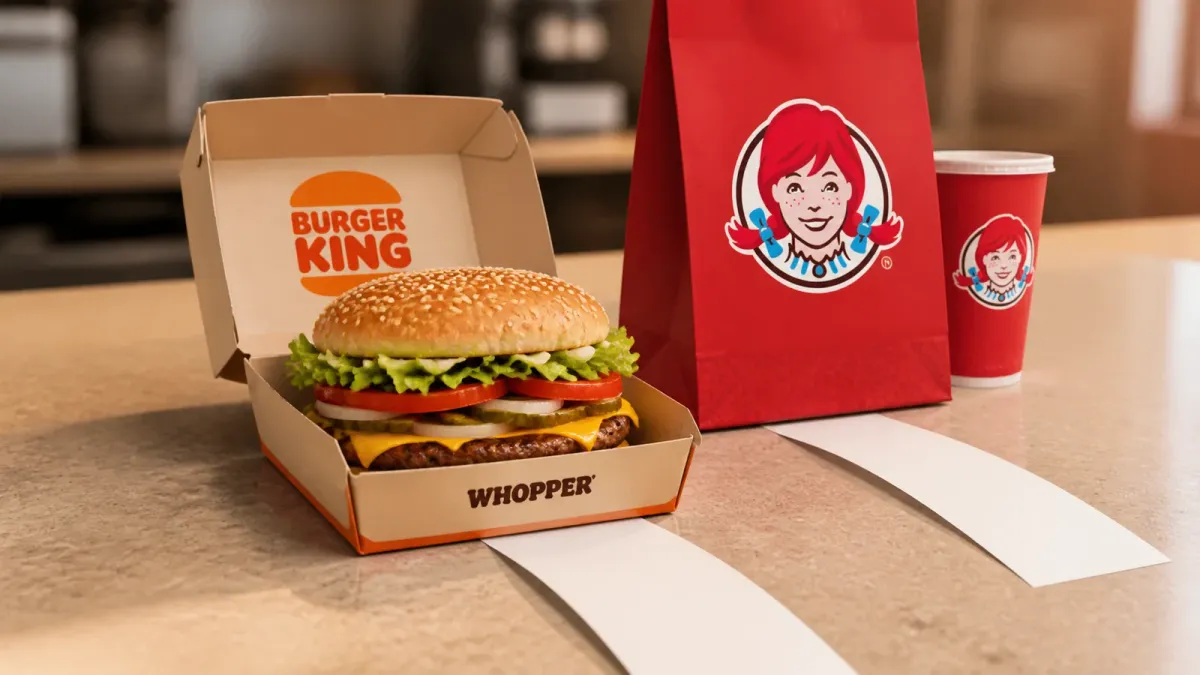
Burger King has moved back ahead of Wendy's in the U.S. burger-chain race, a fresh sign that the fast-food value fight is being won by brands that can make a familiar meal feel more reliable without making it feel expensive.
Fox Business reported on August 9, 2026, that Burger King reclaimed the No. 2 U.S. burger-chain spot after Wendy's held it for roughly six years. The change follows a sharp second-quarter split: Restaurant Brands International said Burger King U.S. comparable sales rose 8.5%, while Wendy's said its U.S. same-restaurant sales fell 7.0%.
The numbers
Restaurant Brands reported on August 6 that consolidated systemwide sales grew 6.4% year over year in the second quarter, with comparable sales up 3.8% overall and up 8.5% at Burger King U.S. The company said Burger King helped drive the acceleration as the parent company continued returning cash to shareholders and kept its 2026 operating-income target on track.
Wendy's reported on August 7 that global systemwide sales fell 6.5%, driven by an 8.2% U.S. decline. The company generated $571 million in revenue and $32.6 million in net income, but it also withdrew its 2026 outlook and cut its dividend to support a turnaround under new leadership.
Why customers and franchisees care
The ranking change matters because both chains are fighting for diners who have become harder to impress after years of menu inflation. A burger chain can advertise a low price, but it still has to deliver speed, accuracy, food quality and a deal that feels worth the trip.
Burger King's current advantage appears tied to the basics. Its turnaround has included restaurant remodels, heavier marketing, changes around the Burger King Whopper and a service push built around order accuracy and customer feedback. The bet is that a better core burger and a clearer service promise can bring back customers who had drifted to rivals or stopped visiting as often.
Wendy's problem is different. The company is not just trying to sell one promotion; it is trying to rebuild confidence in traffic, value and restaurant economics. Chief Executive Robert Wright, who returned to the brand this year, said the company is reviewing menu quality, marketing, operations, digital frequency and restaurants as a growth engine.
The caveat
Burger King's move into second place does not make it close to McDonald's. Fox Business cited Barclays data showing McDonald's had about 48% of the U.S. burger market in 2024, compared with 11.4% for Wendy's and 10% for Burger King at the time.
That gap is the useful context: the real contest is not a new king of burgers, but whether Burger King can turn a strong quarter into repeat visits and whether Wendy's can stop a sales slide before franchisees lose patience.
What to watch next
The next signal is Wendy's detailed turnaround plan and whether it gives operators a simpler value message without cutting margins too deeply. For Burger King, watch whether sales growth continues after the novelty of the Whopper push fades and whether remodeled restaurants keep improving customer traffic.
For diners, the practical takeaway is simpler: the burger wars are moving away from flashy limited-time items and back toward execution. The chain that wins the next phase may be the one that makes the ordinary order feel dependable again.


