
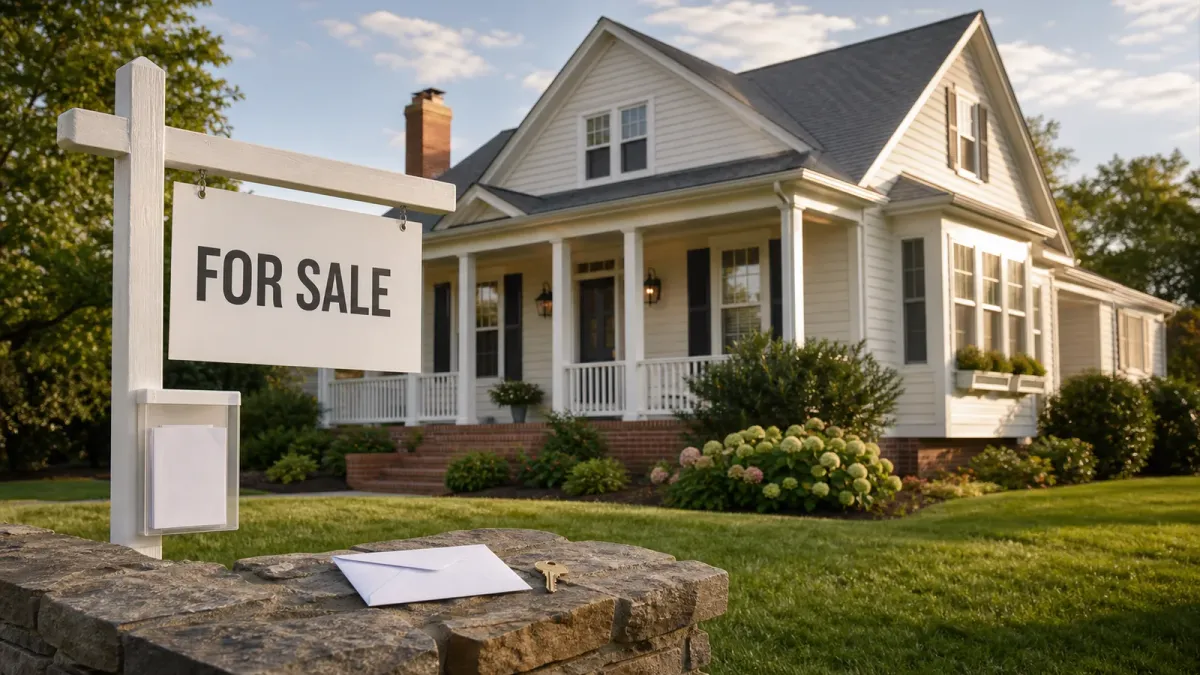
The short answer: Buy now only if the home fits your life for at least several years and the full payment works at today’s rate. Wait if buying would drain your reserves, restrict your choices or depend on a future refinance. A lower rate later could help, but it is not guaranteed—and a higher future price can absorb much of the savings.
The financing hurdle is real. Freddie Mac reported that the average 30-year fixed mortgage rate was 6.66% on July 30, 2026. Meanwhile, the National Association of Realtors put the June median existing-home price at $440,600, up 1.8% from a year earlier. High borrowing costs have not produced a broad national price collapse.
That means “wait for rates to fall” is not a complete strategy. The decision depends on the price you would pay later, the cash you can save while waiting, the rent you would pay, your local inventory and how long you expect to own the home.
What 6.66% means for a typical purchase
Start with an illustration based on NAR’s $440,600 national median. With 20% down, the loan would be $352,480. At 6.66% for 30 years, principal and interest would be about $2,265 a month.
That is not the all-in housing cost. Property taxes, homeowners insurance, mortgage insurance when required, homeowners association dues, utilities and maintenance can add hundreds of dollars or more. Closing costs and the down payment also compete with the emergency fund you will need after the keys arrive.
The national median is a benchmark, not a quote for your market. In June, existing-home medians ranged from $346,600 in the Midwest to $633,600 in the West. Use the same method with a realistic local price, an address-specific tax estimate and actual insurance quotes.
Waiting for 5.75%: four price scenarios
Suppose the average rate falls to 5.75% in a year. No official source promises that result; it is simply a useful stress test. With 20% down and a 30-year loan, here is how the principal-and-interest payment changes:
- Price unchanged at $440,600: about $2,057 a month, or $208 less than buying now.
- Price rises 2% to $449,412: about $2,098 a month, or $167 less.
- Price rises 5% to $462,630: about $2,160 a month, or $105 less.
- Price falls 5% while the rate stays at 6.66%: about $2,152 a month, or $113 less.
These examples are not forecasts, and they exclude every cost beyond principal and interest. They show why timing one variable is dangerous. A lower rate helps, but the price, down payment and ownership costs determine how much.

The market is giving mixed signals, not an all-clear
June’s existing-home inventory was 1.56 million units, equal to 4.6 months of supply, according to NAR. That was only slightly higher than a year earlier. The median price still rose, while sales fell 2.4% from May. Buyers were rate-sensitive, but supply remained limited enough to support prices in many markets.
New construction looked different. Census Bureau and HUD estimates showed 485,000 new homes for sale in June, equal to 9.3 months of supply. The median new-home sale price was $398,300, though new and existing medians are not directly comparable because the homes and locations differ. More new-home supply can create room to negotiate price, closing costs or a temporary rate buydown—if the property and contract are sound.
The latest Federal Housing Finance Agency index adds another caution: national prices slipped 0.1% in April from March but remained 2.0% above a year earlier. Local results varied widely. Waiting can pay off in a cooling market, but national data cannot tell you which neighborhood or house will become cheaper.
Buy now only if these four tests pass
- The payment passes without a refinance. Budget the current principal and interest plus taxes, insurance, dues and maintenance. Leave room for those costs to rise.
- Your time horizon is long enough. If work, family or location needs may change soon, transaction costs and a forced sale can overwhelm modest appreciation.
- Cash remains after closing. Keep a repair and emergency reserve. A down payment that empties every account is not a safety margin.
- The specific home is worth owning. Inspection findings, insurance availability, flood or wildfire exposure, taxes, association finances and resale limitations matter more than a national rate headline.
Also shop the loan itself. The Consumer Financial Protection Bureau says buyers can potentially save $600 to $1,200 a year by obtaining mortgage offers from multiple lenders. Compare Loan Estimates for the same loan type and term, including the rate, annual percentage rate, points, lender credits, origination charges and cash to close.
Wait when flexibility and cash are more valuable
Waiting is the stronger choice when the current payment leaves no monthly breathing room, your income or location is uncertain, or the available homes require compromises you will soon regret. It can also make sense when another year would materially improve your credit, reduce expensive debt or build enough cash to avoid mortgage insurance and preserve an emergency fund.
Set measurable goals instead of waiting for a magical rate. Choose a maximum all-in payment, a minimum cash reserve and a target down payment. Track actual local sale prices and days on market. Ask lenders to refresh comparable estimates periodically. If the numbers reach your thresholds, you can act without guessing where rates go next.
Do not make refinancing the rescue plan
Buying now and refinancing later can work, but only when buying now already works. Rates may not fall enough, your home value or credit profile may change, and a new loan has costs. Freddie Mac says refinancing commonly costs 3% to 6% of the loan principal, depending on the lender, borrower and location. A lower payment must last long enough to recover those costs.
Any seller- or builder-funded rate buydown needs the same scrutiny. Find out whether it is permanent or temporary, what the note rate becomes, who funds it and whether the home price or other concessions changed. Qualify your budget at the payment you will owe after a temporary subsidy ends.
The decision rule
Buy now when the right home is available, the all-in cost fits comfortably at the locked terms, you can keep reserves and you expect to stay. Wait when the deal needs a predicted rate cut, rapid appreciation or a quick refinance to become affordable.
A 6.66% rate is expensive by recent standards, but the rate alone cannot declare a good or bad purchase. Use today’s payment as the floor of your decision, treat a future refinance as optional upside and compare the cost of waiting against realistic—not ideal—price scenarios. The best time to buy is when the house and the balance sheet both pass.


