
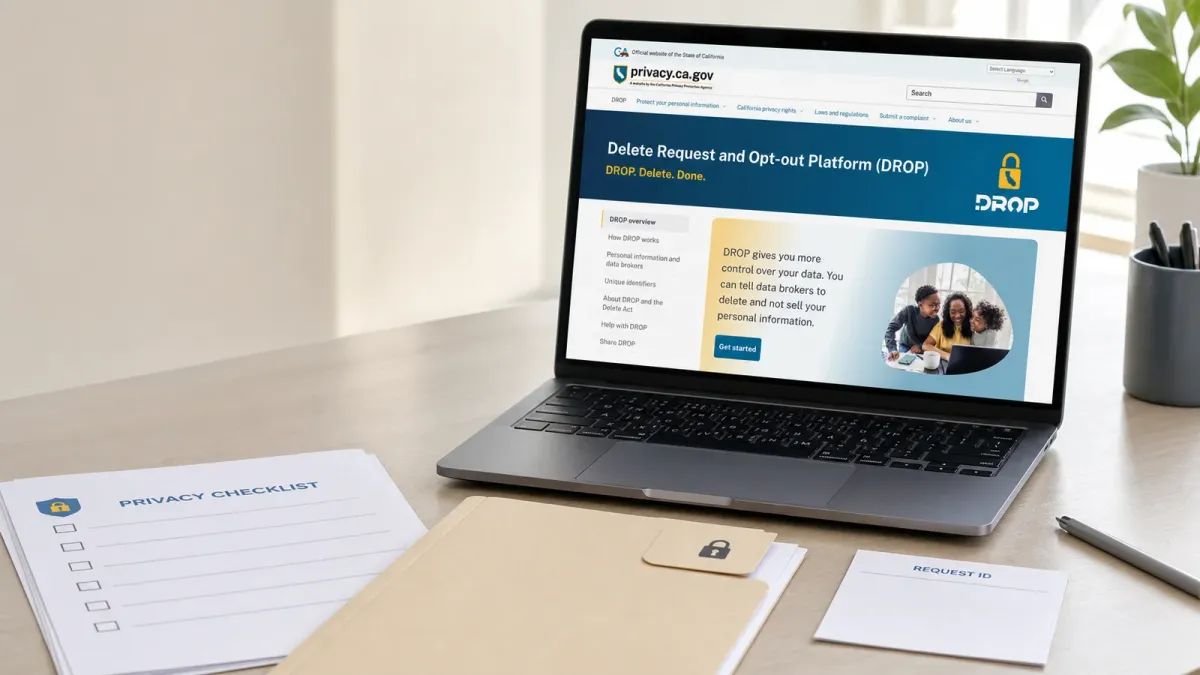
The short answer: California residents can use DROP now, but Aug. 1, 2026 is the date when data brokers must begin processing those deletion requests. If you live in California and want less of your personal information moving through data broker lists, this is the moment to check the tool rather than wait for another breach, spam wave or scam call.
DROP stands for Delete Request and Opt-out Platform. CalPrivacy, the California Privacy Protection Agency, says the state-run site lets residents send one request to more than 600 registered data brokers, asking them to delete and stop selling personal information.
The tool is not a magic erase button for the internet. It is a legal request system aimed at data brokers, which are businesses that collect personal information from sources even when the consumer did not directly deal with that company. Public records, data held by companies you use directly and information covered by legal exemptions may not disappear.
Check your eligibility first
DROP is for California residents. The state says users must verify residency through the California Identity Gateway or Login.gov, and the information entered into DROP is used to complete the request rather than sold or shared for another purpose.
That makes the first decision simple: use the official state site, privacy.ca.gov/drop, and avoid look-alike services that ask for money or unnecessary personal details. CalPrivacy says DROP is free.
Decide how much information to provide
The basic request can use ordinary identifying details such as name, email, phone number and ZIP code. CalMatters notes that users may also add optional identifiers, including mobile advertising IDs, smart TV IDs or a vehicle VIN, to help brokers match more records.
More identifiers can improve the odds of a match, but they also take more effort to collect. A practical approach is to submit the basic request first, save the DROP ID, then update the request later if you find device or vehicle identifiers you are comfortable providing.
Know the timeline
Starting Aug. 1, data brokers must begin pulling and processing DROP requests. CalPrivacy's regulations say brokers must access the system at least every 45 days, delete matched personal data, including inferences, unless an exemption applies, and report status within 45 days of retrieving a request.
That means results may not appear instantly. You should expect to track the request over weeks, not minutes. ABC7 San Francisco reported that more than 300,000 Californians were expected to have data deleted as the first enforcement deadline approached.
Use DROP as one layer, not your whole privacy plan
A July 2026 research paper on data broker opt-out and deletion requests found that consumers still face a heavy burden when deletion systems are fragmented. DROP is designed to reduce that burden for Californians, but it does not replace basic privacy habits: turn off unnecessary ad tracking, review app permissions, use strong account security and be skeptical of unsolicited calls or texts that already have pieces of your personal data.
Bottom line: if you are eligible, the best time to file a DROP request is before your data is used in a way you regret. The key is to use the official tool, keep your request ID and understand that deletion is a process with legal limits, not an instant wipe of every record about you.


