
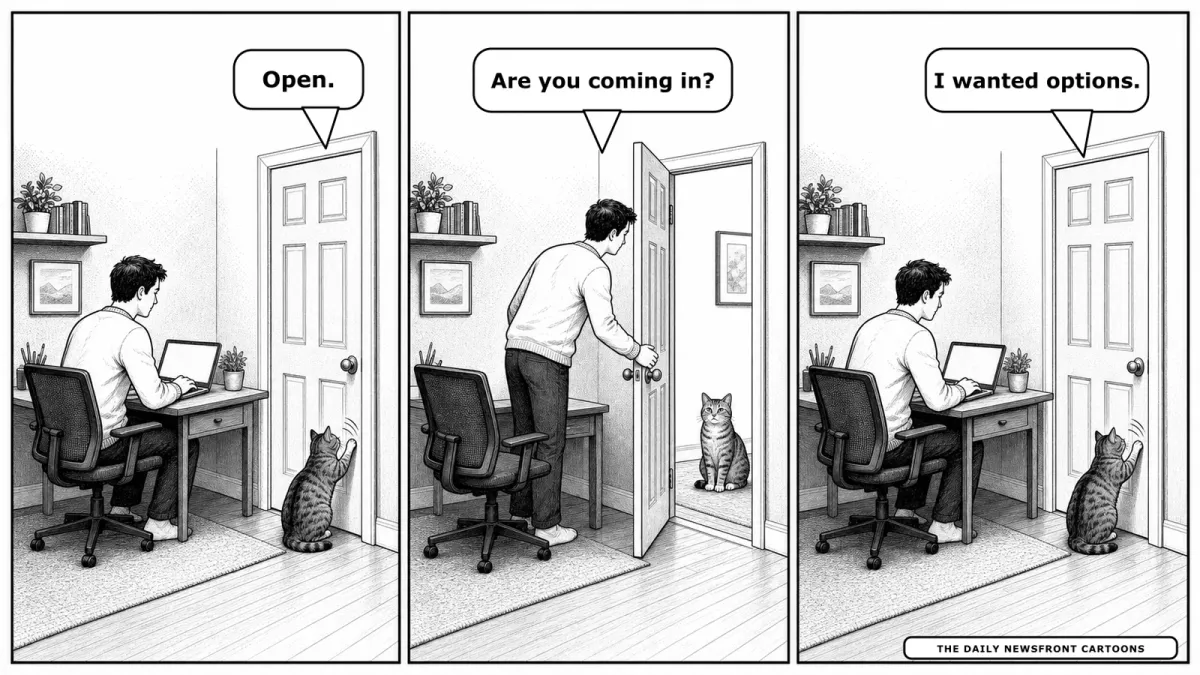
Some household negotiations begin with a scratch at the door. The request seems clear. The human opens the door. The cat studies the threshold as if the family has suddenly asked for a binding decision on its long-term strategic direction.
There is a real behavioral idea beneath the joke, although the cartoon is not a diagnosis of any individual cat. The AAFP and ISFM Feline Environmental Needs Guidelines say cats prefer familiar territory, and that a sense of control can help them feel comfortable and reduce stress. The guidelines also emphasize choices among resting places, perches, hiding areas and other resources.
The joke
Our fictional cat scratches at a closed interior door and says, "Open." Once the human complies, the cat does not cross the threshold. The human eventually closes the door, triggering another scratch and the clarification: the cat wanted options, not a completed transaction.
The sequence, the cat's dialogue and the cat's stated motive are invented satire. The factual kernel is narrower: veterinary guidance treats familiarity, predictability, choice and a sense of control as meaningful parts of a healthy feline environment. The 2022 ISFM/AAFP Cat Friendly Veterinary Environment Guidelines similarly describe perceived safety in terms that include familiarity, control and predictability.
A cat-friendly takeaway
No one needs to become a full-time door attendant. Where it is safe and practical, give a cat several comfortable places to rest, hide, perch and observe. Exterior doors and other unsafe access points should stay secure. Interior doors, meanwhile, remain subject to review by the household's smallest and most persistent facilities manager.


