
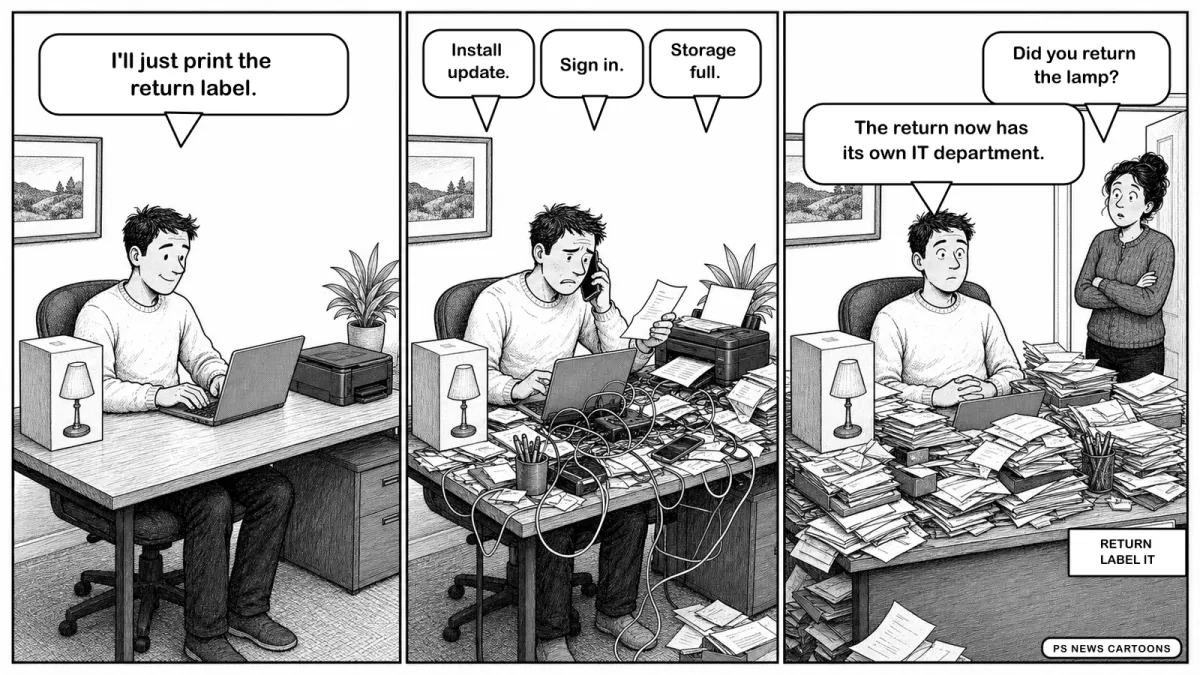
The most dangerous phrase in modern life may be: I'll just do this one quick thing. A return label needs a printer. The printer needs an update. The update needs a login. The login needs a password reset. The password reset needs a phone that has chosen this exact moment to run out of storage.
There is a real cognitive kernel beneath the joke. A weeklong Microsoft Research diary study found that information workers interleaved many tasks amid interruptions and had difficulty shifting among them. In a separate controlled experiment at the University of California, Irvine, researchers found that participants compensated for interruptions by working faster, but reported more stress, frustration, time pressure and effort.
The joke
Our fictional shopper starts with one boxed lamp and a reasonable plan: print its return label. Three panels later, the lamp has not moved, but the return now has an IT department. The setup, dialogue, characters and escalating technical failures are invented satire; the research findings are factual context, not proof that every interrupted chore unfolds the same way.
Why it feels familiar
The cartoon targets a universal ritual rather than any one company or product. Digital systems often turn a single intention into a chain of prerequisites, and each prerequisite asks the brain to hold the original goal while opening another little loop. The lamp waits patiently. The loops unionize.
The practical escape is less glamorous than the cartoon: write down the original goal, finish one dependency at a time and resist adding unrelated fixes to the stack. Or accept your promotion to chief return-label infrastructure officer.


