
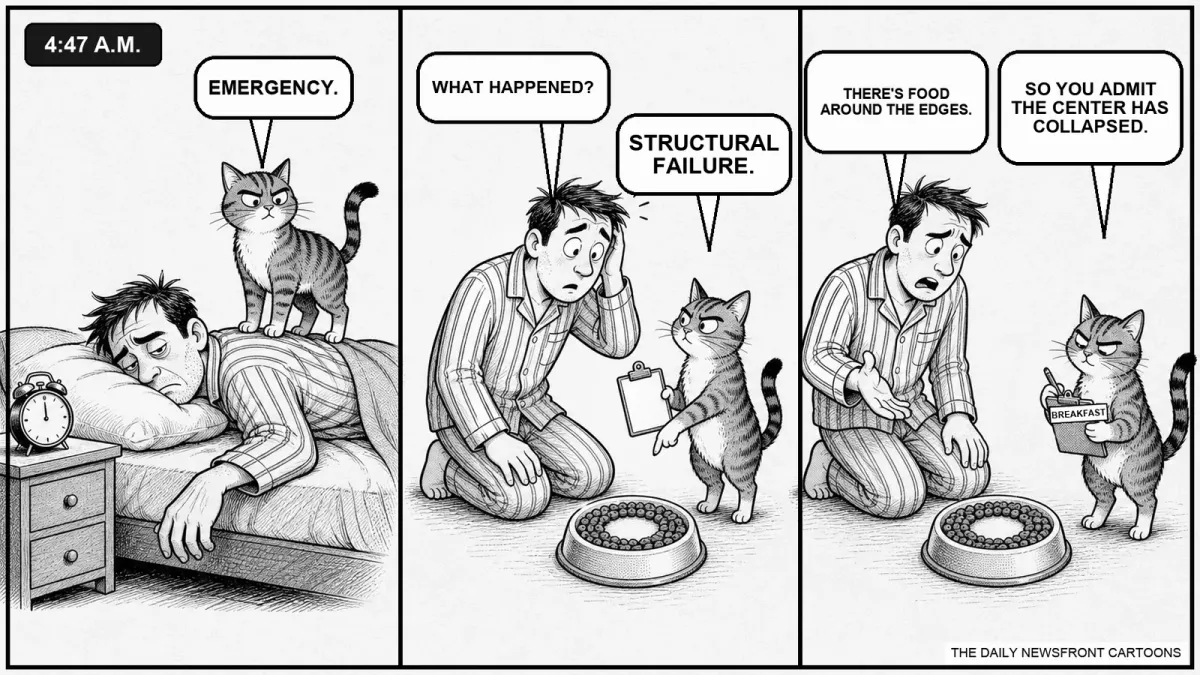
A cat's 4:47 a.m. breakfast alarm can feel like a tiny personal emergency. Veterinary behavior guidance suggests it is usually a collision between normal feline activity, a household routine and a human who once made the mistake of responding.
Cats are naturally more active around dawn and dusk. Cornell's Feline Health Center notes that this crepuscular rhythm can include waking people to play, while VCA Animal Hospitals says early-morning walking, vocalizing and energetic play are common complaints from cat owners.
The factual kernel
Attention can become part of the routine. VCA says offering food, affection or attention in response to nighttime activity may reinforce it. Regular feeding, more play and enrichment during the day or evening, and—when appropriate—a timed feeder can help move breakfast negotiations away from the pillow.
The joke
The cartoon turns that familiar negotiation into a three-panel incident report. A cat declares an emergency, presents the exposed center of an otherwise stocked bowl as a structural failure, then treats the owner's obvious defense as a confession.
The 4:47 a.m. timestamp, clipboard and dialogue are invented satire. Cats do not file breakfast infrastructure reports, although some owners may dispute that after enough predawn wake-up calls. The target is the universal ritual: a cat's absolute confidence that the household schedule begins when the cat says it does.
A sudden change in nighttime vocalization or activity can have medical or behavioral causes, especially in an older cat. That is a reason to call a veterinarian—not convene the emergency breakfast committee.


