
OpenAI began rolling out ChatGPT Health more broadly in the United States on July 23, 2026, expanding a feature that had been available to a limited group of early users. The rollout covers logged-in adults age 18 and older on ChatGPT Free, Go, Plus and Pro plans on the web and iOS.
The short answer: ChatGPT Health is a dedicated place inside ChatGPT where users can optionally connect supported medical records and Apple Health data. It can organize that information, explain it in plain language, compare changes over time and help people prepare questions for a medical appointment. With permission, ChatGPT can also use relevant Health information in an ordinary conversation.
OpenAI says more than 300 million people ask ChatGPT health-related questions each week. The new rollout is an effort to give those conversations more context than a standalone prompt or a one-time file upload, while keeping the product framed as a tool that supports—not replaces—professional care.
What ChatGPT Health actually does
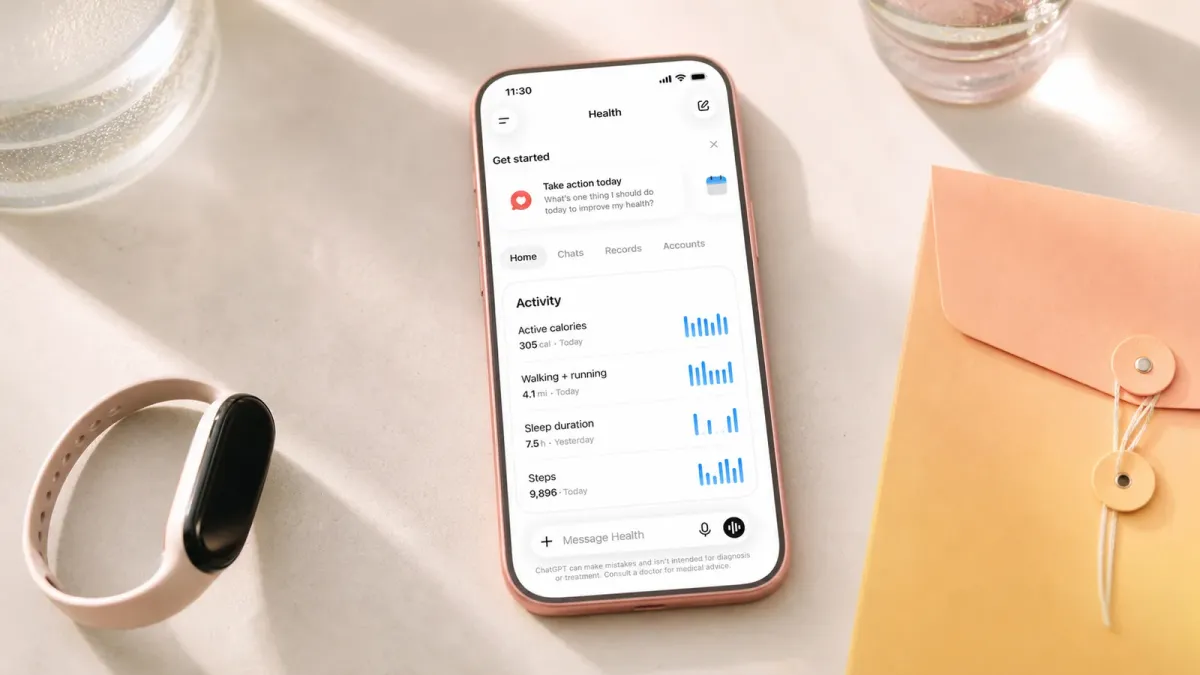
Health appears in the ChatGPT sidebar as a home base for connected accounts, records, recent data, trends and earlier health conversations. People can ask health questions without connecting anything, but linking data lets ChatGPT ground an answer in the information the user has chosen to share.
The feature can bring together details that often sit in separate places: lab results in a patient portal, medications in a medical record, activity and sleep data in Apple Health, or records from supported services such as One Medical and Function Health. The available information depends on the source, and some wearable or app-specific scores may not transfer.
OpenAI’s examples include summarizing changes since a previous appointment, comparing a new lab result with earlier tests, explaining a visit note, preparing follow-up questions, and looking at how sleep, activity and workouts relate to a routine. It can also use relevant context in everyday requests—for example, considering a food allergy during meal planning or a recent injury when suggesting a lower-impact activity.
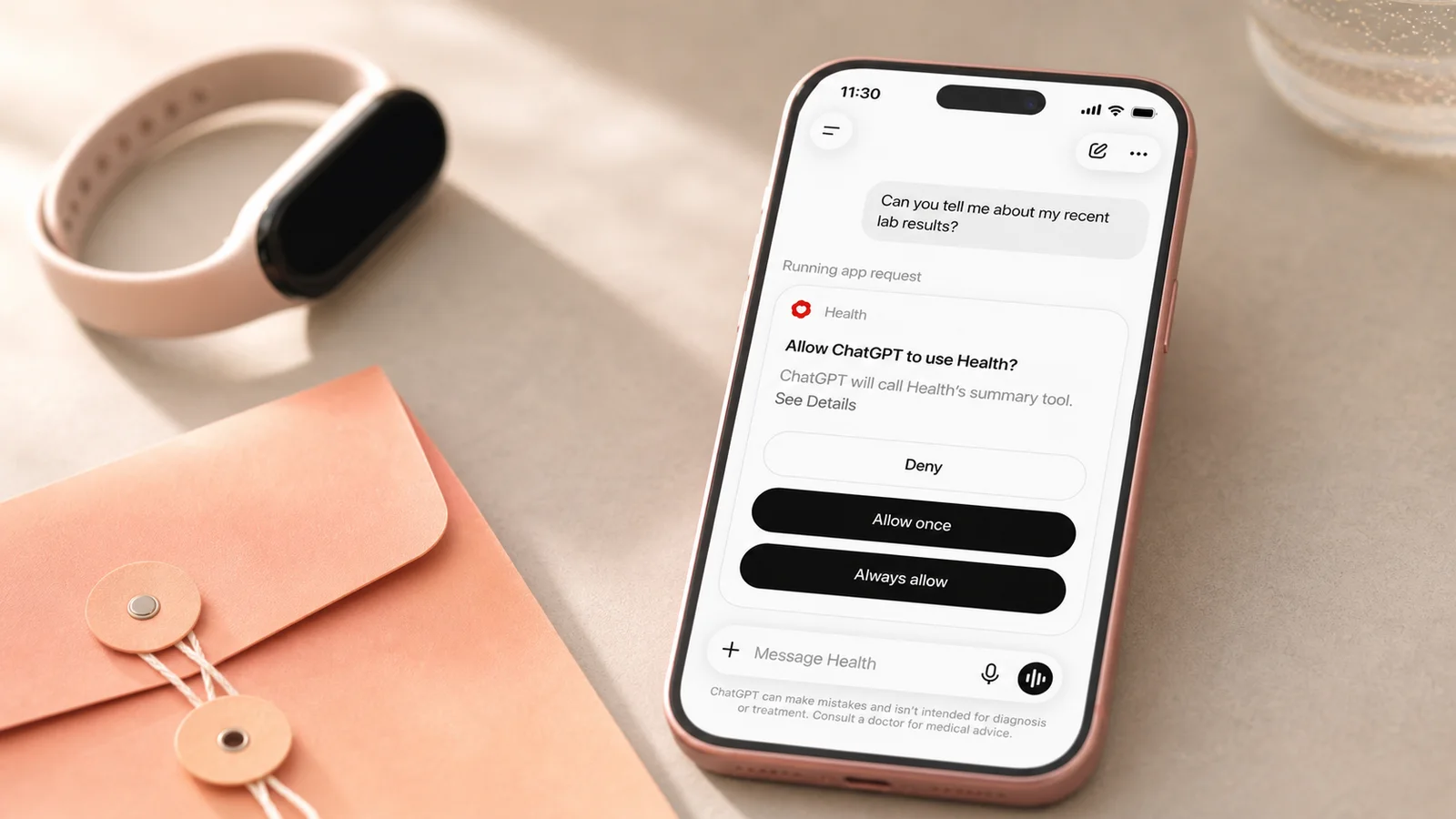
That cross-chat use is optional. By default, ChatGPT asks before using connected medical records or Apple Health information in a response. A user can allow access once, choose to always allow it, or deny the request. Typing @Health in a message can explicitly ask ChatGPT to include connected health context.
How to connect it
Eligible users can open Health from the sidebar or the More menu and select Get started. ChatGPT then guides them through connecting an available record source or Apple Health. Syncing can take a few minutes, and access may appear gradually as the rollout reaches accounts.
Once records are connected, users can review listed conditions and medications, remove items that are no longer relevant and add missing context such as family history. That review matters: OpenAI cautions that a connected record may be incomplete or out of date, such as a medication that still appears after a person has stopped taking it.
The July 23 rollout covers web and iOS. OpenAI says Health is not yet available in Codex.
What the privacy controls cover
OpenAI says all ChatGPT conversations are encrypted at rest and in transit, with additional encryption protections for information connected through Health. Connected medical records and Apple Health information—and conversations that use that data—are not used to train OpenAI’s foundation models or target advertising, regardless of the account’s normal model-training setting.
Users can disconnect a health-data source in Health under Accounts. OpenAI says synced data from that source is deleted from its systems within 30 days after disconnection. Information that has already appeared in a ChatGPT conversation remains in the conversation history until the user deletes that chat.
Health can create memories from conversations if memory is enabled, but OpenAI says memories are not created directly from connected medical records or Apple Health data. Temporary Chat or turning memory off provides another control for conversations a user does not want carried forward.
What ChatGPT Health cannot do
ChatGPT Health is not intended to diagnose a condition, prescribe treatment or replace the judgment of a qualified medical professional. OpenAI says its models have improved at recognizing when urgent care may be needed, asking for missing context and explaining uncertainty, but it also says ChatGPT can still make mistakes.
That limit is especially important because a polished answer can sound more certain than the evidence warrants. A single lab value outside a reference range does not establish a diagnosis, and a chatbot may not have the full clinical picture, including an examination, a complete history or the most current medication list.
The rollout also comes amid renewed scrutiny of health advice from general-purpose chatbots. A Florida man filed a lawsuit this week alleging that earlier ChatGPT responses discouraged him from promptly seeking care for symptoms later linked to a pulmonary embolism. OpenAI has said people should verify important information and make medical decisions with professional guidance. The allegations have not been adjudicated.
What users should check first
- Confirm the source. Check which record system or app is connected and whether its information is current.
- Review each permission prompt. “Allow once” gives narrower access than “Always allow” when ChatGPT asks to use Health context.
- Verify important details. Compare medication names, dates and lab values with the original record before acting on an explanation.
- Use it to prepare, not conclude. Asking for questions to bring to a clinician is safer than asking the chatbot to make a final diagnosis.
- Seek urgent help when needed. Do not wait for a chatbot response when symptoms may require emergency evaluation.
The bottom line
ChatGPT Health turns scattered records and wellness data into context that ChatGPT can use with a user’s permission. Its most practical role is helping people organize information, understand terminology, notice changes and prepare for conversations with clinicians. The tradeoff is equally clear: connecting more health data may make answers more relevant, but it does not make the system a doctor or eliminate the need to verify what it says.


