
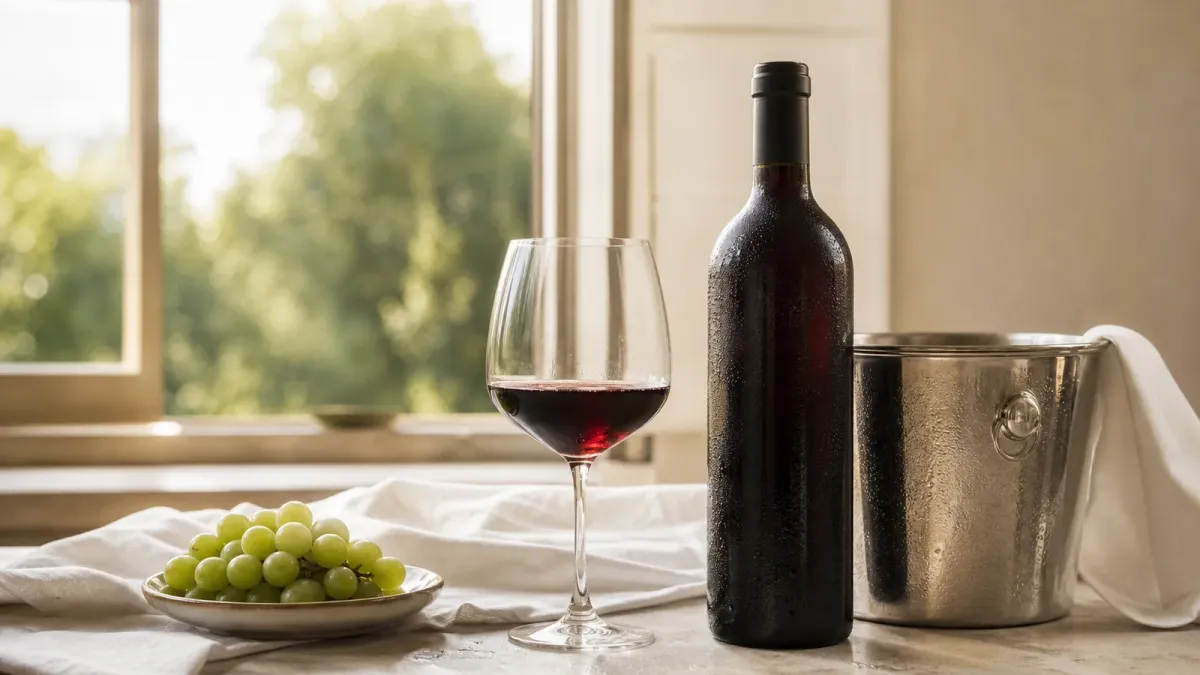
Chilled red wine has moved from restaurant-side request to summer search trend. Google’s Summergeist 2026 report says “chilled red” recently reached peak search interest among U.S. summer wine queries, a sign that more people are wondering whether red wine belongs in the fridge.
The short answer: yes, but not every bottle wants the same chill. The goal is usually cool and refreshing, not refrigerator-cold. Lighter reds with bright fruit and modest tannins are the best candidates; big, dense reds can taste harsh if they are served too cold. Treat the chill as a serving adjustment, not a universal rule for every red on the shelf.
The short answer
Start with light-bodied reds and aim roughly for the low-to-mid 50s Fahrenheit. Wine Enthusiast puts many light- to medium-bodied reds around 54 to 60 degrees, while Decanter’s quick guide places light, chillable reds around 54 to 56 degrees and medium-bodied reds around 57 to 61 degrees.
That is cooler than a warm kitchen or patio, but warmer than most white wine. If the bottle feels lightly cool to the touch and the fruit still smells lively in the glass, you are close.
Which reds to chill
Look for words such as light-bodied, low tannin, fresh, juicy, carbonic or served chilled. Good starting points include Gamay or Beaujolais, Pinot Noir, Cabernet Franc, Frappato, Zweigelt, Lambrusco, lighter Grenache and many young unoaked reds.
These wines tend to show more red fruit, acidity and freshness when cooled. Jancis Robinson’s serving guidance notes that lighter reds can be especially appropriate in warmer climates, where keeping red wine at a comfortable cellar temperature is hard.
Which reds to keep warmer
Be careful with high-tannin or very full-bodied reds such as many Cabernet Sauvignon, Syrah, Malbec and heavily oaked blends. They can still benefit from being cooler than a hot room, but an aggressive chill can make tannins feel drying and mute the aromas.
For bigger reds, think cellar cool rather than patio-cold. If the wine tastes tight, bitter or flat, let the glass sit for 10 minutes and try again.
How to chill a bottle quickly
The easiest method is 30 to 60 minutes in the refrigerator, depending on the bottle’s starting temperature and weight. If guests are already arriving, use an ice bucket with both ice and water for about 10 to 15 minutes, then take the bottle out before it gets too cold.
Pour smaller servings outside. Wine warms quickly in the glass, especially on a summer table, and a small pour gives each glass a better chance to stay in the right range.
What to watch
Temperature should support the wine, not become a rule to perform. Chill lighter reds enough to sharpen their fruit and freshness, keep fuller reds only moderately cool, and adjust after the first pour. If the wine opens up as it warms, you chilled it a little too far. If it tastes warm, heavy or alcoholic, give it more time in the fridge.
Sources: Google Summergeist 2026, Wine Enthusiast, Decanter and Jancis Robinson.


