
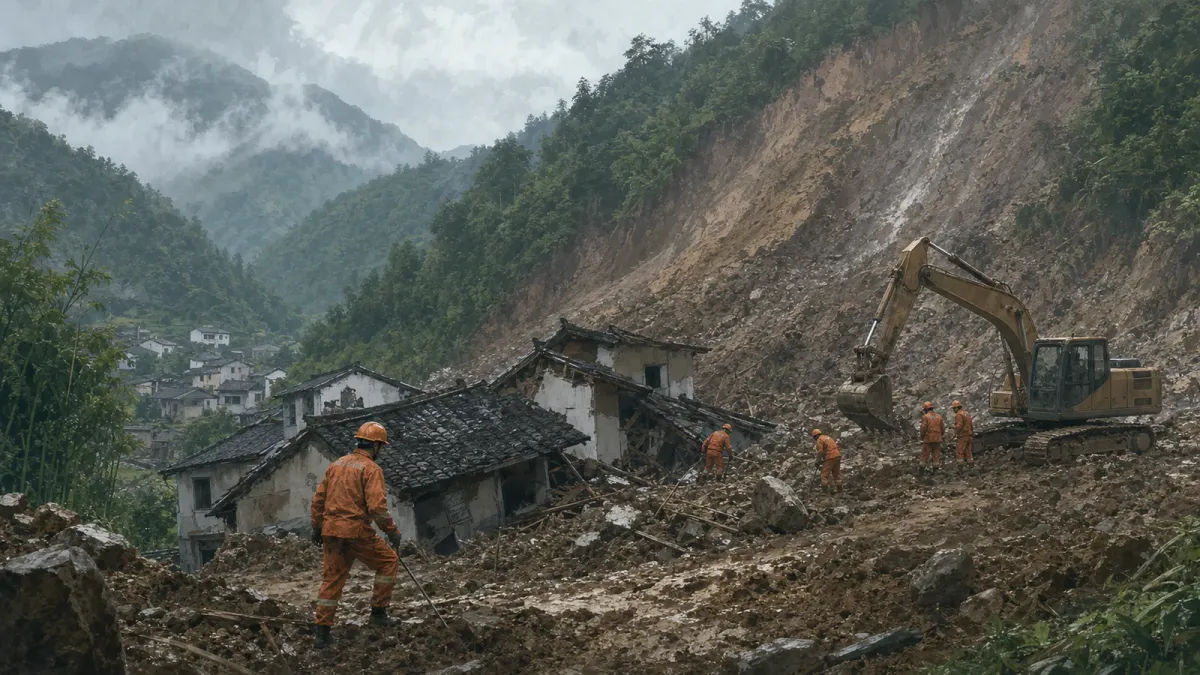
Rescue crews in southwest China were still searching for survivors after a rainfall-triggered landslide buried more than 10 residential buildings in Pengshui County, part of Chongqing municipality.
The landslide struck at 9:08 a.m. on Friday, July 17, 2026, in the Hanjia subdistrict along the Wujiang River, according to Xinhua. The Associated Press reported Sunday that at least eight people had died and 34 remained missing.
What changed
Authorities said 10 people had been pulled from the rubble. AP reported that one survivor had been discharged from the hospital and nine others were in stable condition.
The collapse sent large amounts of rock and soil down a slope, and officials evacuated more than 1,100 residents from buildings judged to be in the danger zone. Xinhua reported Sunday that search and rescue operations were still underway at the site.
The rescue work is difficult because unstable boulders and rain-soaked terrain can make heavy excavation dangerous. AP said crews were using excavators, rescue dogs and detectors while specialists worked to avoid triggering another collapse.
Why it matters
The disaster highlights the risk that heavy rain can pose in steep, karst mountain areas where homes sit near slopes and river corridors. Pengshui County lies in southeastern Chongqing, near the Wujiang River and mountainous terrain that can complicate evacuation and rescue access.
For families waiting on missing relatives, the key issue is whether crews can keep searching without creating new danger for trapped people, rescue workers or nearby residents.
What happens next
Officials have not announced a final casualty count. The next updates to watch are revised missing-person totals, whether additional survivors are located, and whether local authorities expand evacuations if geologists find continuing slope instability.


