
Some Chinese rare-earth suppliers are declining shipments to U.S. customers because they fear repercussions from Beijing, Reuters reported on September 4, citing three sources. The report points to a continuing obstacle for manufacturers even after Washington and Beijing made commitments intended to keep export licenses flowing.
The reported refusals involve some suppliers; they do not establish a blanket Chinese ban on all rare-earth exports to the United States. Reuters did not identify every affected company or quantify the total volume being withheld.
Compliance has become part of the bottleneck
According to Reuters, a handful of suppliers stopped shipping after China sanctioned the Responsible Business Alliance, a U.S. supply-chain monitor, in August. One source described concern about complying with an associated minerals-audit framework while risking punishment in China.
That account suggests the difficulty extends beyond securing an export license: a supplier must also be willing to complete the transaction. The shipment claims remain attributed to Reuters' sources, rather than a newly published, comprehensive government prohibition.
Why a limited disruption matters
The International Energy Agency estimates that China produced 60% of mined magnet rare earths in 2024, but 91% of refined output and 94% of sintered permanent magnets. Those figures describe magnet-related materials and production stages, rather than every rare-earth mineral.
This concentration makes the processing chain particularly hard to replace. Ore must pass through separation, refining and manufacturing before it becomes a useful magnet. Finding another deposit does not immediately provide a substitute for those capabilities.
The IEA says export controls introduced in 2025 disrupted magnet supplies and forced some automakers to reduce or temporarily stop production. That history explains the concern now; it is not evidence that September's reported refusals have already caused equivalent shutdowns.
An alternative supply chain is taking shape
Separately, USA Rare Earth announced on September 4 that its combination with Brazil's Serra Verde had closed the previous day. The company said the deal connects Serra Verde's upstream operation with its own processing, metallization and magnet-making capabilities.
That is a concrete diversification step, but the announcement does not establish that affected U.S. buyers can immediately replace withheld Chinese shipments. The company's description of an integrated platform should be distinguished from independently demonstrated delivery capacity.
What to watch next
The key measures are completed shipments, suppliers' willingness to accept orders and the availability of material at each processing stage. Diplomatic commitments and new projects matter most when they translate into reliable deliveries to manufacturers.
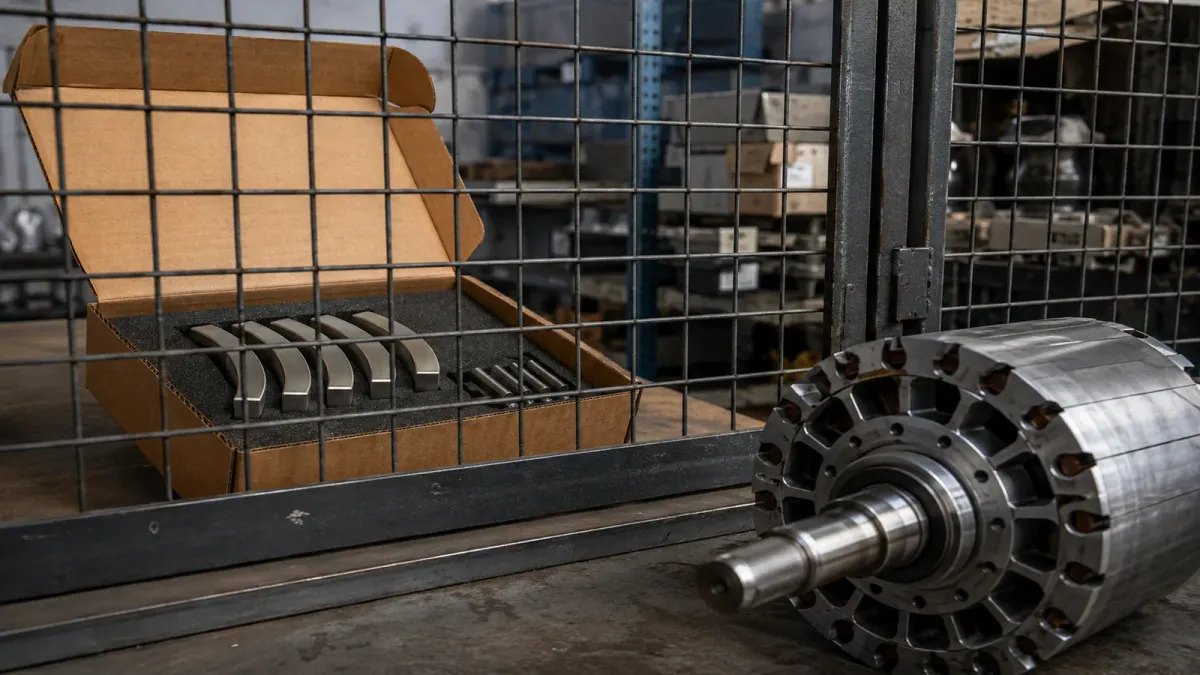
Image: AI-generated, staged editorial scene illustrating a materials bottleneck; it does not depict a specific supplier or shipment.


