
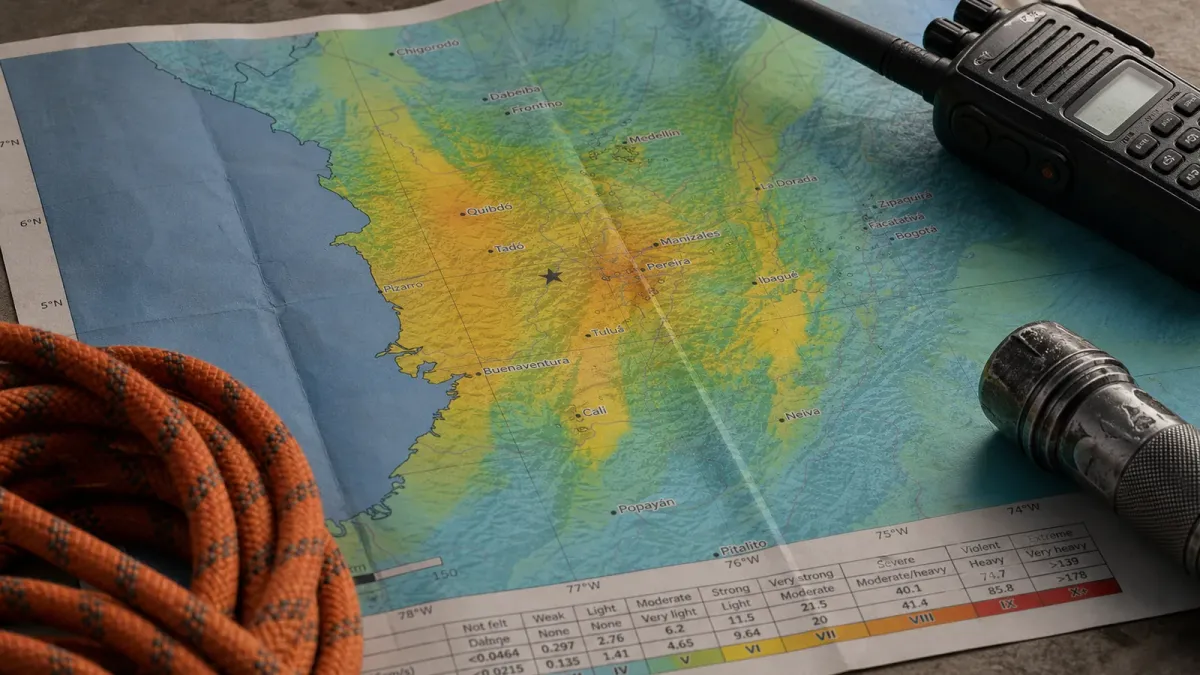
The reported death toll from western Colombia's magnitude 7.4 earthquake rose to at least 224 on Tuesday, August 11, as rescue teams searched collapsed buildings and officials tried to reconcile sharply different local and national counts.
El País reported the 224 figure from local authorities at 8:39 a.m. Eastern time. The Associated Press separately reported that mayors and governors in Cali, Pereira, Chocó and Manizales had counted at least 179 deaths, while the federal government's most recent public total remained 111. The gap reflects the speed and difficulty of collecting verified information during an active rescue operation.
More than 3,000 people were listed as missing, according to AP, and roughly 1,600 buildings had been reported damaged or collapsed. Cadena SER, citing Colombia's National Unit for Disaster Risk Management, reported at least 176 deaths and more than 2,000 injuries. All of the figures remain provisional.
What changed overnight
The scale of the human toll is now substantially clearer than it was Monday. Search operations resumed Tuesday across dozens of western cities and towns, with soldiers, firefighters, rescue specialists and residents moving debris by hand. AP reported that access remained especially difficult in Chocó, the department around the epicenter, where many communities can be reached only by boat, air or routes through dense jungle.
Cali officials reported 86 people rescued alive, according to Cadena SER, but hundreds were still described as trapped or missing in the city. Pereira and surrounding Risaralda also reported heavy loss of life. The uneven flow of information means no single number yet captures the full national impact.
What the seismic data shows
The U.S. Geological Survey lists the reviewed event at magnitude 7.4, centered about 5 kilometers south of San José del Palmar. It struck at 7:34 a.m. local time Monday at a depth of about 110 kilometers. USGS classified the event with a red alert and reported no tsunami flag.
Colombia's Geological Service had recorded 47 aftershocks by Tuesday morning, El País reported, with the strongest reaching magnitude 4.8. Aftershocks smaller than the main quake can still threaten already weakened structures, so building inspections and controlled access remain central to the rescue effort.
What remains uncertain
Officials have not completed a national damage assessment, and the largest uncertainty is the number of people still unaccounted for. A missing-person count can include people who are safe but unable to communicate, as well as people trapped beneath debris. It should not be read as a projected death toll.
Authorities are also assessing hospitals, schools, airports, roads and utilities across the affected region. Those checks will determine where aircraft can land, which routes can carry heavy rescue equipment and whether damaged medical facilities can continue treating patients.
What happens next
The next reliable milestones will be a reconciled national casualty report, updated rescue totals and clearer access to Chocó's remote communities. Families seeking information should use official Colombian emergency and consular channels and be cautious with old videos, fundraising links or casualty figures circulating without a timestamp or named source.


