
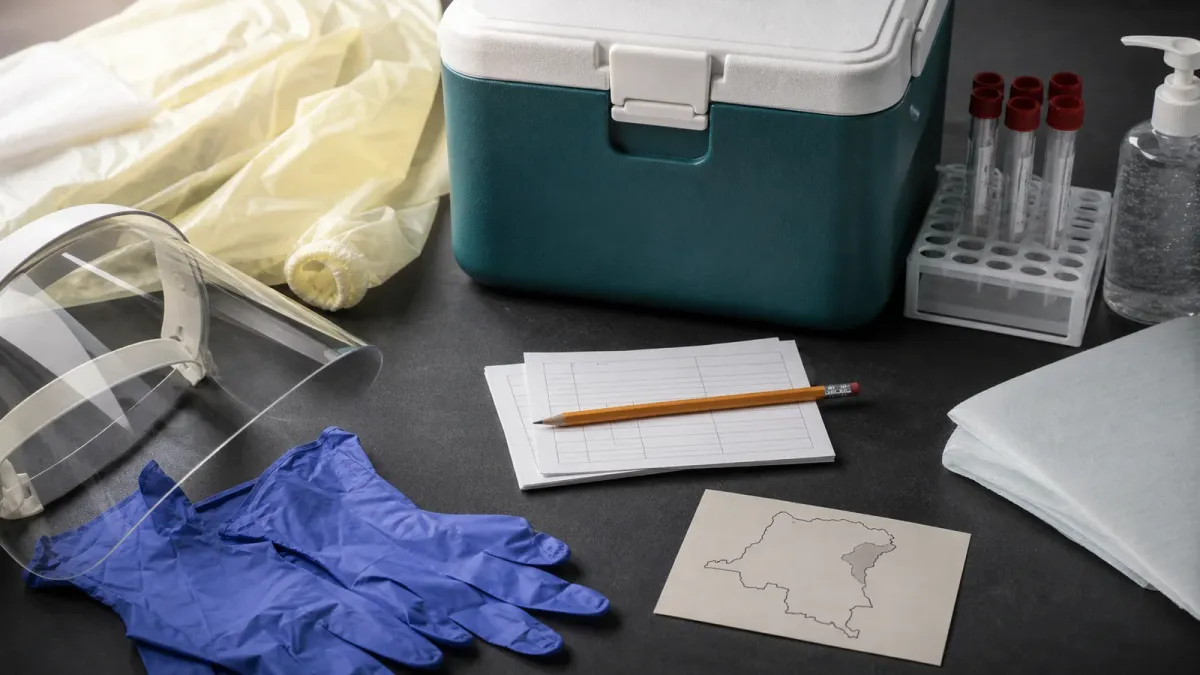
Health workers at an Ebola treatment center in Bunia, in eastern Democratic Republic of the Congo, went on strike Saturday, July 25, adding a labor crisis to an outbreak that has nearly reached 3,000 confirmed cases.
The Associated Press reported that staff at the Elikya Ebola Treatment Center stopped work over unpaid performance bonuses, disrupting care in Ituri province, the outbreak's center. AP, citing Congo's Ministry of Health, reported 2,973 confirmed cases and 1,309 deaths.
The strike follows earlier walkouts at Bunia General Hospital and Rwampara, where workers have said they went months without pay while handling one of the world's most dangerous infectious diseases. The immediate risk is not only fewer beds or slower care, but weaker isolation, testing, burial support and contact tracing in a place where every delay can start another chain of transmission.
What changed
The newest development is the strike at Elikya, a treatment center in the city most closely associated with the response. That makes the dispute more than a payroll story. Ebola control depends on trained teams staying in place long enough to identify symptoms, isolate patients, protect other health workers and win enough community trust for families to report illness early.
WHO's latest disease outbreak update, published July 17, said the Bundibugyo virus disease outbreak in Congo remained active, with sustained transmission driving increases in cases and deaths. As of July 15, WHO reported 2,124 confirmed cases and 828 deaths in Congo, with Ituri accounting for nearly 90% of confirmed cases.
The July 25 AP figures show how quickly the numbers have moved since that update. They also point to the central problem for responders: the outbreak is not waiting for the payment dispute, supply gaps or security problems to be solved.
Why containment is harder
Bundibugyo virus disease is one species of Ebola. WHO says there is no approved vaccine or specific treatment for this species, although candidate vaccines and therapeutics are under review. Care still matters: rapid recognition, testing, isolation and supportive treatment can reduce deaths and make communities more willing to seek help.
The outbreak is unfolding in a region already strained by conflict, displacement and limited access to basic services. WHO said health-worker infections continued to rise by mid-July, underscoring the occupational risk when infection-prevention systems are weak or workers lack enough protection and support.
For readers outside the region, the key distinction is risk versus consequence. WHO assessed global risk as low on July 17, and Ebola is not airborne; it spreads through direct contact with the bodily fluids of symptomatic infected people, contaminated materials or unsafe burial practices. But low global risk does not mean low stakes. A faster outbreak in a fragile health system can still become a larger humanitarian emergency and demand more international support.
What happens next
The next signal to watch is whether Congo's health authorities resolve the payment dispute quickly enough to restore full staffing at treatment centers in Bunia and nearby health zones. The other signal is whether contact tracing improves. WHO reported that more than 12,000 contacts had been identified by July 15, but follow-up rates varied sharply by province.
If staffing gaps continue, responders may lose time on the basic work that stops Ebola: finding cases, isolating patients, tracing contacts and protecting health workers. That is why the strike matters now. It turns a fast-moving outbreak into a test of whether the people asked to contain it can stay on the job safely and reliably.


