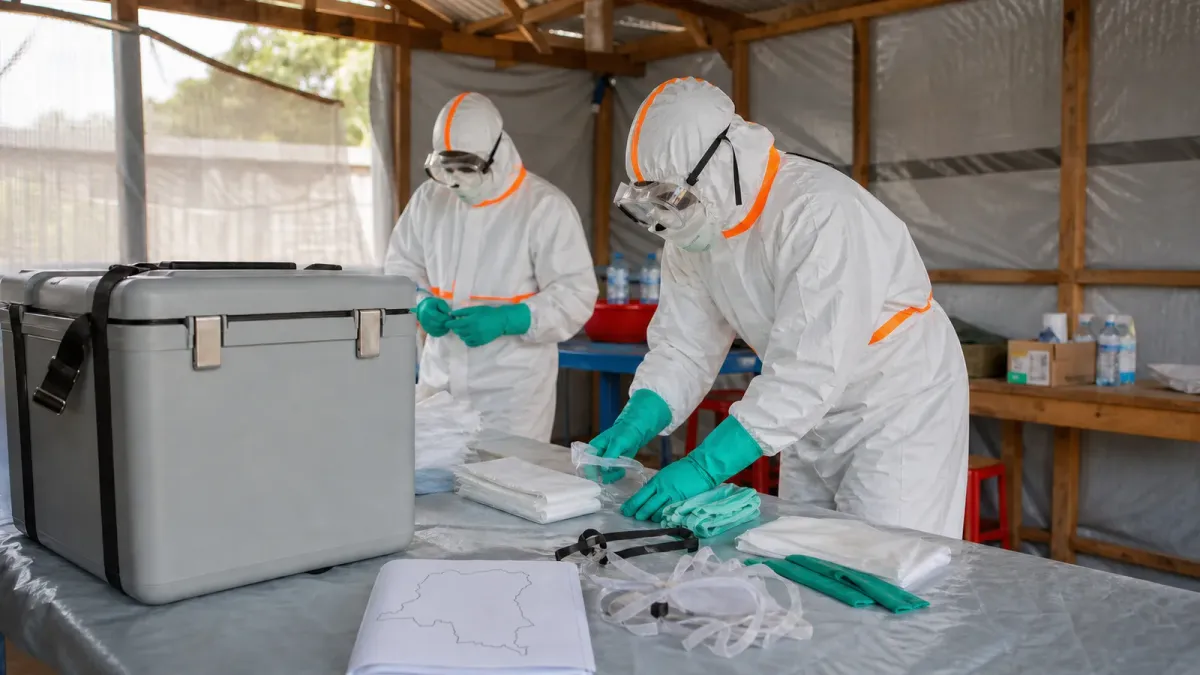
The Democratic Republic of the Congo has received 16,250 doses of the Ervebo Ebola vaccine as an exceptionally fast Bundibugyo virus outbreak pushes past 2,500 reported deaths. The doses arrived in Kinshasa late Friday, August 21, and are the first part of a 70,000-dose allocation organized by the World Health Organization and its partners.
Congolese data cited by The Associated Press on August 22 counted 5,375 confirmed cases and 2,557 deaths across six provinces. Those totals are changing quickly. The important new development is not that a proven vaccine has suddenly solved the crisis: Ervebo is licensed for Ebola disease caused by Zaire ebolavirus, not Bundibugyo virus.
The short answer
Health authorities are using Ervebo because early laboratory and animal evidence suggests that it may offer some protection against Bundibugyo disease, particularly against death. Human protection remains unproven, so part of the campaign will operate as a Phase 3 clinical trial while frontline workers receive doses under emergency recommendations.
Of the 70,000 doses approved for release, 20,000 are reserved for the clinical trial and 50,000 for health and frontline workers. The WHO and Africa Centres for Disease Control and Prevention say people offered vaccination must be told the potential benefits, risks and limits and must be able to give informed consent.
That distinction matters. A vaccine can be scientifically promising and still not have demonstrated how well it prevents infection, severe illness or transmission from this strain in people. The trial is intended to produce the evidence that future outbreak policy currently lacks.
Why this outbreak has outpaced the response
WHO said the outbreak reached 4,665 confirmed cases and 2,184 deaths in Congo by August 12, a 46.8% case-fatality ratio among confirmed cases at that time. Ituri Province accounted for 85% of reported cases, but infections had reached 54 health zones in Ituri, North Kivu, South Kivu, Haut-Uélé, Tshopo and Bas-Uélé.
The accelerating national totals reported since then show how quickly the picture is changing. Africa CDC data cited by AP indicated that the outbreak had recorded about 10 times as many cases and seven times as many deaths by week 13 as the 2014–2016 West Africa epidemic had at the same stage. Officials also cautioned that the current outbreak had not peaked.
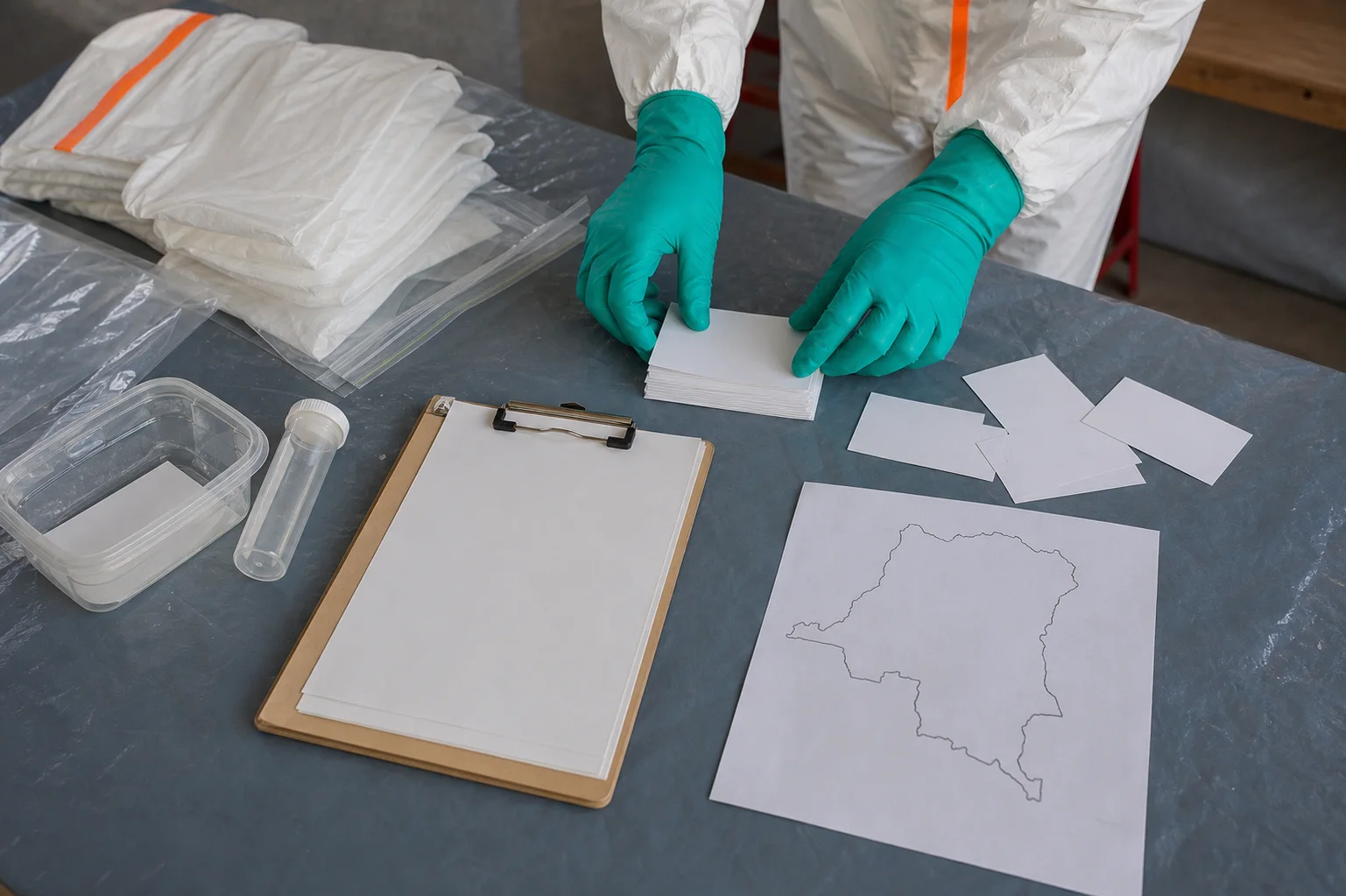
Several forces are reinforcing one another. Armed conflict and displacement keep people moving through eastern Congo. Some communities have limited access to clinics, laboratories and reliable transport. Attacks on health workers and facilities interrupt surveillance and care. Early symptoms can resemble malaria or typhoid, and some early tests looked for the more common Zaire strain, delaying recognition of what was spreading.
Contact tracing illustrates the gap. WHO reported that teams followed 84.2% of identified contacts on August 12, yet Africa CDC later said fewer than 10% of new cases were arising from already known contacts. Those measures are not contradictory: teams may reach most people on a list while still missing many transmission chains that never make it onto the list.
What the vaccine will—and will not—do
Vaccination can add a vital layer of protection, especially for the workers most exposed to infected patients and contaminated materials. It cannot replace rapid testing, safe isolation, protective equipment, supportive treatment, contact tracing, dignified burials and trusted communication with affected communities.
The strain mismatch is the central scientific question. Ervebo trains the immune system against Zaire ebolavirus. Bundibugyo is related, but not identical. Preliminary animal data suggest cross-protection may be possible; only the planned human trial can show how much protection exists and which outcomes it changes.
Treatment research is proceeding in parallel. WHO reported that the PARTNERS trial, which is testing potential therapies for Bundibugyo disease, began enrollment on July 2 and had enrolled more than 100 confirmed patients at three clinical facilities in Ituri by mid-August. Until effective strain-specific tools are established, early recognition and optimized supportive care remain essential.
Why this is a global health concern
WHO declared the outbreak a public health emergency of international concern on May 17. Imported cases have been diagnosed in Uganda, France and Germany, although WHO's August 20 risk assessment said there had been no sustained transmission outside Congo. Uganda planned to maintain enhanced monitoring through August 27 because movement across the border creates a continuing risk of reintroduction.
That is a reason for coordinated surveillance, not panic. Ebola spreads through direct contact with blood or other body fluids from a sick or deceased infected person, not through ordinary long-distance airborne transmission. The immediate burden remains concentrated in affected Congolese communities and among the workers trying to reach them.
What to watch next
- Delivery: whether the remaining doses reach deployment sites beyond Kinshasa and the most affected health zones without cold-chain or security delays.
- Trial enrollment: how quickly the Phase 3 vaccine study begins and whether communities receive clear information and meaningful consent.
- Transmission chains: whether a rising share of new cases can be linked to known contacts, a practical sign that surveillance is catching up.
- Worker safety: whether infections among health personnel decline as vaccination, protective supplies and infection-control support expand.
- Regional spread: whether imported cases are isolated without sustained transmission in neighboring countries.
The bottom line is deliberately cautious: 16,250 arriving doses are an important operational step, but not proof that the outbreak has turned. Their value will depend on speed, trust, careful trial design and the broader public-health system around them.


