
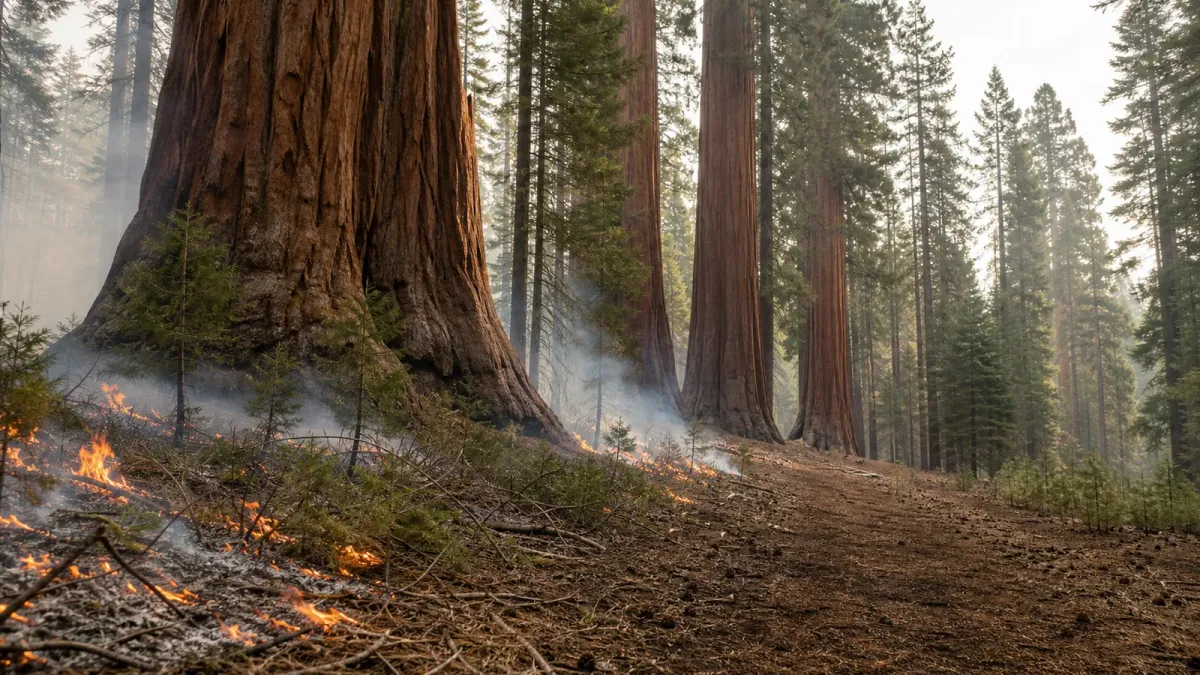
A NASA-funded study released this week gives a sharper answer to one of the hardest wildfire questions in the West: small, planned fires can help some of the world’s largest trees survive the megafires that now threaten them.
The analysis, published July 11, 2026, in Nature Communications and highlighted by NASA on July 20, found that giant sequoias in areas treated with prescribed burns were nearly four times more likely to survive the extreme 2020 and 2021 California wildfires than similar trees in untreated areas.
That matters now because wildfire smoke is again crossing long distances in North America. NASA Earth Observatory reported July 22 that brown carbon from wildland fires worsened air quality in parts of the United States and Canada from July 14 through July 20, while several major cities saw air quality range from unhealthy to hazardous.
The short answer
Prescribed burns do not fireproof a forest. They reduce the needles, branches, shrubs and smaller trees that can turn a future wildfire into a hotter, more lethal event. In the new study, researchers estimated that previous prescribed burns prevented at least 1,888 giant sequoia deaths during the Castle Fire in 2020 and the KNP Complex Fire in 2021.
The team analyzed 26,403 giant sequoias across 19 groves in Sequoia and Kings Canyon National Parks using field observations, airborne lidar, high-resolution satellite imagery and modeling. The paper estimated 7,974 sequoia deaths in the study area and found that prescribed burns within the previous decade reduced mortality odds by 77%.
Why sequoias need the right kind of fire
Giant sequoias evolved with fire. The National Park Service says low- to moderate-intensity fire clears crowded undergrowth, reduces fuel on the forest floor and opens sunny gaps where young sequoias can grow. A century of fire exclusion allowed fuel to build up in many groves, making high-severity fire more likely when drought, heat and wind line up.
The difference is intensity. Low fire can help a grove regenerate. Extreme fire can kill mature trees that stood for hundreds or thousands of years. NASA said giant sequoias can grow more than 300 feet tall, exceed 30 feet in diameter and live for more than 3,000 years, but recent fires have killed them at rates unusual for the species.
What readers should take from it
The study is not an argument for casual burning or fewer safeguards. Prescribed fires are planned by trained crews under specific weather, fuel and safety conditions. They can still produce smoke, face narrow burn windows and require public coordination.
But the practical lesson is clear: waiting until a fire is already extreme leaves managers with fewer choices. The evidence now points toward earlier, carefully managed fuel reduction as one of the most concrete tools for protecting old-growth forests as fire seasons grow more volatile.
For residents downwind of wildfire smoke, the study also explains why forest policy can show up as an air-quality issue far from the trees themselves. Fuel decisions made years before a fire can affect how intensely a grove burns, how much smoke is produced and how hard it is for crews to defend irreplaceable ecosystems.


