
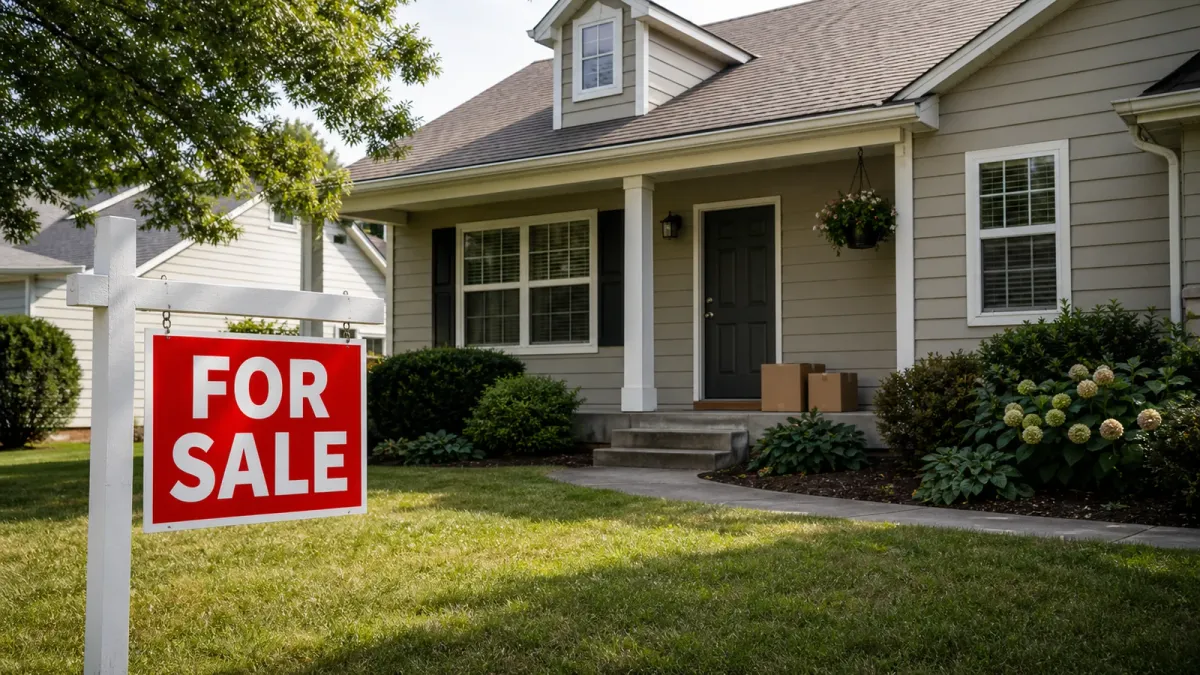
Large corporate landlords are putting many more single-family rental homes on the market, a shift that could give individual buyers additional choices in some cities before a new federal acquisition ban begins.
Homes owned by institutional investors and listed for sale rose from 4,166 on February 1 to 9,447 in July, according to a Parcl Labs analysis reported by CNBC on July 21. Those listings carried a combined asking value of about $3.1 billion.
The movement is meaningful, but it is not a forced liquidation. The federal law does not require investors to sell homes they already own, and its purchase restrictions do not take effect until January 7, 2027.
The numbers
The largest single-family landlords — Progress Residential, Invitation Homes, AMH, Tricon, FirstKey, Amherst and VineBrook — sold 3,180 more homes than they bought from January 1 through the date of Parcl's analysis. Together, they still own roughly 400,000 homes.
VineBrook has the largest share of its portfolio up for sale among that group: nearly 1,900 homes, or close to 10% of its holdings, with an aggregate asking price of about $285 million. Invitation Homes and AMH had 549 and 536 homes listed, respectively, while Progress Residential had 143.
Price cuts are also more common on institutional listings. Parcl found that 54% of listings tied to owners with more than 350 homes had reduced their asking price, compared with 38.7% of all listings nationwide. Average markdowns for the institutional group deepened from about 3.1% in early May to 4%.
What the ban changes
The 21st Century ROAD to Housing Act became law on July 11. Its restrictions apply to for-profit entities that control at least 350 single-family homes, counting related entities under the law's investment-control rules.
Once effective, covered investors generally cannot purchase additional single-family homes. The law includes exceptions for newly built build-to-rent communities, substantial renovate-to-rent projects, certain homeownership programs, foreclosures and purchases from other large institutional investors. It also excludes manufactured homes and buildings with three or more units.
The enrolled text published by the U.S. Government Publishing Office says the ban and enforcement provisions start 180 days after enactment and expire 15 years later. A violation can bring a civil penalty of at least $1 million or three times the purchase price, whichever is greater.
Why buyers and renters should care
More listings can improve selection for would-be homeowners, particularly in starter-home markets where investors have been active. But the national effect may be limited. Parcl estimates investors covered by the law own about 589,000 homes, equal to 3.9% of the country's roughly 14 million single-family rentals.
The pullback is also uneven. Earlier Cotality research found the sharpest declines in mega-investor activity in markets including San Jose, Huntsville, San Diego and Seattle, while Atlanta remained an outlier with a comparatively strong institutional presence.
For renters, the tradeoff is less clear. If landlords sell occupied or soon-to-be-vacant homes to owner-occupants, the supply of single-family rentals could shrink. Investors, meanwhile, are likely to redirect more capital toward build-to-rent projects and other transactions permitted by the law.
What to watch next
The next several weeks will show how many listings convert into completed sales and whether price reductions deepen. Buyers should evaluate each property on its condition, local comparable sales and financing costs rather than assume an institutional seller will accept a steep discount. The broader test begins January 7, when the acquisition ban becomes enforceable and large landlords must operate within its exceptions.


