
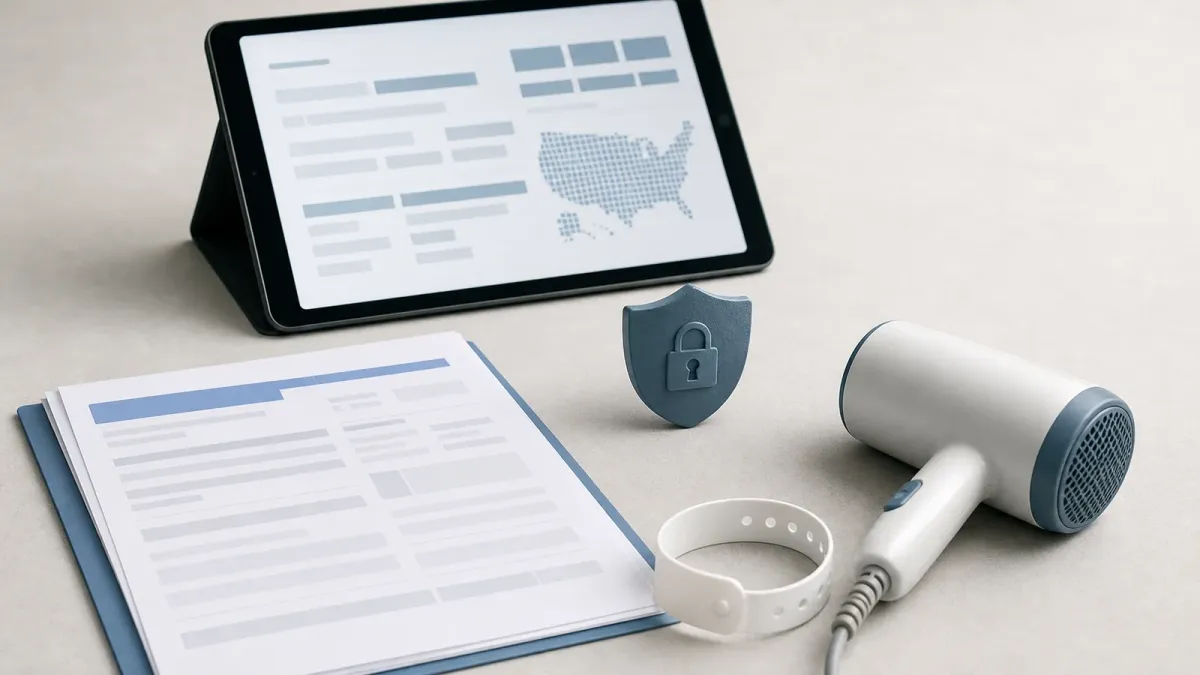
The Consumer Product Safety Commission is rebuilding the way it tracks emergency-room injuries tied to consumer products, a change that could make product hazards visible sooner while raising a simple reader question: what health data is moving, and who sees it?
The short answer is that CPSC says its new system, called NEISS-Remodel or NEISS-R, will use standardized electronic health-data exchange to replace a smaller, manual injury-surveillance process. The agency announced the modernization on July 22, 2026, and said it expects the system to become fully effective by the beginning of 2027.
What changes
NEISS is the National Electronic Injury Surveillance System, CPSC's long-running database for estimating product-related injuries treated in U.S. hospital emergency departments. The current system relies on participating hospitals that report patient information for emergency visits associated with consumer products, or poisonings involving children younger than 5, so the agency can estimate nationwide injury patterns.
CPSC says the remodel will expand the surveillance network across all 50 states. In its July 22 release, the agency said the legacy system drew from roughly 70 of the nation's more than 5,000 hospital emergency departments and left 14 states without participating hospitals. A July 24 American Hospital Association item summarized the change as an expansion from 36 states to all 50.
The practical promise is speed. Instead of waiting on labor-intensive manual review and coding of medical records, CPSC says NEISS-R will use electronic exchange through a federally designated Qualified Health Information Network. The agency says that should help it spot rare or emerging product hazards sooner, including patterns that may not show up quickly in a smaller or geographically uneven sample.
The privacy check
The privacy claim matters because emergency-room records can be sensitive even when the public-health goal is legitimate. CPSC says NEISS-R is built around privacy-by-design principles, including limits on collection and retention, contractual privacy requirements, standardized security safeguards, and de-identification before information reaches CPSC. That makes the implementation details more important than the slogan itself.
That does not mean readers should treat the system as either harmless or alarming by default. The useful question is narrower: whether the final implementation collects only what is needed to identify product-related injury patterns, whether hospitals and data networks have clear obligations, and whether CPSC explains how de-identification, retention, access controls, and audits will work once the system is live and audited.
Why it matters
For consumers, better injury surveillance can mean faster warnings when a product problem is real and recurring. For hospitals, it means another data-flow obligation attached to emergency care. For privacy-minded patients, it is a reminder that health data can be reused for public-safety monitoring even when names and direct identifiers are supposed to be removed.
The next thing to watch is the rollout before early 2027. CPSC's public materials say the remodel should improve coverage, speed, statistical reliability, and security. The strongest version of that promise will depend on whether the agency keeps the data narrow, the safeguards visible, and the consumer benefit concrete.


