
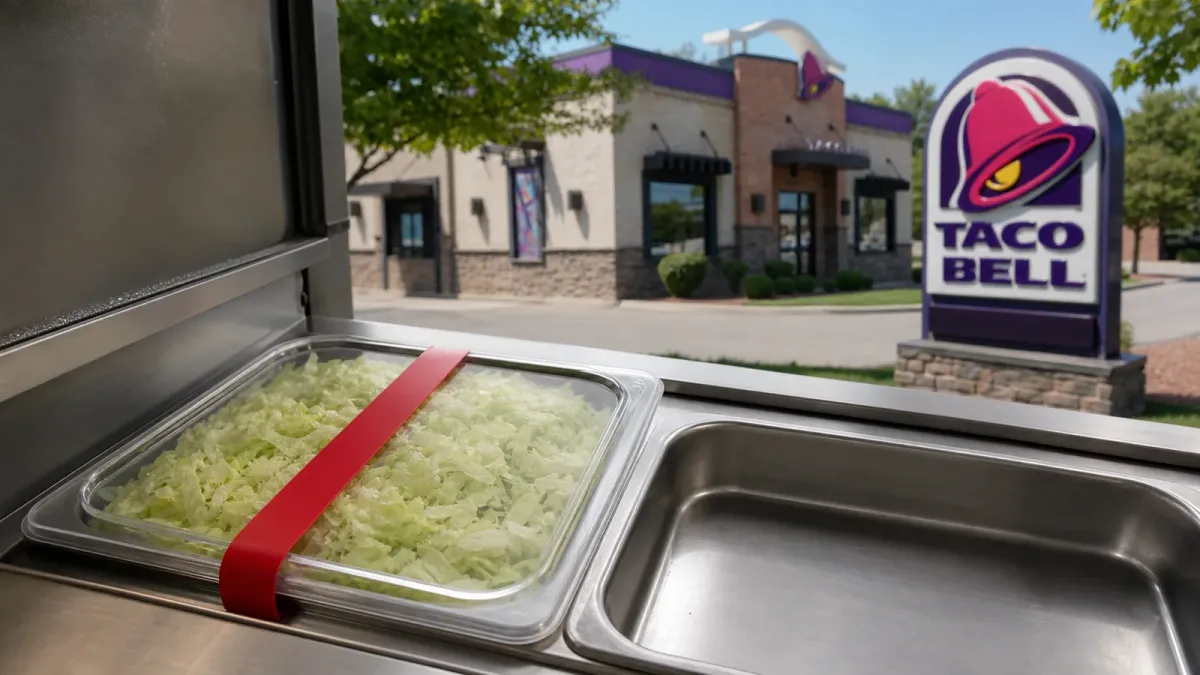
Federal health officials have now linked shredded iceberg lettuce served at Taco Bell restaurants in five states to a Cyclospora outbreak, replacing the earlier uncertainty over the source with a specific warning. Taco Bell says it has removed the affected supplier's lettuce from its nationwide supply chain and is replacing it in selected states.
The CDC says consumers should not eat shredded iceberg lettuce served at Taco Bell locations in Indiana, Kentucky, Michigan, Ohio and West Virginia. The warning is limited to those five states, and the agency says not every Taco Bell location there received the implicated product.
More than 1,644 people in the five-state outbreak reported eating at Taco Bell, according to the CDC. The FDA reported 94 hospitalizations and no deaths as of July 16, 2026. Illnesses began between May 13 and July 13.
What changed
FDA traceback work converged on a single supplier of iceberg lettuce from Mexico used by Taco Bell locations where people ate before becoming sick. Among 190 Michigan cases with detailed food histories, 90% reported eating iceberg lettuce.
Taco Bell said on July 16 that it had voluntarily removed potentially affected lettuce from that supplier in selected states. The company also said the ingredient was being indefinitely removed from its supply chain nationwide and would be replaced within 24 hours in selected states.
This is a supplier removal, not a formal recall. The CDC outbreak page says no recall has been issued, while FDA investigators continue checking whether potentially contaminated shredded lettuce reached other restaurants, retailers or distribution channels.
What diners should do
- Do not eat shredded iceberg lettuce served at Taco Bell locations in Indiana, Kentucky, Michigan, Ohio or West Virginia until health officials change the advice.
- If you have food containing the lettuce, clean and sanitize any container or surface it touched.
- Contact a health care provider if you develop watery diarrhea, fatigue or loss of appetite, especially after eating the lettuce within the previous two weeks.
- Ask specifically about Cyclospora testing. The CDC says routine stool tests do not always screen for the parasite.
- Stay hydrated if symptoms develop. Untreated symptoms can last from days to a month or longer and may relapse.
What remains unknown
The investigation is still open. FDA has not publicly named the supplier in its advisory, and officials say more brands, restaurants, retailers or distribution routes could be identified. The five-state Taco Bell cluster is also only one part of the wider 2026 rise in cyclosporiasis; other cases reported across the country may have different sources.
Washing produce under running water can reduce some risk but cannot guarantee removal of Cyclospora. The CDC says cooking produce to at least 158°F, or 70°C, kills the parasite. That general guidance does not replace the more direct instruction to avoid the implicated shredded iceberg lettuce at Taco Bell locations in the five named states.
What happens next
FDA is working with the supplier and has increased screening at the border for products tied to the investigation. The agency says it will update the advisory if the affected geography or distribution list expands. Diners should check the FDA or CDC outbreak page for the latest state list before relying on older restaurant notices or social posts.


