
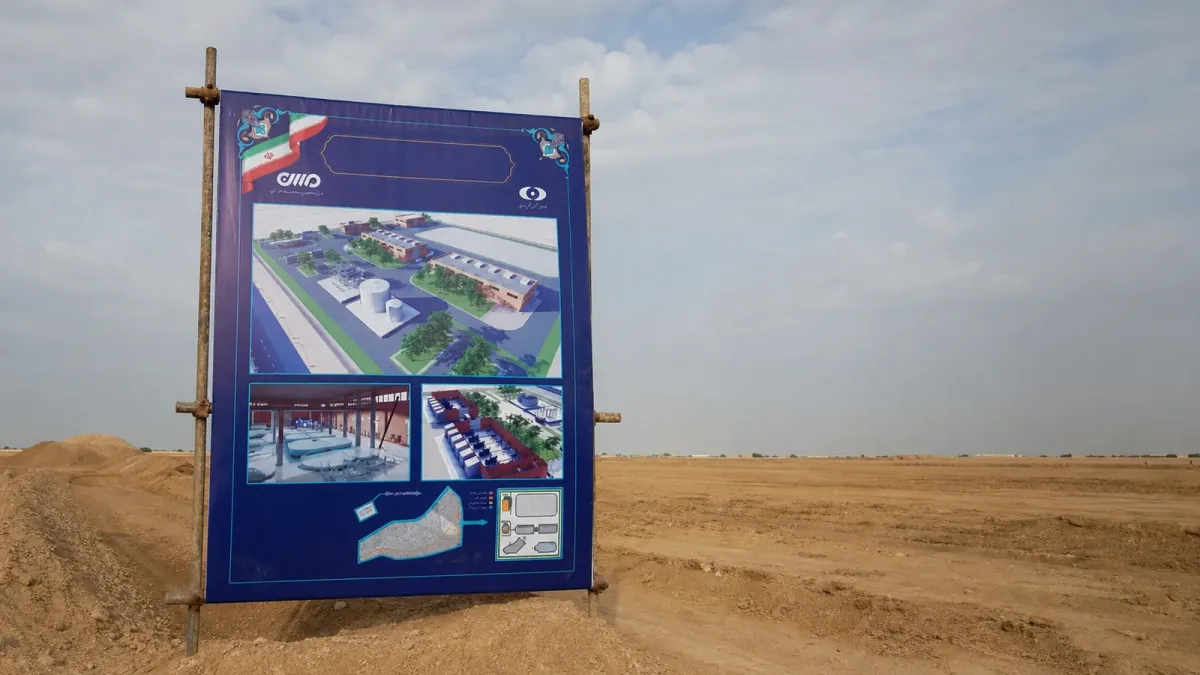
Iran’s atomic-energy agency said U.S. forces struck the construction site of the planned Darkhovin nuclear power plant in southwestern Iran on Sunday, July 19, 2026. The claim marks a potentially significant expansion of the overnight U.S. air campaign, but Washington has not publicly named Darkhovin among its targets.
The International Atomic Energy Agency said it was investigating the report. The U.N. watchdog described Darkhovin as being in the very early stages of construction and said the site contained no nuclear material when inspectors last visited. That distinction sharply limits the immediate radiological concern suggested by the phrase “nuclear site,” although the extent of any physical damage remains unknown.
What changed overnight
U.S. Central Command confirmed an eighth consecutive night of strikes against Iran. Its public account said the operation hit coastal-surveillance and air-defense facilities, maritime capabilities, and missile and drone storage sites. CENTCOM said the strikes were intended to weaken Iran’s ability to threaten shipping in the Strait of Hormuz and punish Islamic Revolutionary Guard Corps forces after deadly attacks on U.S. troops in Jordan.
Iran’s Atomic Energy Organization separately alleged that several U.S. projectiles hit Darkhovin. The organization did not publish a detailed damage assessment, and the U.S. military’s announced target list did not mention the plant. Reporting from The Associated Press and Reuters preserved that gap rather than treating the targeting claim as independently confirmed.
Why the site’s status matters
Darkhovin, also called the Karun project, lies roughly 70 kilometers south of Ahvaz near the Karun River in Khuzestan province. It is a power-reactor project, not an operating enrichment plant. Iran began work in December 2022 on what it described as a domestically designed, roughly 300-megawatt pressurized-water reactor. World Nuclear News, citing Iran’s atomic organization, said at the time that the project was expected to take about eight years.
That early-stage status distinguishes Darkhovin from Iran’s operating Bushehr power reactor and from enrichment facilities elsewhere in the country. Recent commercial satellite imagery reviewed by the AP showed earth clearing but little construction at the site as of July 9.
The IAEA’s statement that no nuclear material was present at its last visit means there is currently no public evidence of a radioactive release from the reported strike. It does not answer whether non-nuclear construction, equipment, or nearby infrastructure was damaged.
What remains unknown
No independent assessment has yet established what hit Darkhovin, which part of the project was affected, or whether the site was deliberately selected. The reported attack also raises legal and diplomatic questions because Iran describes the project as a safeguarded civilian facility, while the United States has not provided a site-specific explanation.
What happens next
The next reliable markers will be an IAEA update, a more detailed CENTCOM target account, or independently verified satellite imagery. Until one of those emerges, the firmest formulation is that Iran says Darkhovin was struck during a confirmed U.S. attack wave—and that the nuclear watchdog has found no nuclear material at the unfinished project.


