
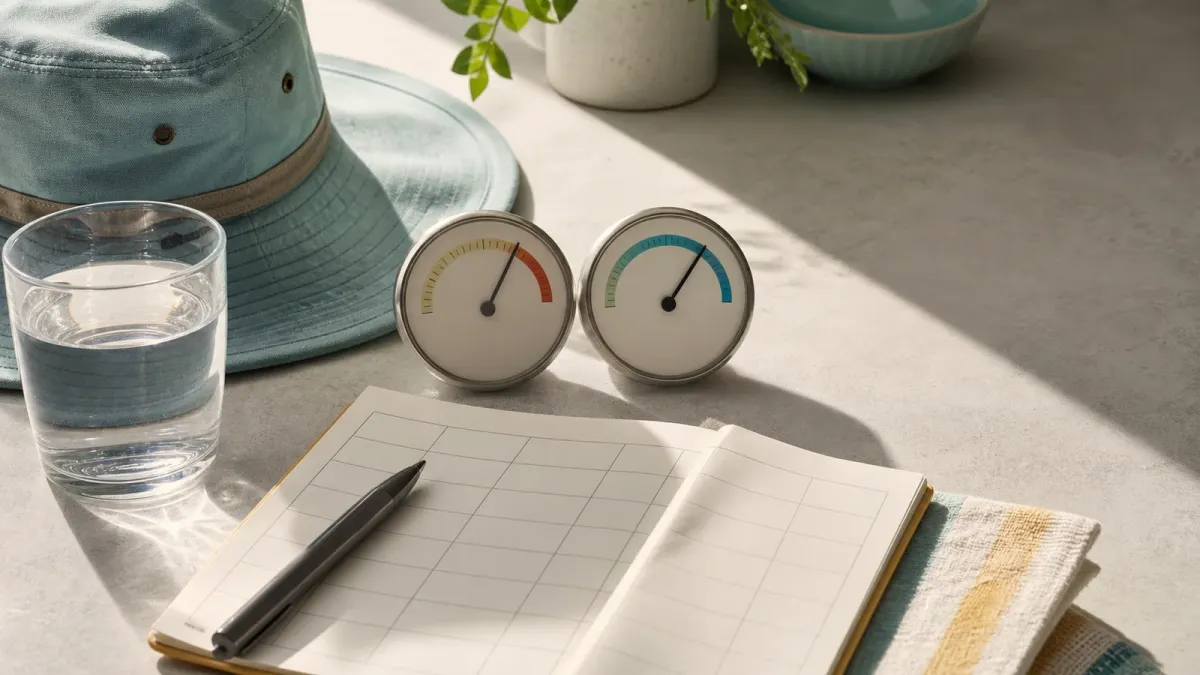
Hot weather forecasts can bury the most useful number. The air temperature tells you what a thermometer reads, but the heat index and dew point often do a better job of explaining how a summer day will feel and when you should change plans.
The distinction matters in July 2026 because extreme heat and humid nights have been part of recent U.S. weather coverage, and official heat guidance is built around how the body cools itself. The goal is not to memorize a weather chart. It is to know which number to check before a walk, a commute, a youth practice, an outdoor shift or a night in a home without strong cooling.
The short answer
Check the heat index first when you need a health-risk signal for outdoor activity. It combines air temperature and relative humidity to estimate how hot conditions feel to the human body. The National Weather Service says direct sunshine can make heat-index conditions feel up to 15 degrees hotter than the shaded value, so a borderline day can become dangerous on pavement, fields, job sites and playgrounds.
Check the dew point when you want to know how muggy the air will feel. Dew point is tied to the amount of moisture in the air. A high dew point makes sweat evaporate more slowly, which is why an 88-degree day can feel oppressive in one city and more tolerable in another.
How the numbers work
The heat index is sometimes called the apparent temperature. It rises when both air temperature and humidity rise because sweat is less able to evaporate from the skin. The National Weather Service classifies heat-index values of 90 to 103 degrees as an extreme-caution range, 103 to 124 degrees as danger, and 125 degrees or higher as extreme danger.
Dew point answers a different question: how much water vapor is in the air. The National Weather Service office in La Crosse, Wisconsin, describes summer dew points at or below 55 degrees as generally dry and comfortable, 55 to 65 degrees as becoming sticky, and 65 degrees or higher as increasingly oppressive.
Relative humidity can be misleading because it changes with temperature. A cool morning can show high relative humidity and still feel comfortable. A hotter afternoon with a lower relative humidity can feel much muggier if the dew point is higher. That is why dew point is often the cleaner comfort clue.
Do this first
Before you spend time outside on a hot day, check three things in order: the heat index, the dew point and the overnight low. If the heat index is climbing into the danger range, move strenuous activity to the coolest part of the day, shorten the activity, or choose an air-conditioned place instead.
If the dew point is 65 degrees or higher, assume sweat will not cool you as efficiently. Add more rest breaks, pick shade, and be cautious with kids, older adults, pregnant people, outdoor workers and anyone with heart, lung or other chronic conditions.
If the overnight low stays unusually warm, the risk can build over several days. Bodies and homes need time to cool down. A house that never cools below the upper 70s or 80s can become unsafe even if the daytime forecast looks only slightly worse than normal.
Check these warning signs
The Centers for Disease Control and Prevention says overheating symptoms can include muscle cramping, unusually heavy sweating, shortness of breath, dizziness, headaches, weakness and nausea. Those are signs to stop, cool down and pay attention rather than trying to push through.
The National Weather Service lists heat exhaustion symptoms such as heavy sweating, weakness or tiredness, cool and clammy skin, a fast weak pulse, dizziness, nausea, headache and fainting. The first-aid steps include moving the person to a cooler place, loosening clothing, applying cool wet cloths or using a cool bath, and offering sips of water if the person can drink safely.
Heat stroke is an emergency. Warning signs can include confusion, slurred speech, fainting, loss of consciousness, hot red skin, a strong rapid pulse or a body temperature above 103 degrees. Call 911, move the person to a cooler place and cool the body while waiting for help. Do not give fluids to someone with suspected heat stroke.
Common mistakes
Do not treat shade values as the whole story. Heat-index charts are based on shaded, light-wind conditions. Full sun, dark pavement, heavy clothing, sports equipment, machinery and enclosed spaces can raise the strain quickly.
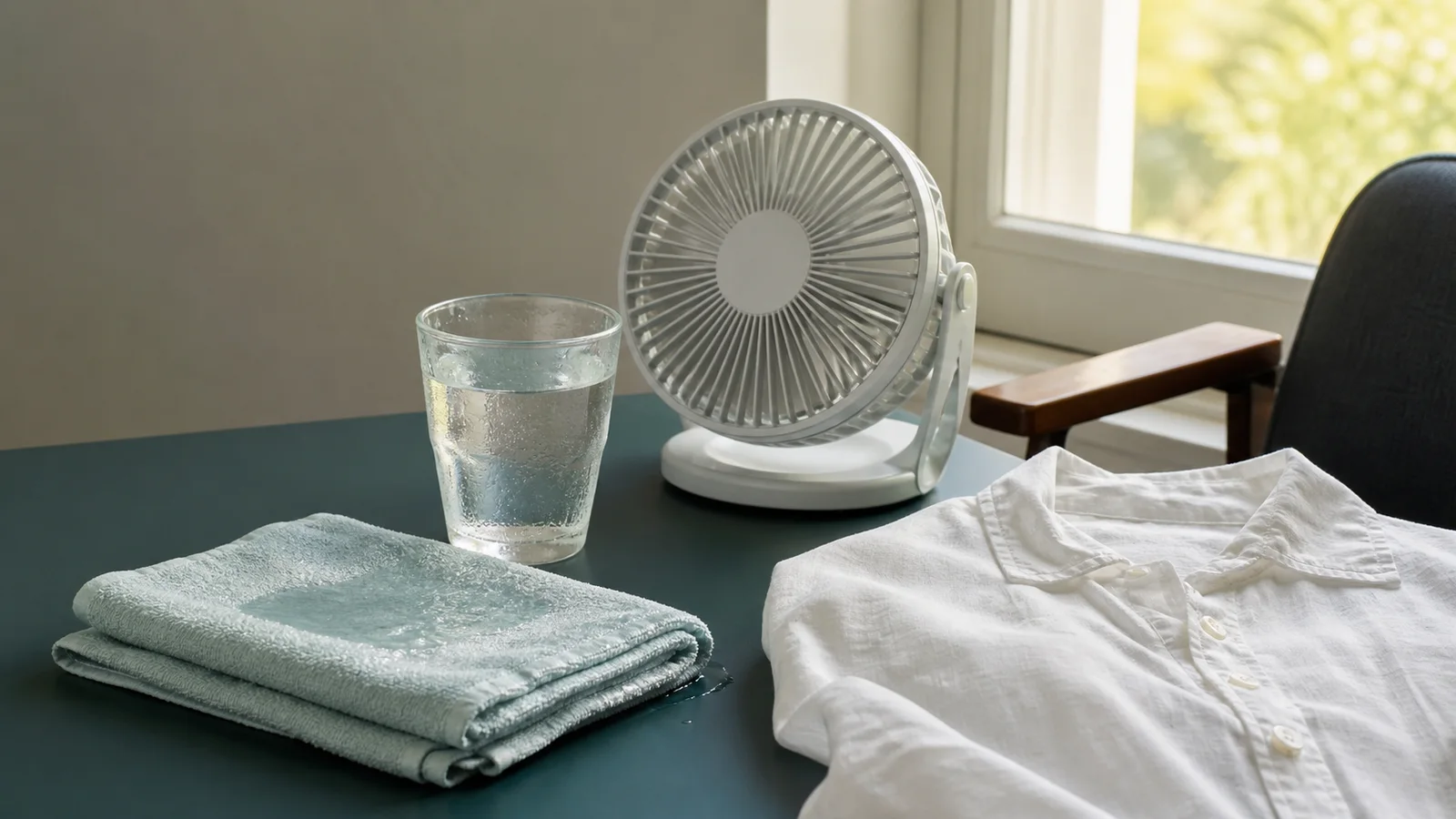
Do not rely on fans alone when conditions are very hot. The National Weather Service cautions that a fan blowing on someone can make the person hotter when heat-index temperatures are above the high 90s. Use air conditioning, cooling centers, cool showers, wet cloths or another cooling method when heat is severe.
Do not wait until you feel thirsty to change behavior. Ready.gov advises people to drink fluids, wear loose and lightweight clothing, take cool showers or baths, and find a cooling center when air conditioning is not available at home.
What to watch
For a quick everyday rule, use the heat index as the action number and the dew point as the comfort clue. A high heat index should change outdoor plans. A high dew point should make you more conservative because your normal cooling system is working against wetter air.
Also check local alerts from the National Weather Service, especially if you are responsible for children, older relatives, outdoor work, sports practices or travel. Official alerts account for local conditions and thresholds in a way a national rule of thumb cannot.
The safest plan is usually simple: move hard activity earlier or later, build in real cooling breaks, check on people without reliable air conditioning, and treat confusion or fainting as an emergency rather than a normal part of summer heat.


