
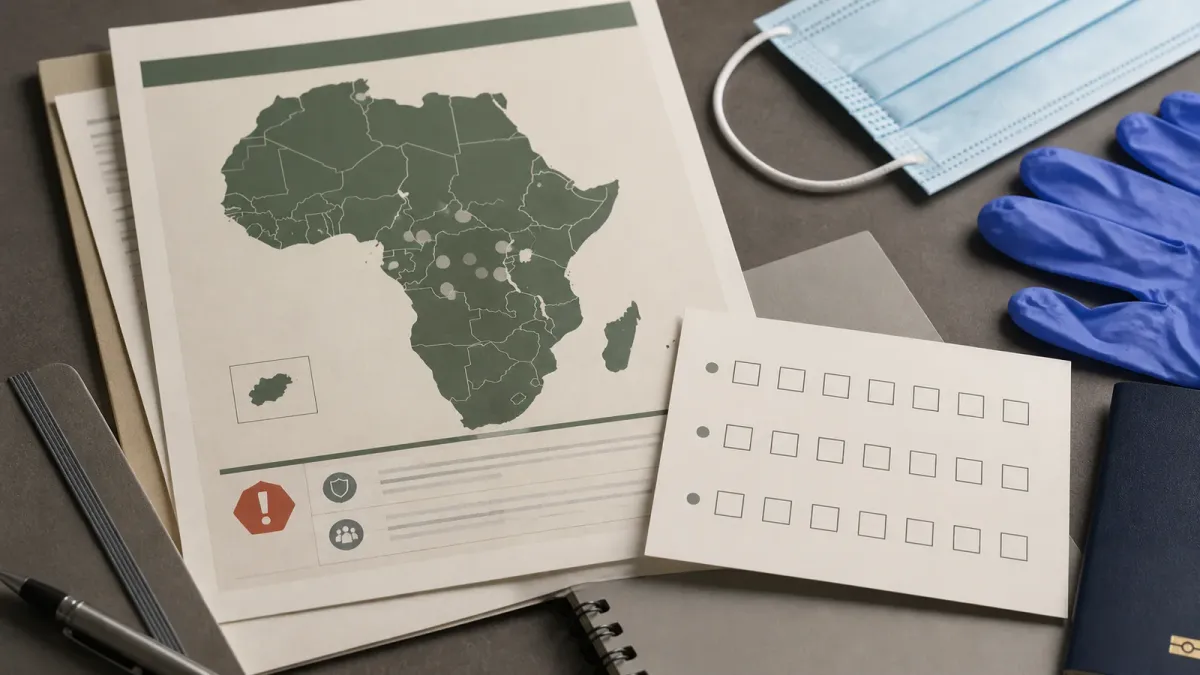
Ebola deaths in the Democratic Republic of Congo have passed 2,000 in a fast-growing Bundibugyo virus outbreak, according to public health updates reviewed Wednesday, August 12, 2026.
The practical takeaway for U.S. readers is narrower than the global alarm: the outbreak is severe in parts of central Africa, but the Centers for Disease Control and Prevention says no related Ebola cases have been confirmed in the United States and the overall risk to the American public and travelers remains low.
European health officials said a DRC situation update reported 4,449 confirmed cases and 2,061 related deaths through August 10. The World Health Organization's Africa office reported 4,381 confirmed cases and 2,011 confirmed deaths through August 9, with Ituri still the epicenter and transmission described as intense and expanding.
What changed
The 2,000-death threshold turns the outbreak from a regional emergency into a broader preparedness test. CDC says the current outbreak is already the second-largest Ebola outbreak on record and is spreading substantially faster than earlier outbreaks.
The virus involved is Bundibugyo virus, a type of Ebola virus. CDC says confirmed DRC cases have been reported in Haut-Uele, Ituri, North Kivu, South Kivu and Tshopo provinces. ECDC said 53 health zones across those five provinces were affected in the latest DRC update it reviewed.
Uganda has also reported cases linked to the outbreak, though ECDC said Uganda declared the end of its Ebola disease outbreak on July 28 after no new cases followed the last patient discharge. CDC still lists Kampala-linked cases as part of the regional situation it is monitoring.
Why the U.S. risk is different
Ebola spreads through direct contact with bodily fluids from a sick or deceased infected person, not through casual airborne exposure. That makes uncontrolled local transmission devastating in areas with fragile health systems, but it also means strong infection control can sharply reduce wider spread.
CDC says the likelihood of Ebola spreading to the United States is very low. The agency says that, if a case were diagnosed domestically, U.S. public health and infection-control systems would make further spread unlikely.
The U.S. has still tightened travel measures. CDC says travelers who have recently been in DRC face temporary U.S. entry restrictions, and U.S. citizens and nationals who have been in DRC should plan to remain outside DRC for 21 days before entering the United States.
What to watch next
The key signals are whether DRC case growth slows, whether contact tracing improves, and whether infections keep appearing outside known transmission chains. Health agencies are also watching cross-border movement because CDC says frequent travel can increase spread risk to Uganda, South Sudan, Rwanda and other areas.
For most Americans, the immediate action is not panic. It is checking official travel guidance before any trip to DRC, Uganda or neighboring affected areas, and seeking medical advice quickly after travel if fever or other Ebola-like symptoms develop within 21 days of possible exposure.
Hospitals and public health teams will also be watching for travel-linked cases, because early isolation and lab testing are what keep a single imported infection from becoming a wider exposure event.


