
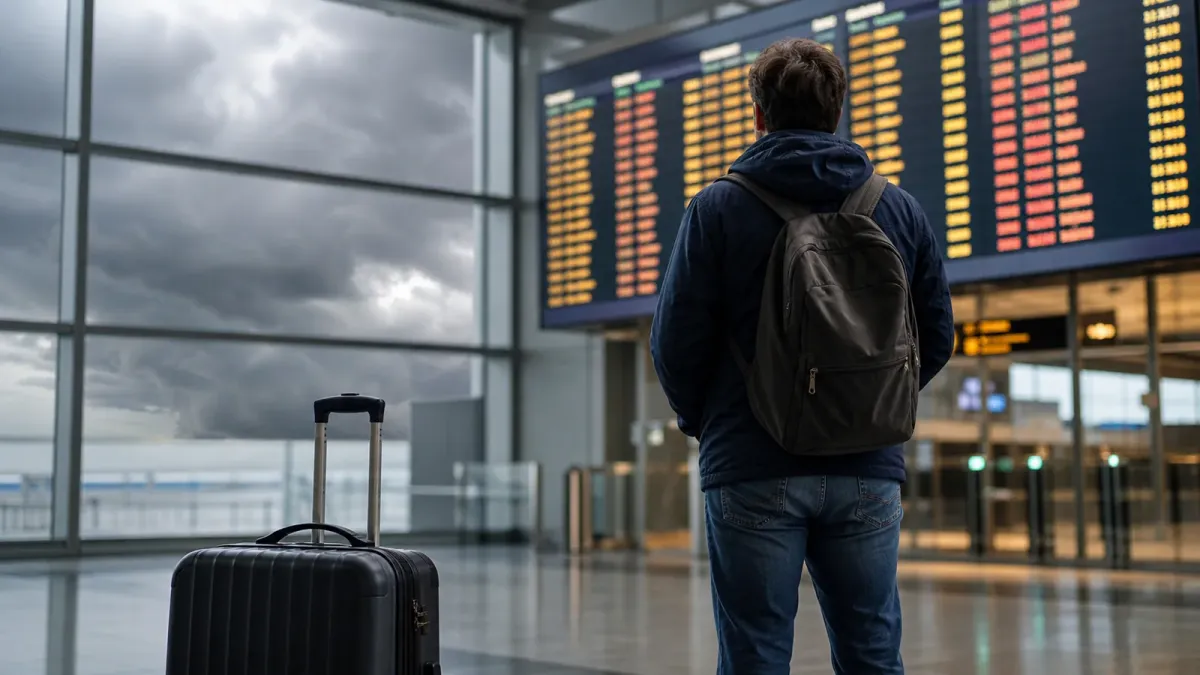
Flight delays and cancellations were spreading across several U.S. airport hubs on Sunday, July 19, 2026, after weekend thunderstorms and flash flooding hit the New York region and more severe weather threatened parts of the Mid-Atlantic and Southeast.
The Federal Aviation Administration's National Airspace System status board showed possible ground stops or delay programs later Sunday at several airports, while the agency's current operations advisory said evening thunderstorm activity was expected in the Southeast. Barron's, citing FlightAware, reported by late Sunday morning that the United States had nearly 2,400 delays and about 1,000 cancellations, with disruption at New York's Kennedy and LaGuardia airports, Newark Liberty, Boston Logan, Reagan National and Atlanta.
If you are scheduled to fly today, the useful question is not just whether your own airport looks calm. Weather delays can roll through the network when aircraft and crews are stuck somewhere else, so checking early can save a wasted trip to the terminal.
Do this first
- Check your airline app before leaving. Look for a posted delay, aircraft swap, gate change, cancellation or rebooking option. Refresh again before you enter security.
- Check FAA airport status. A ground stop or delay program can affect flights headed to that airport even if your departure city has clear skies.
- Look at the weather at both ends. Storms near the arrival airport, not just your departure airport, can delay boarding or keep your aircraft from arriving.
- Hold off on canceling yourself. If the airline cancels or significantly changes your flight, U.S. Department of Transportation rules can give you refund rights that may not apply if you voluntarily cancel first.
Refunds and rebooking
The DOT says passengers are entitled to a prompt refund when an airline cancels a flight or makes a significant change and the passenger does not accept the airline's alternative. That applies regardless of the reason for the cancellation, including weather.
That does not mean every weather delay comes with cash compensation, meals or a hotel. For domestic itineraries, DOT guidance says airlines generally are not required to compensate passengers just because a flight is delayed or canceled. Some airlines make extra customer-service commitments, especially for problems within the airline's control, but weather disruptions are usually treated differently.
Check these details
If your trip is time-sensitive, compare the airline's automatic rebooking with other same-day options before accepting. A later nonstop can be better than a connection through another storm-hit hub. If you booked through a third-party site, check both the airline and the booking platform so you know who controls changes.
Keep screenshots of cancellation notices, delay messages, receipts and rebooking offers. If you decide not to travel after a qualifying cancellation or significant change, request a refund to the original payment method rather than accepting a voucher unless a credit is actually what you want.
What to watch next
The main risk for Sunday evening is that thunderstorm activity shifts into new airport regions while crews and aircraft are still recovering from earlier delays. Travelers with late-day flights should recheck status before leaving home, again before security, and once more before boarding.


