
Congo's Bundibugyo Ebola outbreak has reached a new grim threshold, with the Associated Press reporting on July 22, 2026 that official data showed 2,473 confirmed cases and 999 deaths as of Monday. The outbreak was declared in May and remains concentrated in eastern Democratic Republic of the Congo, with cross-border consequences for Uganda and travelers leaving affected areas.
The practical question for most readers is not whether Ebola is suddenly spreading like a respiratory virus. It is not. The question is whether recent travel, humanitarian work, medical exposure or close contact in an affected area triggers screening, temperature checks or a 21-day monitoring period. U.S. CDC guidance says those rules now apply to travelers recently in the Democratic Republic of the Congo, Uganda or South Sudan.
Do this first
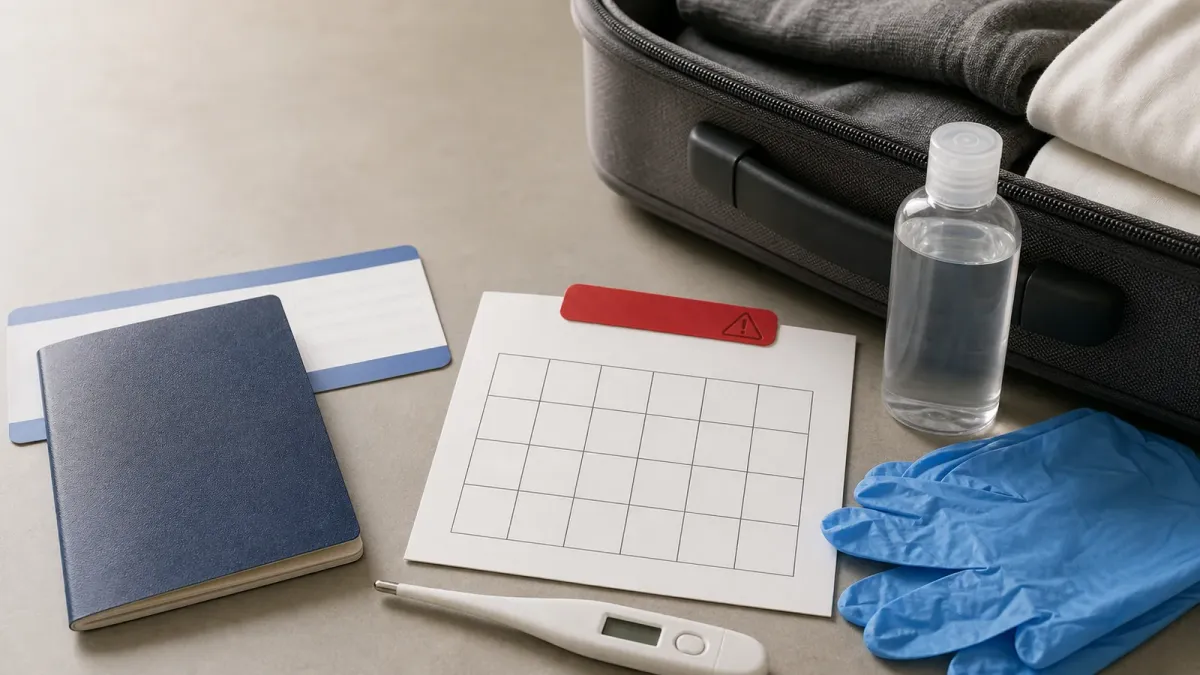
If you were recently in an affected area, start with dates. CDC tells travelers to watch their health for 21 days after leaving the affected country, because symptoms can appear after travel. Write down the date you left, the countries you transited through, and whether you had contact with patients, health facilities, funerals, wildlife or body fluids.
Do not travel while sick. CDC says anyone who develops symptoms should avoid travel and contact public health authorities immediately. Symptoms to watch for include fever of 100.4 degrees Fahrenheit or higher, headache, body aches, weakness, sore throat, diarrhea, vomiting, stomach pain, rash, or unexplained bleeding or bruising.
Call before showing up for care. If you need urgent medical attention and cannot reach the health department quickly, contact a health care provider first and explain your recent travel and symptoms. Calling ahead helps a facility prepare isolation and infection-control steps before you arrive.

What changed
The latest case count is moving quickly. ECDC's July 21 update said DRC had reported 2,423 confirmed cases and 967 related deaths from data through July 19, including 79 new confirmed cases and 37 deaths from the previous day. AP's July 22 report, citing official data published overnight, put the DRC total at 2,473 cases and 999 deaths.
Those numbers may continue to shift as local authorities and international agencies harmonize reports. The useful takeaway is the direction, not a single frozen count: confirmed infections and deaths are still rising, and official agencies are treating the outbreak as active.
WHO says the outbreak involves Bundibugyo virus disease, a species of Ebola for which there is no approved vaccine or specific treatment, though candidate tools are being studied. WHO also says the response is complicated by insecurity, humanitarian needs, remote and densely populated areas, high movement and the need for community engagement.
Check these travel rules
CDC says it is assessing travelers arriving in the United States who recently spent time in DRC or Uganda, as well as neighboring South Sudan. The agency says U.S. entry is temporarily restricted for all travelers recently in DRC and for certain travelers recently in Uganda or South Sudan, with limited case-by-case exceptions.
Travelers who are allowed to enter the United States after being in Uganda or South Sudan in the prior 21 days may be routed through designated airports for screening. CDC lists Washington-Dulles, Atlanta, Houston Intercontinental and New York's JFK as designated screening airports. Screening can include a questionnaire, temperature check, observation for illness and automated reminders to monitor symptoms.
What not to assume
Ebola spreads through direct contact with bodily fluids or contaminated materials, not through casual airborne exposure like a cold. That distinction matters because the right response is targeted monitoring and fast reporting of symptoms, not broad panic.
At the same time, the numbers are serious. The outbreak has spread faster than public health officials can comfortably track in some areas, and conflict has made surveillance and care harder. If you have no recent travel or exposure connection to DRC, Uganda or South Sudan, the useful action is to follow official updates rather than change ordinary routines.
Bottom line
For travelers and aid workers, the safest plan is simple: document your travel dates, monitor for 21 days, take your temperature as directed, avoid travel if symptoms appear, and call public health authorities before seeking care. For everyone else, the key is to understand that this is a severe outbreak with travel-specific rules, not a reason to treat every fever as Ebola.


