
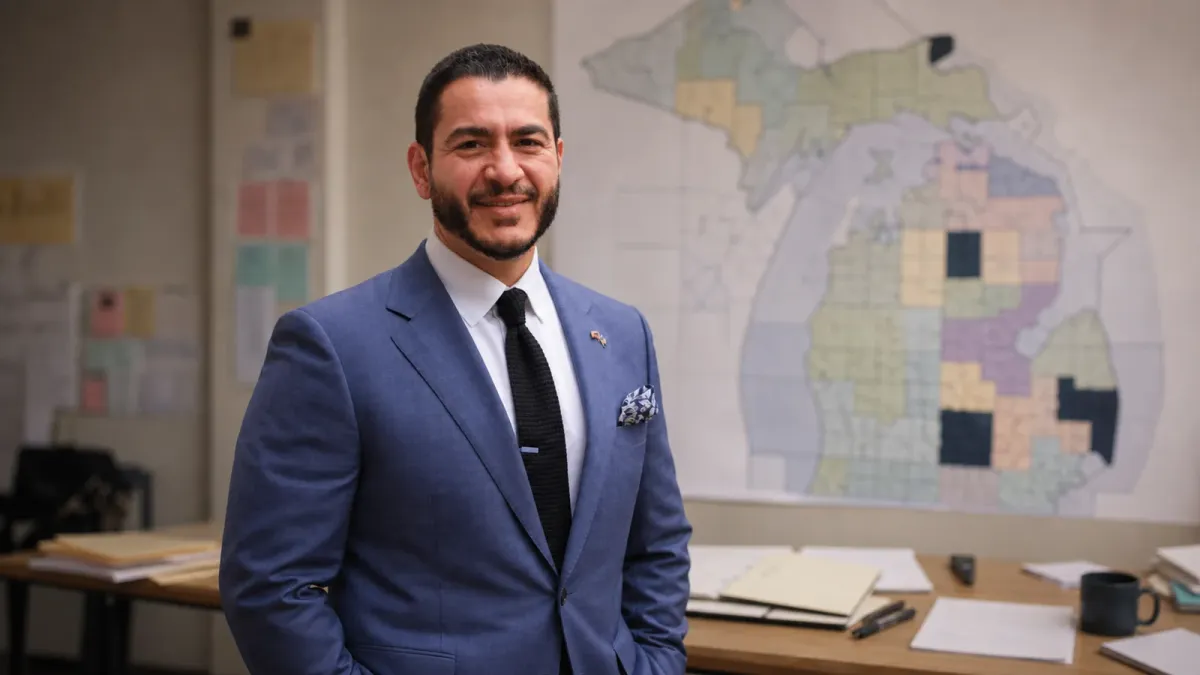
Abdul El-Sayed's victory in Michigan's Democratic U.S. Senate primary has turned a factional fight into a November test: can a progressive nominee win one of the country's most important battleground Senate seats?
The Associated Press called the race on Wednesday, August 5, 2026, after a close count. At the time of the call, AP reported that El-Sayed led U.S. Rep. Haley Stevens by 14,893 votes, just under 1 percentage point, out of more than 1.5 million ballots counted.
The result matters beyond Michigan because El-Sayed now faces Republican Mike Rogers for the seat being vacated by Democratic Sen. Gary Peters. Democrats need Michigan in their path to Senate control, while Republicans will try to frame the nominee as too far left for a state Donald Trump carried in 2016 and 2024.
What changed
El-Sayed, a former Detroit and Wayne County public health official, entered the race as a progressive insurgent. Stevens had support from major establishment Democrats, including Gov. Gretchen Whitmer, Peters and Senate Democratic Leader Chuck Schumer. El-Sayed had backing from national progressive figures including Bernie Sanders and Alexandria Ocasio-Cortez.
AP and The Guardian both reported that Stevens conceded after the call. The Guardian reported that El-Sayed will now face Rogers, a former congressman and the GOP's 2024 Senate nominee in Michigan.
The race also became a referendum on money in politics. El-Sayed's campaign said he prevailed despite record outside spending; AP reported that he overcame more than $60 million in outside spending and an opponent backed by many of the state's top Democrats. The Guardian reported that El-Sayed argued at a Wednesday press conference that the race showed grassroots support could beat a heavily funded opposition campaign.
Why Michigan is different
Michigan is not a safe-state test for either party. Both of its current senators are Democrats, but the state has repeatedly swung in presidential races. That makes the Senate contest a practical test of two claims: progressives argue their agenda can expand turnout, while Republicans argue that the same agenda gives them a clearer general-election target.
Bridge Michigan's analysis of unofficial results showed why the argument is not simple. El-Sayed won by running up large margins in college towns and progressive strongholds, including Washtenaw and Kent counties. But Bridge also reported that Stevens carried metro Detroit and that El-Sayed did not win Wayne, Oakland or Macomb counties, a warning sign for a statewide general election.

That split gives both sides a starting point. El-Sayed can argue that a more direct economic and anti-establishment message brought new energy into the primary. Rogers and national Republicans can argue that the Democratic nominee must now win back moderates, suburban voters and Democrats who preferred Stevens.
The map also explains why the next phase is less about celebrating a surprise and more about measuring reach. A primary campaign can win by maximizing pockets of intense support. A Senate nominee has to stitch together college counties, Detroit-area voters, working-class suburbs, union households, Arab American communities, Black voters, independents and occasional split-ticket voters who may not agree on the same issues.
What to watch next
The first question is how quickly Democrats unify. The Guardian reported that Stevens offered El-Sayed her support after conceding, and that former candidate Mallory McMorrow also backed him after the race. Those endorsements matter because a primary this expensive and personal can leave voters and donors slow to consolidate.
The second question is whether El-Sayed's campaign can turn primary energy into a broader coalition. Bridge Michigan reported that more than 1.2 million people voted in the Democratic Senate primary and about 2.5 million Michiganders voted overall. High turnout can signal enthusiasm, but the general election electorate will be larger and less ideologically sorted.
The third question is how the campaign handles issues that defined the primary, including Medicare for All, campaign finance, foreign policy and the role of outside groups. El-Sayed's campaign site says his priorities include money out of politics, money in voters' pockets and Medicare for All. In November, those positions will move from a Democratic primary electorate to a statewide contest against a Republican nominee.
The bottom line: El-Sayed has already won the test progressives wanted inside the Democratic Party. The harder test is whether that same message can carry Michigan when the whole Senate map is watching.


