
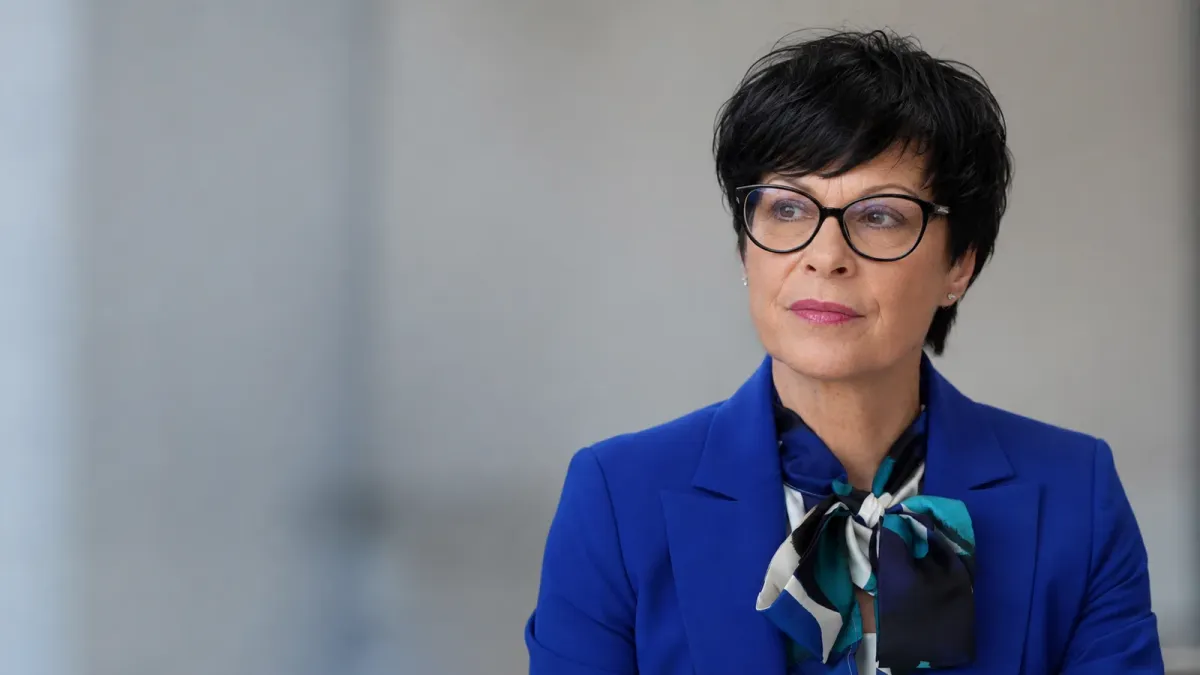
European Union enlargement commissioner Marta Kos canceled a planned visit to Serbia on September 4, saying the glorification surrounding Ratko Mladić's death was incompatible with the values required for EU membership. The decision turns a dispute over commemorating a convicted war criminal into a concrete diplomatic setback for Belgrade.
Kos's announcement concerns her visit. It does not itself amount to a formal suspension of Serbia's accession process or a new EU sanctions decision.
Why Kos called off the trip
RFE/RL reported that a Serbian government aircraft returned Mladić's remains to Belgrade and soldiers carried his flag-draped coffin from the plane. He died on August 27 in custody in The Hague, where he was serving a life sentence for genocide and crimes against humanity.
In her public explanation, Kos linked Serbia's European prospects to confronting the past, reconciliation and respect for war-crimes victims. N1 independently reported the cancellation and said her planned engagements included an international economic forum in Belgrade.
The European Commission's description of her role places the rule of law and fundamental values at the center of her work with countries seeking membership. The visit's cancellation gives that principle an immediate diplomatic consequence.
The convictions are not an unresolved allegation
Mladić commanded Bosnian Serb forces during the war in Bosnia and Herzegovina. Human Rights Watch notes that his 2017 conviction for genocide, crimes against humanity and war crimes was upheld on appeal. The judgment established responsibility for atrocities including the mass execution of Bosnian Muslim men and boys at Srebrenica.
The rights group said survivors' organizations had condemned plans for state and military honors. It argued that prosecution alone had not produced shared recognition of the crimes and urged stronger support for regional truth and reconciliation efforts. Those recommendations are the group's position, distinct from the court's findings.
A divided response in Serbia
Deutsche Welle's reporting from Serbia describes a divided public response and a government leaving funeral arrangements to Mladić's family while international pressure mounts. That distinction matters: family mourning and official endorsement are different issues, and the controversy centers on how public authorities participate.
The immediate questions are what official role Serbian authorities take in the funeral and whether further diplomatic steps follow. No replacement date for Kos's visit was established in the reporting reviewed for this article. The broader test is whether Serbia's leaders respond to the EU's stated demand for reconciliation and respect for victims.
Image: AI-generated editorial portrait of EU enlargement commissioner Marta Kos, who canceled her planned Serbia visit.


