
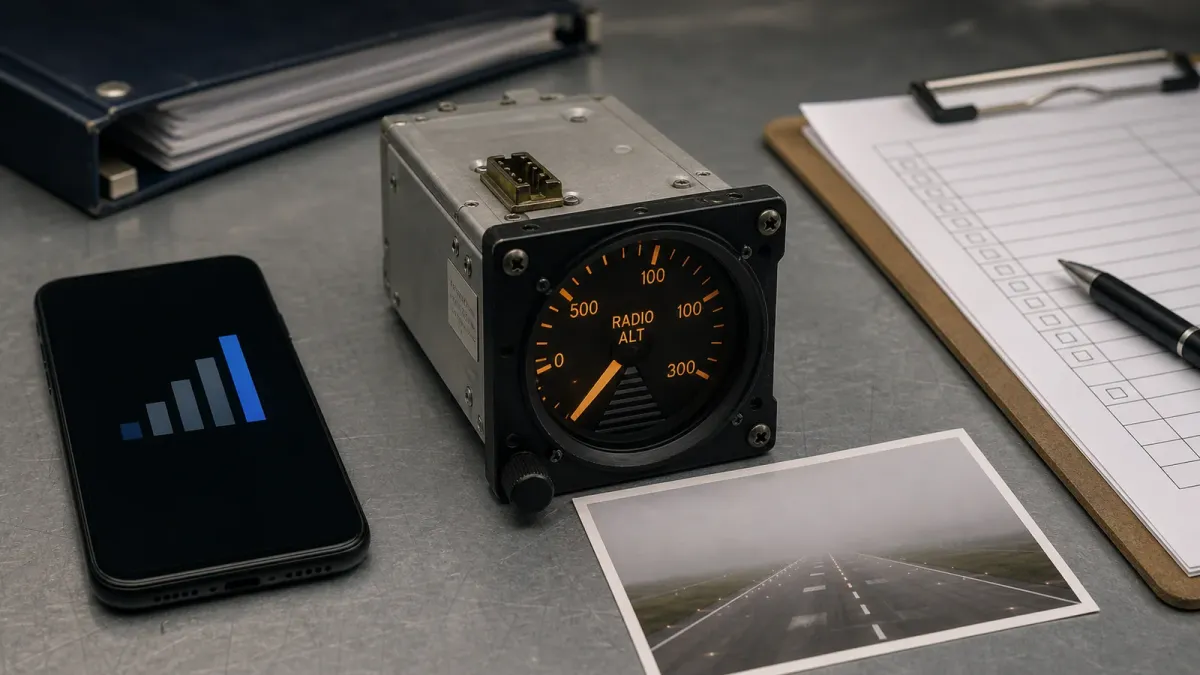
The Federal Aviation Administration says it will issue a final rule on Friday, July 24, requiring aircraft radio altimeters to meet next-generation performance standards when equipped aircraft operate in the United States.
The rule matters because radio altimeters help aircraft measure height above terrain and obstacles, especially during takeoffs and landings in low visibility. The FAA says upgraded equipment is needed so those readings are not thrown off by 5G wireless signals in neighboring spectrum bands.
The timing is not random. The FAA said on July 22 that its rule is aligned with a Federal Communications Commission order adopted the same morning for new Upper C-band 5G spectrum auctions. The FCC's plan sets up a 2027 auction for 160 megahertz of prime mid-band spectrum, while the FAA rule sets the aviation side of the deal.
The short answer
This is not a new instruction for passengers to change phone settings before boarding. It is a federal equipment and spectrum-coordination rule aimed at aircraft operators, altimeter manufacturers, wireless bidders, and regulators.
For flyers, the practical point is narrower: the agencies are trying to prevent a repeat of the 5G-and-airport disruption fights that made some low-visibility landings and airline schedules a concern during earlier C-band rollouts. The FAA says the coordinated rulemaking should let aviation coexist safely with expanded wireless access.
What changes
The FAA says the final rule will require all altimeters to meet next-generation performance requirements when aircraft equipped with them are operating in the United States. The agency also says it will adopt two installation deadlines: one for scheduled air carriers that need to keep operating during low-visibility conditions, and a second for other aircraft.
The FAA statement did not list the exact deadline dates in advance of the final rule. That detail is what airlines, business-aviation operators, maintenance shops, and aircraft owners should check when the rule is published on July 24.
The FCC side of the action is also consequential. FCC Chairman Brendan Carr said the July 22 decision sets the stage for an Upper C-band auction next year and would create a larger block of mid-band spectrum by pairing new Upper C-band licenses with the already deployed Lower C-band. In the FCC statement, Carr said wireless providers could light up service to most Americans by the end of 2030 after the auction and transition process.
Why radio altimeters are the focus
A radio altimeter is not the same thing as the cabin altimeter number passengers may see on a flight map. It is a safety-critical instrument that measures an aircraft's height above the ground or obstacles. That data can feed cockpit displays, automated landing systems, terrain warnings, and other aircraft safety systems.
The FAA says next-generation altimeters are designed to prevent interference from 5G signals in neighboring spectrum bands that could cause inaccurate readings. The concern is about signals near the frequencies used by altimeters, not about ordinary passengers browsing the web after takeoff.
The new plan includes several safeguards on the wireless side. According to the FAA, the FCC rule limits the power of the auctioned 5G signals to levels the FAA has determined are safe for aviation, preserves a buffer band between auctioned frequencies and the altimeter band, limits the height of 5G transmission towers in the new band, and protects key altimeter-based alerting systems such as Terrain Avoidance Warning Systems.

What travelers should check
Most passengers do not need to do anything today. If the rule works as intended, the change should happen behind the scenes through aircraft upgrades, filters, scheduling, and operator compliance planning.
Still, travelers should watch for three practical issues. First, check airline alerts if flying during fog, heavy rain, snow, or other low-visibility weather after the rule's deadlines take effect. Second, do not assume every aircraft type or operator will be on the same timeline until the FAA publishes the final compliance schedule. Third, if a flight is delayed, look for the airline's stated reason rather than assuming 5G is the cause; weather, staffing, maintenance, air traffic flow, and airport congestion remain more common explanations.
Aircraft owners and smaller operators have a more direct checklist. They should compare the final rule against their installed altimeters, confirm whether an approved upgrade or radio-frequency filter is available, ask maintenance providers about lead times, and watch the FCC's rebate program details. The FAA said the FCC requirements for a radio-altimeter rebate program are meant to provide financial incentives for the aviation community to stay on the upgrade schedule.
What happens next
The next key date is Friday, July 24, when the FAA says it will issue the final rule. The full text should clarify compliance deadlines, covered aircraft categories, and technical requirements.
The FCC auction is a longer clock. The FCC says the Upper C-band auction is planned for 2027, with service to most Americans expected by the end of 2030 after post-auction transition work. That means the July 24 rule is less about tomorrow's flight and more about preventing a future collision between faster wireless service and aircraft safety equipment.
The bottom line: passengers should not panic, but airlines and aircraft operators should read the July 24 rule closely. The agencies are trying to trade uncertainty for a clearer schedule, clearer equipment standards, and fewer last-minute fights when new wireless spectrum turns on near the aviation band.


