

The Federal Aviation Administration has ordered airlines to inspect certain Boeing 737 MAX jets for potential cracks around part of the fuselage, a fresh safety directive that affects an estimated 471 U.S.-registered aircraft.
The order applies to some Boeing 737-8, 737-9 and 737-8200 airplanes. It was published in the Federal Register on August 6, 2026, and takes effect September 10, 2026.
The important traveler takeaway is narrower than the headline may sound: the FAA is requiring inspections because cracks were reported in a related structural area, but Boeing told Fox Business the issue has not been observed on the MAX fleet. The Associated Press also reported that no cracks have been found on MAX aircraft.
What the FAA ordered
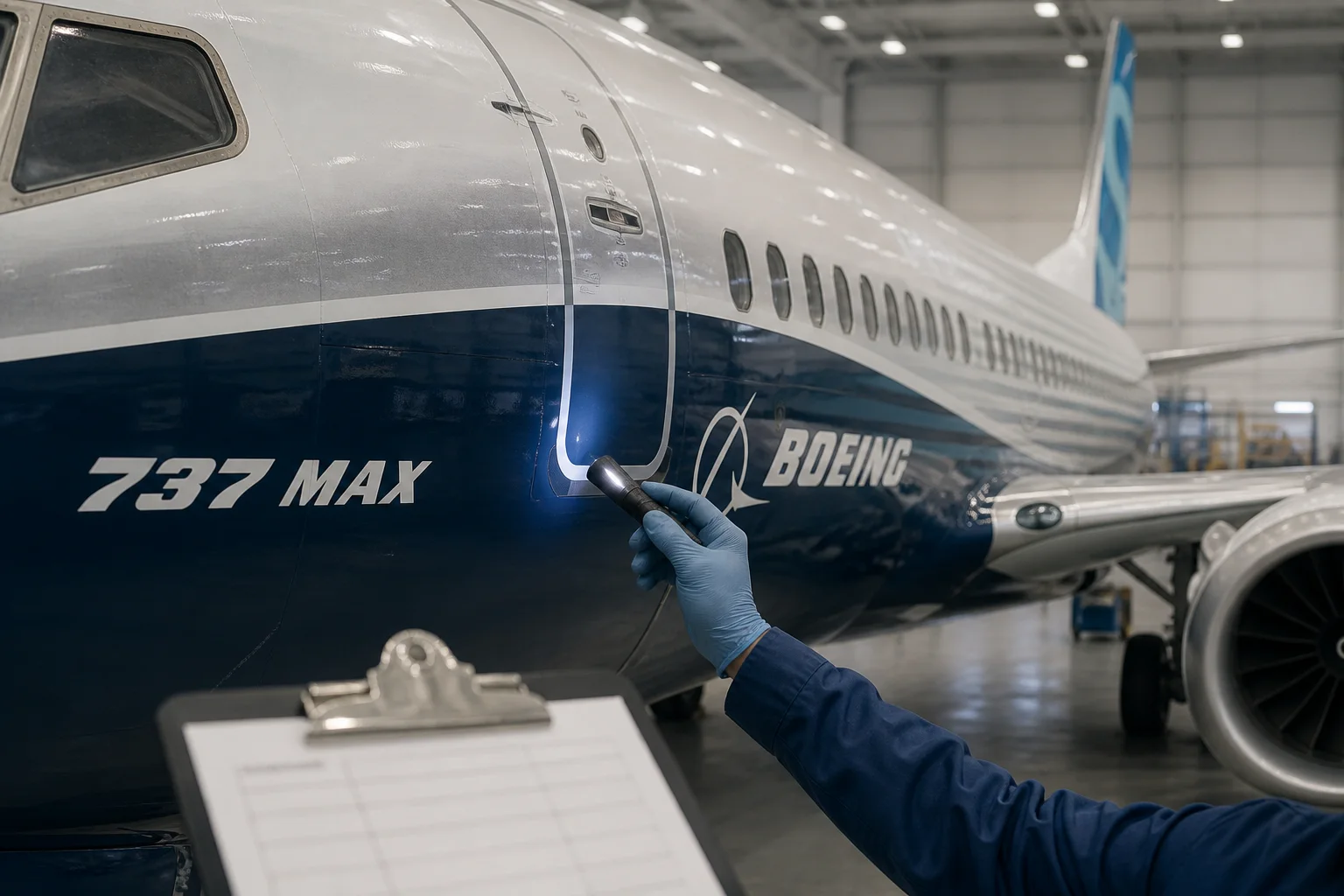
The directive requires operators to inspect the fuselage skin for existing repairs and then take any required follow-up actions. The concern centers on the bear strap near the forward upper corner of the forward galley door cutout, a reinforcing structure that helps support the aircraft body around a door opening.
In the Federal Register notice, the FAA said cracks in the fuselage skin and bear strap could affect whether a principal structural element can sustain required loads. That is why the agency treated the issue as an unsafe condition that needs mandatory inspection rather than leaving the checks as voluntary service work.
The order does not say all covered airplanes are unsafe to fly today. Airworthiness directives are one of the FAA's routine tools for forcing inspections, repairs or documentation steps when a potential safety issue needs to be addressed across a fleet.
Why MAX jets are being checked now
The current MAX order traces back to crack findings involving older Boeing 737 Next Generation aircraft. The MAX family is not the same airplane, but regulators said the affected MAX models share enough design and manufacturing similarity that inspections are warranted.
That distinction matters. The directive is not a new grounding, and the public sources reviewed for this article do not show a finding that cracks have already appeared on the MAX fleet. Instead, the FAA is trying to catch a possible structural issue before it becomes more serious.
Boeing has said it identified and reported the broader issue years ago and has been working with operators. AP reported that Boeing supports the FAA directive, while the Guardian reported that inspections are expected to begin in September.
What travelers should and should not assume
Travelers may see Boeing 737 MAX language in a booking path, seat map or flight-tracking app and wonder whether they need to cancel. The directive alone does not answer that question. It does not list passenger-facing route changes, airline-specific cancellations or a finding that a particular flight is unsafe.
A better approach is to separate three questions. First, is the flight operating as scheduled? That is an airline question. Second, has the aircraft cleared any required maintenance before it flies? That is an airline and FAA oversight question. Third, do you personally feel comfortable with the aircraft type? That is a passenger decision, but it should be based on verified information rather than a viral post that turns an inspection order into a grounding claim.
If an airline changes equipment, delays a flight or cancels a route because of maintenance, passengers should watch the airline's app, email alerts and reservation page. Those are the practical channels where traveler-specific consequences would appear.
Why this still matters
The 737 MAX remains one of the most scrutinized commercial aircraft families after two fatal crashes in 2018 and 2019 and later manufacturing-quality concerns, including the 2024 Alaska Airlines door-plug incident on a MAX 9. That history means even a technical inspection directive can carry wider public significance.
For Boeing, the order arrives as the company is trying to stabilize production, restore confidence with regulators and customers, and move past years of quality-control pressure. For airlines, the key issue is whether inspections can be completed without disrupting schedules or creating new maintenance bottlenecks.
For passengers, the most useful signal is not whether a social post says the MAX is back in trouble. It is whether the FAA, airlines or Boeing report findings that change flight operations, maintenance timelines or aircraft availability.
What to watch next
The next meaningful date is September 10, 2026, when the directive takes effect. After that, watch for airline disclosures about inspection schedules, FAA updates if cracks are found, and Boeing statements about any repair or design follow-up.
Until then, the most accurate summary is simple: the FAA has made inspections mandatory for hundreds of U.S.-registered 737 MAX jets, but the verified public record does not show that MAX aircraft have already been found with the cracks that prompted the order.


