
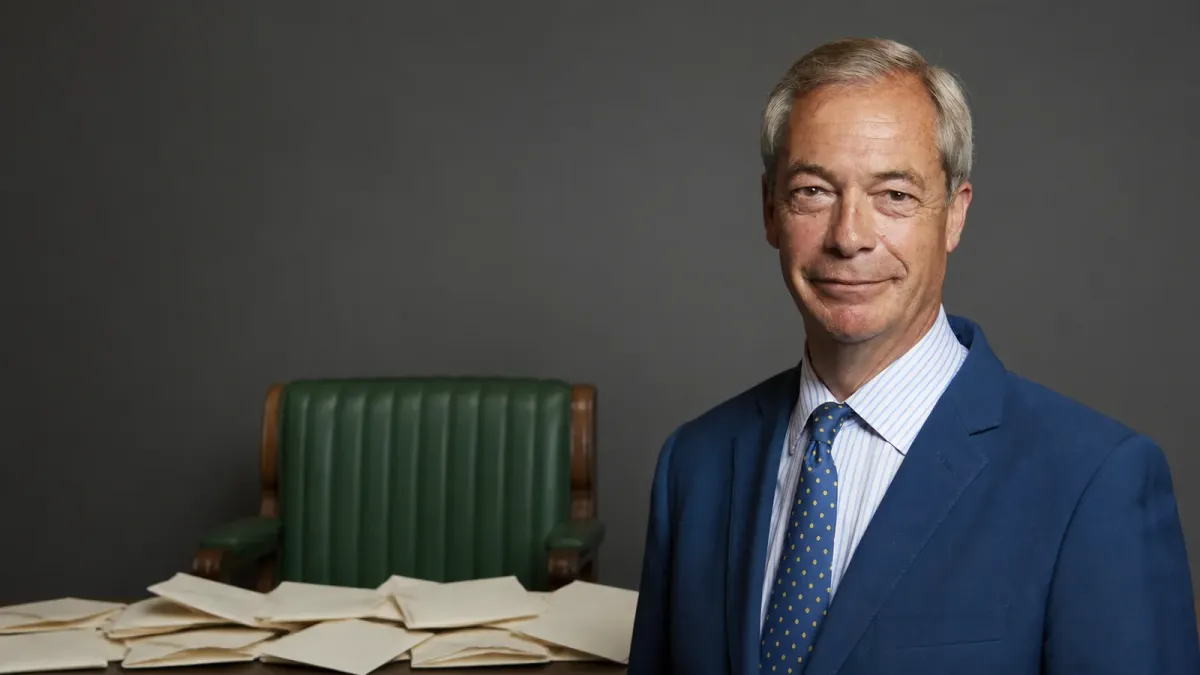
Nigel Farage won the Clacton by-election held Thursday, August 13, returning to the House of Commons a little more than a month after resigning the same seat. The Associated Press reported that the Reform UK leader received 22,239 votes, while the satirical candidate Count Binface finished second with 9,455 in a field of 34 candidates.
The immediate result is straightforward: Farage is again the member of Parliament for the Essex constituency. The route back was anything but ordinary. UK Parliament records show that his July 8 resignation created the vacancy and that the replacement vote took place August 13.
What changed in Clacton
Farage stepped down while Parliament's standards commissioner was examining whether he should have registered a £5 million gift from cryptocurrency investor Christopher Harborne. He then stood in the election his resignation triggered, presenting the contest as a direct test of support from local voters. Farage has said the money was a personal gift for security and did not need to be declared.
Labour, the Conservatives, the Liberal Democrats and the Greens did not field candidates, leaving an unusually fragmented ballot and Count Binface as the best-known challenger. The AP said turnout was about 44%. That makes the result a clear local victory, but a difficult basis for judging how Reform UK would perform against the country's major parties in a normal parliamentary contest.
Farage's raw vote total nevertheless held up. He won 21,225 votes in Clacton at the 2024 general election, according to the official constituency result. Thursday's 22,239 was 1,014 higher, even though overall turnout was lower and the opposing field was radically different.
Why the win does not settle the inquiry
Resigning suspended the standards commissioner's investigation because Farage was no longer an MP. His return clears the basic jurisdictional obstacle, but it does not predetermine what the commissioner will do or how the case will end. CNBC and the AP both reported that the inquiry remains central to what follows the election.
The distinction matters. Voters decided who should hold the Clacton seat; they did not issue a parliamentary ruling on registration requirements. Any resumed inquiry must still examine the facts and apply the House of Commons rules, while Farage retains the opportunity to respond.
What happens next
The first official signal will be an update to Parliament's member records confirming Farage's return. The next consequential step is whether the standards commissioner formally resumes the suspended case and publishes a timetable or finding. Until then, the result restores Farage's seat and platform, but leaves the procedural question that prompted the unusual election unresolved.
For Reform UK, the practical takeaway is mixed but concrete: its leader preserved his Clacton base without the major parties on the ballot. The harder national test will come in an election where those parties compete and where voters are choosing between full governing alternatives rather than passing judgment in a one-off contest. That difference is why this margin should not be stretched into a national forecast, even as the win clearly strengthens Farage's immediate standing.


