
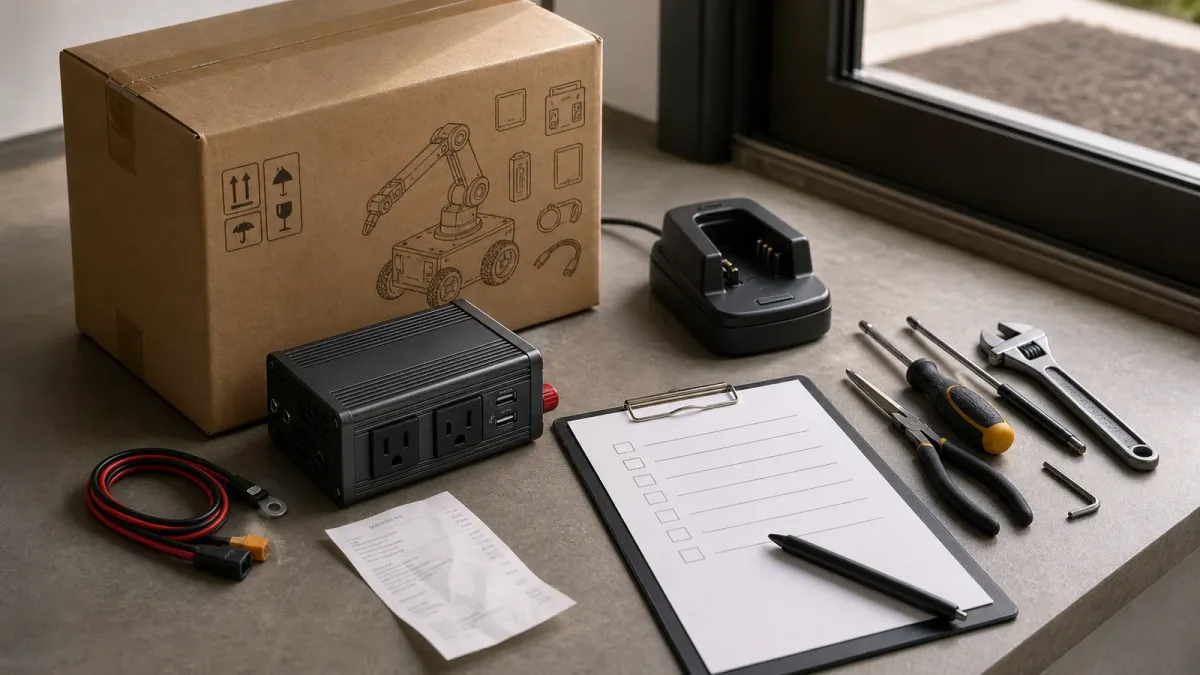
The FCC's new robot ban is best read as a buyer checklist, not just another U.S.-China headline. On July 28, 2026, the Federal Communications Commission said it had added foreign-produced advanced robotic devices and foreign-produced power inverters to its Covered List after national security determinations from an executive branch interagency body.
The short version: new covered devices cannot receive FCC equipment authorization unless they fall under a conditional approval. That matters because FCC authorization is the gate many connected products must pass before they can be imported, marketed or sold in the United States.
For consumers, businesses and installers, the practical question is no longer only whether a robot, dock, inverter or sensor package works. It is whether the specific model, production origin and authorization status make it legal and supportable after the FCC action.
The short answer
If you are buying an already-authorized product that is already in the U.S. market, the action does not automatically mean you must unplug it or return it. The FCC notice focuses on covered equipment authorization for foreign-produced advanced robotic devices and power inverters, with a conditional-approval path for specific devices or classes of devices.
The harder cases are future orders, unreleased models, bulk purchases, robotics pilots, solar or data-center projects, and gray-market imports. Those are the situations where a low sticker price can turn into a delayed shipment, a failed compliance review, a missing update path or a device the seller cannot lawfully bring into the country.
What the FCC added
The FCC public notice says two categories were added to the Covered List: foreign-produced power inverters and foreign-produced advanced robotic devices. The notice ties the action to national security findings about supply-chain exposure, remote connectivity, cybersecurity vulnerabilities and the ability of connected machines to collect data or be remotely manipulated.
That combination is why this is broader than a humanoid robot story. Power inverters convert direct current electricity into alternating current electricity and are used in renewable energy systems, data centers and household appliances. Advanced robotic devices can include humanoid and quadruped models, but reporting on the FCC definition also points to mobile machines with ground movement, sensing, network connectivity and enough size to raise regulatory concerns.
The action also arrives as China holds a major position in the global humanoid robot market. The Associated Press reported that China has an estimated market share of roughly 85%, and that Unitree and AGIBOT each shipped more than 5,000 humanoid robots in 2025, far ahead of U.S. counterparts such as Tesla and Figure AI.
What to check before you order
Start with the exact model, not the product category. A seller saying a device is a robot, inverter, smart appliance or developer kit is not enough. Ask for the FCC ID or authorization record when one is required, the production country, the manufacturer, the importer of record and whether the model is new, previously authorized or covered by a conditional approval.
Second, separate hardware already deployed from hardware you plan to buy later. Existing products may still be usable, but that does not guarantee a future replacement model, accessory bundle, docking station or enterprise batch will clear the same path. If your business relies on the device, ask how repairs, firmware updates, spare parts and replacements will be handled.
Third, do not treat a waiver or conditional approval as a marketing slogan. The FCC notice says power-inverter makers can seek review from the Department of War or the Department of Homeland Security, while advanced robotic-device makers can seek review from the Department of War. Buyers should ask for written confirmation tied to the exact model or class, not a vague claim that approval is expected.
Why power inverters are in the same story
The power-inverter piece may affect more people than the humanoid robot piece. Inverters sit inside solar, battery, data-center and household systems, and the FCC notice says remote connectivity can create vulnerabilities as inverter-based resources spread across the U.S. grid.
That does not mean every foreign-made inverter is secretly unsafe, and it does not prove a specific brand has misused customer data. It means the government is moving the compliance question earlier in the buying process, before the device reaches a roof, a server room, a factory floor or a home energy system.
The buyer mistake to avoid
The costly mistake is assuming this is only a headline about walking robots. The rule can matter whenever connected hardware moves, senses, navigates, converts power or depends on remote software support. The safer habit is to check the authorization status before payment, before installation and before a procurement team standardizes on a device family.
For households, that may mean buying from authorized U.S. retailers and keeping receipts, model numbers and support records. For businesses, it means adding FCC covered-list screening to vendor review, especially for robotics pilots, warehouse automation, physical AI testing, solar projects and backup-power systems.
What to watch next
The next useful signal is how many manufacturers seek conditional approvals and how quickly agencies process them. Watch for updated FCC guidance, seller notices, product-listing changes, canceled preorders, replacement models built outside the covered production path and procurement memos from companies that use robots or inverters at scale.
The bottom line: the FCC action does not make every connected robot or inverter a bad purchase. It does make compliance, origin and long-term support part of the product review. Before buying the hardware, check whether the device can legally reach you, keep working and keep receiving support after the covered-list update.


