
Fiber is having a search moment. Google’s Summergeist report, published June 23, 2026, said U.S. searches for dietary fiber reached an all-time high this year and that “fibermaxxing” searches rose 115% in the prior 90 days.
The trend is useful because most Americans still do not get enough fiber. It can also go wrong when people jump from a low-fiber diet to large scoops of powders, bars or seeds overnight.
The short answer
Fibermaxxing is best treated as a gradual food-first habit, not a contest. A reasonable goal for many adults is roughly 25 to 30 grams of total dietary fiber a day from food, though personal needs vary by calorie intake, health conditions and digestive tolerance.
The safer move is to add one fiber source at a time: oats at breakfast, beans in a salad, lentils in soup, berries with yogurt, whole-grain bread instead of refined bread, or vegetables with meals. Add water alongside those changes. MedlinePlus warns that increasing fiber too quickly can cause gas, bloating and cramps.
How fiber works
Dietary fiber is the part of plant foods the body does not digest in the same way it digests starches and sugars. The FDA separates it into soluble fiber, which dissolves in water and can help slow digestion, and insoluble fiber, which helps move food and waste through the digestive tract.
That distinction matters because a varied diet usually beats a one-product approach. Beans, peas, lentils, fruits, vegetables, nuts, seeds and whole grains bring different fibers and nutrients. NIH research has also found that fiber benefits can vary by type, dose and person, especially with purified supplements.
Do this first
- Start with one meal. Add a high-fiber food to breakfast or lunch before changing the whole day.
- Use labels. The FDA says 20% Daily Value or more is high for dietary fiber, while 5% or less is low.
- Drink water. More fiber without enough fluid can make digestive discomfort worse.
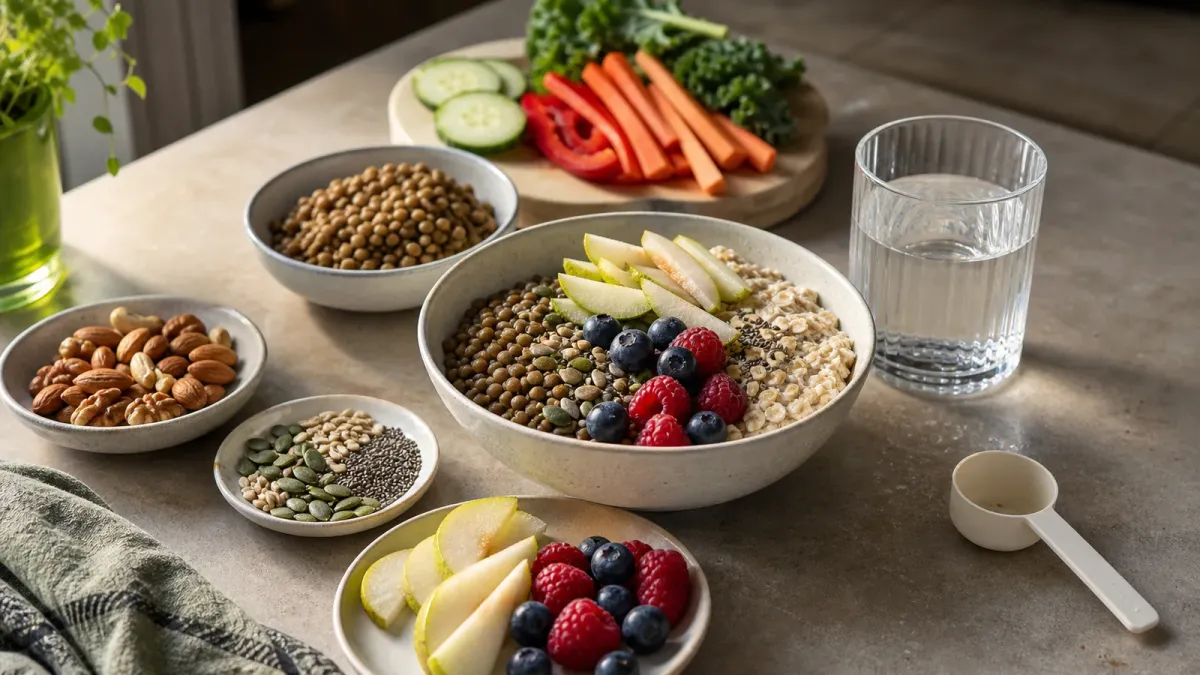
- Mix sources. Rotate oats, beans, lentils, berries, pears, vegetables, brown rice, quinoa, nuts and seeds.
- Slow down if symptoms show up. Bloating, cramps or sudden bowel changes are signs to reduce the pace.
What to check
Look for the pattern, not just the number. A cereal with added isolated fiber may help some people, but it is not the same as building meals around whole grains, legumes, fruits and vegetables. The same goes for social videos that turn chia seeds, psyllium or inulin into a daily challenge. Those ingredients can be useful, but they are easier to tolerate when the dose starts small.
When to be more careful
People with digestive conditions, recent gastrointestinal surgery, swallowing problems or complicated medication routines should ask a clinician before making a major fiber change or adding a supplement. Anyone using GLP-1 medicines or dealing with persistent constipation should be especially cautious about sudden jumps.
The bottom line: fibermaxxing is a better trend when the “max” means consistency, not extremes. A few repeatable swaps, checked against how you feel, are more useful than chasing the highest number on a label.


