
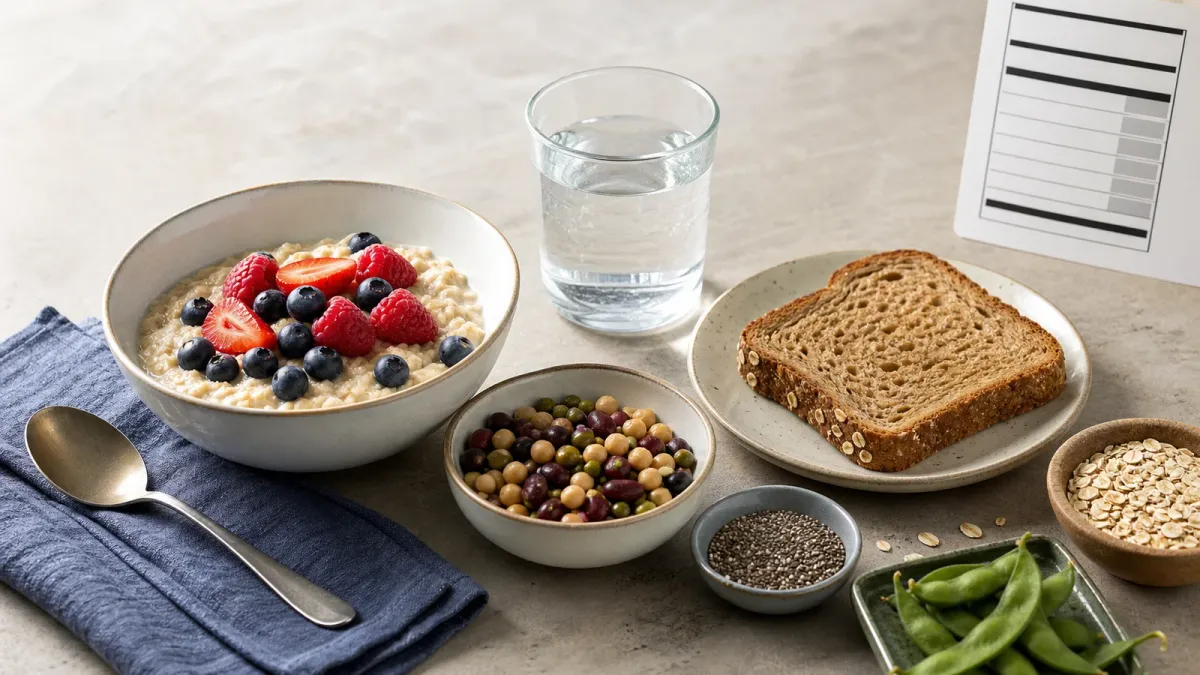
Fiber is getting the summer spotlight. Google's Summergeist report, based on U.S. Google Trends data, says searches for dietary fiber hit an all-time high in 2026 and that searches for "fibermaxxing" rose 115% in the past 90 days.
The trend is useful if it nudges people toward beans, oats, berries, vegetables, nuts and whole grains. It gets less useful when it turns into a race to hit a big number overnight.
The short answer: add fiber like a volume knob, not a switch. A few grams at a time, paired with water and regular meals, is more realistic than trying to rebuild your whole diet in one day.
Do this first
- Add one high-fiber food to a meal you already eat, such as berries on yogurt, beans in a bowl, lentils in soup or oats at breakfast.
- Increase slowly for several days before adding another big source. Sudden jumps can cause gas, bloating or constipation for some people.
- Drink water with higher-fiber meals, especially when adding beans, bran cereal, chia, psyllium or other concentrated sources.
- Keep variety in the plan. Fruits, vegetables, legumes, whole grains, seeds and nuts bring different types of fiber and other nutrients.
Check the label
The FDA lists the Daily Value for dietary fiber at 28 grams on Nutrition Facts labels. It also says 5% Daily Value or less is low and 20% Daily Value or more is high, which makes the label a practical shortcut when comparing breads, cereals, bars and packaged meals.
That does not mean every high-fiber packaged food is automatically the best choice. Check added sugars, sodium and serving size too. A product can help close a fiber gap and still be less useful than a simple serving of beans, fruit or whole grains.
Why it matters
USDA's Economic Research Service has called low fiber intake a public health concern, citing the 2020-2025 Dietary Guidelines for Americans. Its analysis found U.S. consumers averaged 8.1 grams of fiber per 1,000 calories in 2017-18, about 58% of the recommended 14 grams per 1,000 calories.
That gap is why this trend is worth taking seriously. The goal is not to max out a nutrient for its own sake. It is to make regular meals a little more plant-forward and a little more filling without making your stomach miserable.
When to slow down
Back off if a new routine causes persistent bloating, cramps, diarrhea or constipation. People with digestive conditions, recent gastrointestinal surgery, swallowing problems or medically restricted diets should ask a clinician or registered dietitian before making large changes or adding fiber supplements.
For most people, the practical test is simple: can you repeat the change tomorrow? If yes, keep it. If no, make the step smaller.


