
Fiber is having the kind of internet moment usually reserved for protein powders, but the best version of fibermaxxing is not extreme. It is a slower, food-first way to close a gap most Americans already have.
Google's Summergeist report, published June 23, 2026, says U.S. searches for dietary fiber hit an all-time high in 2026 and searches for "fibermaxxing" rose 115% over the previous 90 days. That makes the trend timely, but it does not make every supplement scoop, fortified snack or viral meal plan a good idea.
The short answer: add fiber gradually, drink water, use labels, and favor ordinary foods such as beans, oats, fruit, vegetables, whole grains, nuts and seeds. If you have a digestive condition, recent intestinal surgery, swallowing difficulty, a history of bowel obstruction, or symptoms that worry you, ask a clinician before making a major change.
Do this first
1. Know the target before you chase the trend. The FDA's current Daily Value for dietary fiber is 28 grams, based on a 2,000-calorie diet. Mayo Clinic lists adult targets that vary by age and sex: 25 grams for women age 50 or younger, 21 grams for women over 50, 38 grams for men age 50 or younger, and 30 grams for men over 50.
That means fibermaxxing should not mean eating the most fiber possible. A better goal is to move from your current intake toward a reasonable daily range without treating discomfort as proof that the plan is working.
2. Add one change at a time. The fastest way to ruin a good habit is to triple fiber overnight. Mayo Clinic warns that adding too much too quickly can cause gas, bloating and cramping. A calmer approach is to add one high-fiber food each day for a week, then build from there.
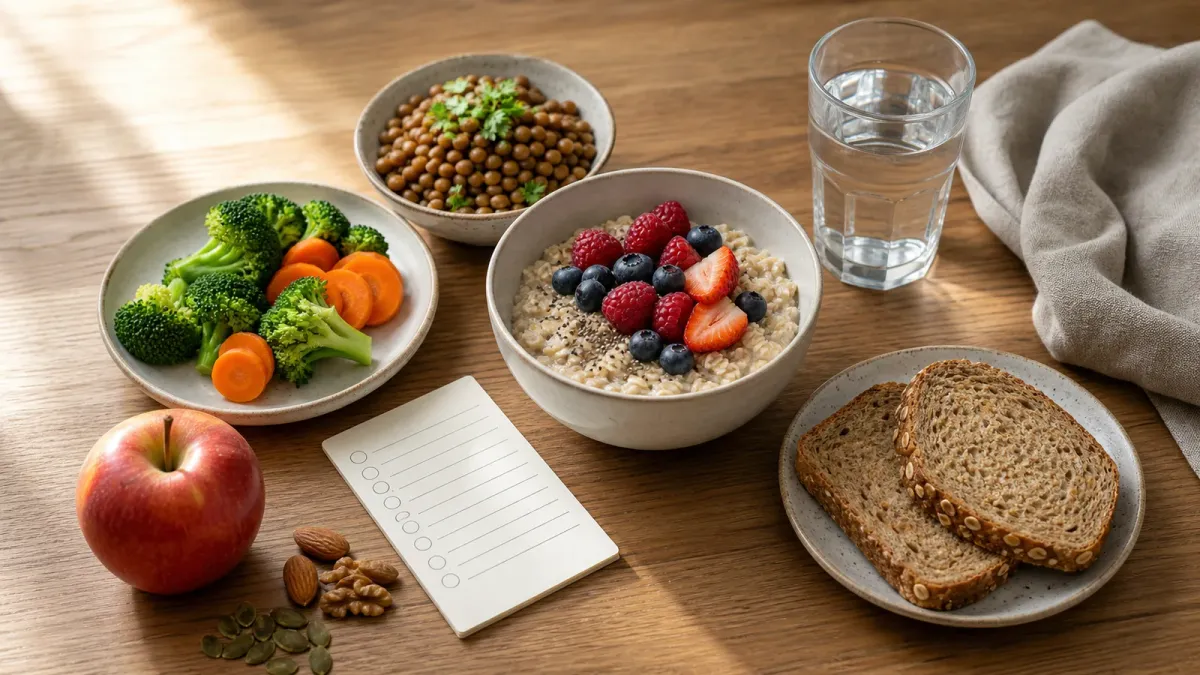
Start with a breakfast cereal that has at least 5 grams of fiber, a bowl of oatmeal with berries, a side of beans at lunch, a lentil soup, an apple with nut butter, popcorn without heavy salt, or a vegetable serving you will actually repeat. The boring choice that survives the week beats the perfect plan that lasts one day.
Check these details
3. Read the Nutrition Facts label instead of trusting front-package claims. The FDA says 5% Daily Value or less is low and 20% Daily Value or more is high for a nutrient. For fiber, that makes the label useful when cereal, bread, wraps, bars or snack foods claim to be a better choice.
Look for the grams of dietary fiber per serving, then check the serving size. A product can look impressive until the serving is smaller than what you actually eat, or until it adds fiber while also loading up sugar, saturated fat or sodium. The practical question is not whether the package says "high fiber." It is whether the whole meal helps you reach the day without creating another tradeoff.
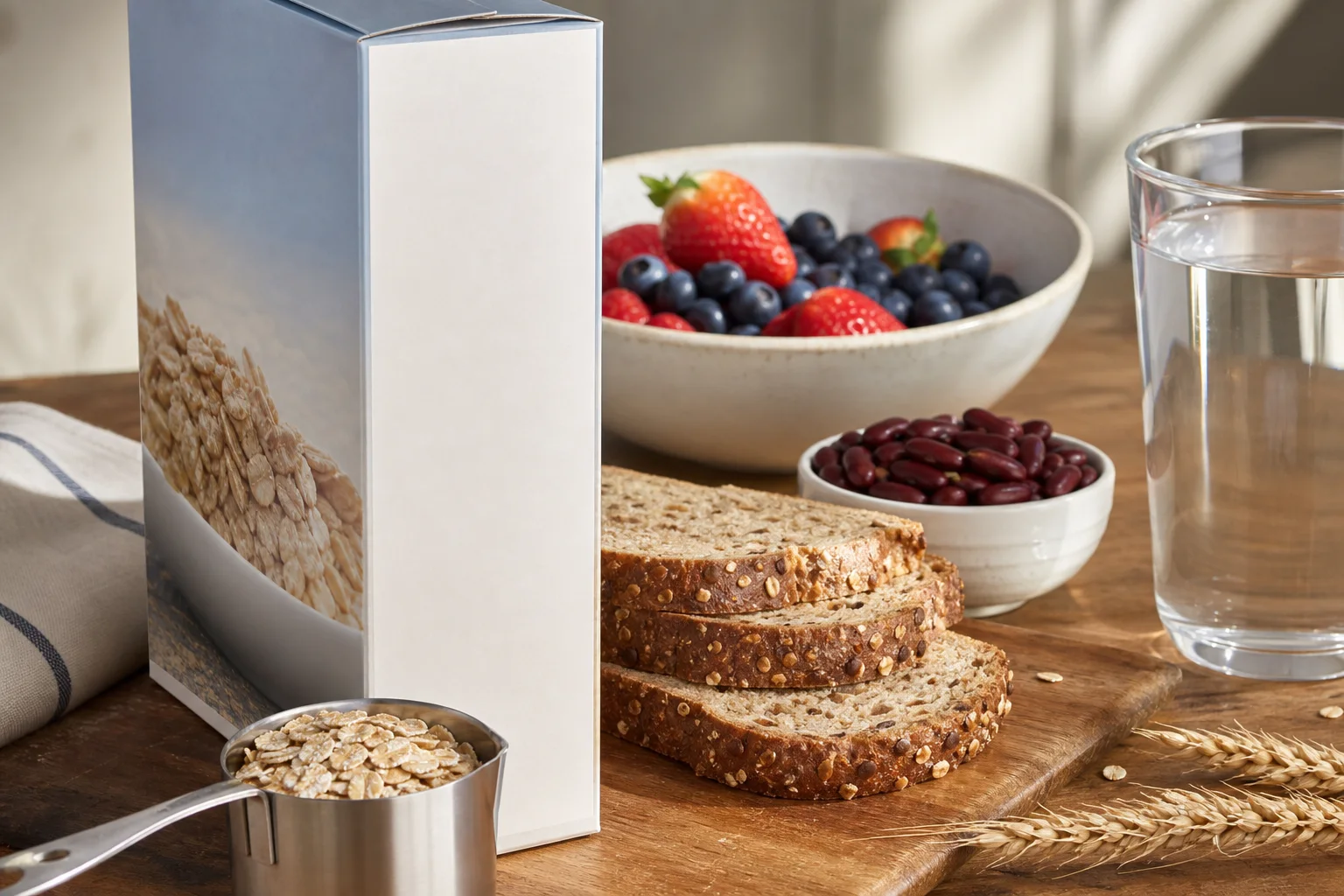
4. Keep water in the plan. Fiber works best when it has fluid with it. Mayo Clinic notes that water helps fiber make stool softer and bulkier. If you add beans, bran, chia, psyllium or a higher-fiber cereal but keep drinking almost nothing, the result can feel like the opposite of digestive health.
That does not require a dramatic hydration challenge. It does mean pairing higher-fiber meals and snacks with water and paying attention to how your body responds over several days, not just the first meal.
Common mistakes
5. Do not make supplements do all the work. Fiber supplements can be useful for some people, and Mayo Clinic says a health professional may recommend one when diet changes are not enough or certain digestive issues are involved. But the trend gets less useful when powder replaces a pattern of whole foods.
Whole foods bring more than fiber. Beans add protein and minerals. Fruit and vegetables add water and micronutrients. Whole grains can replace refined grains rather than just sit beside them. Nuts and seeds can help a snack feel more satisfying. UCLA Health dietitian Yasi Ansari frames fibermaxxing as a push to increase intake, but the examples she gives are meals and snacks built from ordinary foods, not a race to max out a single ingredient.
The other mistake is treating discomfort as something to push through. Bloating, cramping, constipation, diarrhea or pain are signals to slow down, scale back, or ask for medical guidance, especially if symptoms are severe, persistent or new.
When to get help
Talk with a healthcare professional before a major fiber increase if you have Crohn's disease, ulcerative colitis, diverticulitis, gastroparesis, narrowed intestines, recent gastrointestinal surgery, radiation treatment affecting the abdomen or pelvis, or any condition that already changes how you tolerate fiber. Mayo Clinic specifically notes situations where a lower-fiber diet may be recommended for a time.
For everyone else, the useful version of fibermaxxing is simple: pick one meal, add one fiber-rich food, drink water, read the label, and repeat long enough to notice what works. The trend may fade, but a steadier breakfast, lunch or snack can stay.


